

And you have a front-row seat!

When he first walked out from “stage right” in front of those massive pleated curtains draping down from the grand Florida Theatre’s proscenium arch, it was under the stern and watchful eye of Jacksonville, Florida’s Juvenile Court Judge, Marion Gooding.

Gooding was accompanied by uniformed police officers posted at strategic locations around and in front of the theatre stage. Fully armed and holding cameras, their purpose was to keep watch for any “inappropriate” performance conduct, to photographically chronicle the same, and to guard against any rushing of the stage by the packed theatre audience — mostly screaming, and sometimes fainting — young teenage girls.
Only hours before, this 21-year-old singer had been summoned into the chambers of Judge Gooding to receive a firm warning about the young man’s controversial stage behavior. Gooding had even prepared arrest warrants that detailed potential charges of “impairing the morals of minors” and had assured the performer that those warrants would, indeed, be executed if any bodily gyrations became too suggestive.
It was August 1956, and this former delivery truck driver from “the poor side of town” in Tupelo, Mississippi, had previously been stirring up a hurricane-style storm of his own for the second year in a row all across Florida; triggering community unrest, sparking small riots, agitating and alarming local town officials, civic groups, clergy, school principals, and troubling parents of those aforementioned wildly hysterical teenage girls. So, Jacksonville city officials were already alerted and prepared to head off and, hopefully, prevent any repeat of previous chaotic episodes.
Wrapping up a seven-city, nine-day, and twenty-five show tour looping around and through the Florida peninsula, the young singer — who was riding a tsunami wave of recent record chart hit singles like “Heartbreak Hotel,” “Hound Dog,” and “Don’t Be Cruel,” — had just torn through major spots in Tampa, Lakeland, St. Petersburg, Miami, Orlando, and Daytona Beach. On this occasion, his final Florida appearances included a total of six matinee and evening shows over two days, August 10th and 11th, on stage at Jacksonville’s Florida Theatre.
He was, of course, Elvis Presley. And his anxious young fans had been lined up for blocks around the theatre just waiting to experience what many critics called “lude and dangerous” and what his adoring 1950s bobby-soxers called “Dreamy!”
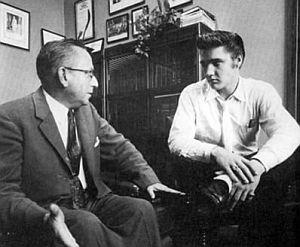


Elvis mostly behaved and adhered to Judge Gooding’s cautionary warnings, but he kept his provocative pelvic and leg gyrations to a minimum throughout his appearances. Yet — as if slyly mocking the Judge’s admonitions — he would, instead, curl his upper lip in that defiant “Elvis snarl” and wiggle his little finger to the beat of the music; a somewhat sarcastic gesture meant to spoof his usual performance antics.
But, in many ways, his restrained theatrics may have ignited the passions of his highly impressionable female audience even more. After all, they were eagerly awaiting Presley’s “scandalous” stage show and were already perched on the edge of their seats in anticipation of — at any moment — him throwing all caution to the wind and cutting loose. Like the bullfighter taunting the already enraged bull with the waving of his red cape, Presley may have seemed to be deliberately teasing and taunting his adolescent audience by holding back.
Yet, even without those “forbidden moves,” Elvis had other ways to woo his young admirers. With his signature sideburns, ducktail, and slicked-back pompadour on full display, he would swivel and stalk his way towards the edge of the Florida Theatre center stage, seductively caress the neck of his soon-to-become famous Shure Unidyne Model 556 microphone (to be officially nicknamed “The Elvis Mic”), drop to his knees downstage nearest the audience, lean daringly towards his screaming fans, tantalize onlookers with that iconic Elvis smirk, occasionally venture into the front row seats to croon a fainted fan and, capture the hearts of every single teenage girl like a sorcerer casting a spell.


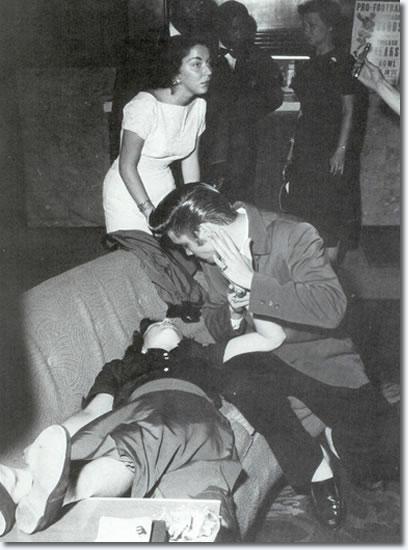
Every teenage boy wanted to be Elvis… And every teenage girl wanted to be with Elvis. And, on this occasion, one lucky girl actually did. During the Florida Theatre concert event, 17-year-old Andrea June Stephens won the one-and-only “Win A Date With Elvis” contest, inviting her to be the special guest of Elvis and his entourage throughout the day, for dinner, backstage, and during the show.
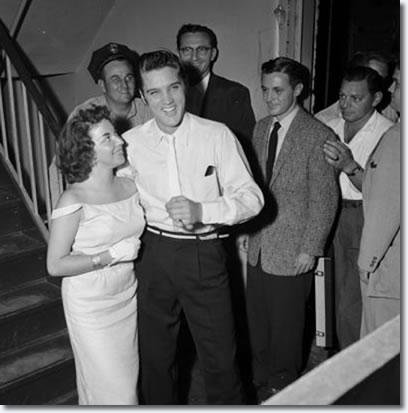
Whether grinding out “Hound Dog” with a guttural growl or breathlessly whispering the plaintiff lyrics of “Heartbreak Hotel,” Elvis held his audience captive and mesmerized in a timeless swoon. Accompanied by his loyal “Jordanaires” bandmates and backup singers — Scotty Moore on lead and rhythm guitar, D.J. Fontana on drums and percussion, and Bill Black on double bass and bass guitar — Presley was only a month away from his first of two live appearances on the hit CBS network television variety program, The Ed Sullivan Show; appearances that further catapulted the one-of-a-kind singer phenomena to international stardom both on record and in the movies…movies that would eventually be shown to more Elvis fans at Jacksonville’s Florida Theatre.
Due to the highly publicized civic and legal controversy surrounding his Jacksonville appearance, Presley’s Florida Theatre performance instantly captured national attention and inspired banner headline and news coverage across all three TV networks, countrywide radio stations, big city newspapers, and major magazine covers. Already a celebrated and renowned grand theatrical venue by its own merits, with these final 1956 Elvis Jacksonville shows, the town’s Florida Theatre was exposed to a whole new level of state and nationwide recognition and notoriety.
NOTE: Ironically, by today’s pop music concert standards, Presley’s so-called “outrageous stage performances” would be considered tame and virtually uneventful. Ultimately, Judge Gooding is reported to have been pleased with Elvis’s Florida Theatre performances and, years later, The Gooding family was known to have become enthusiastic Elvis fans. Elvis didn't return to Jacksonville until 1972 for two shows at the city's Coliseum.
Jacksonville’s original 1900-seat Florida Theatre was built during what’s often referred to as “the golden age of cinema.” This was an age of genuine movie palaces that were designed to give theatre audiences a virtual escape into a world of opulent luxury and captivating fantasy. The lavish interior included ornate plasterwork, hand-painted details, and a dramatic proscenium arch, all of which contributed to the theater’s reputation as an architectural masterpiece. Both then and now, the Florida Theatre’s visual and experiential essence is captured in the theatre’s coined phrase, “A thing of beauty, A palace of dreams.”
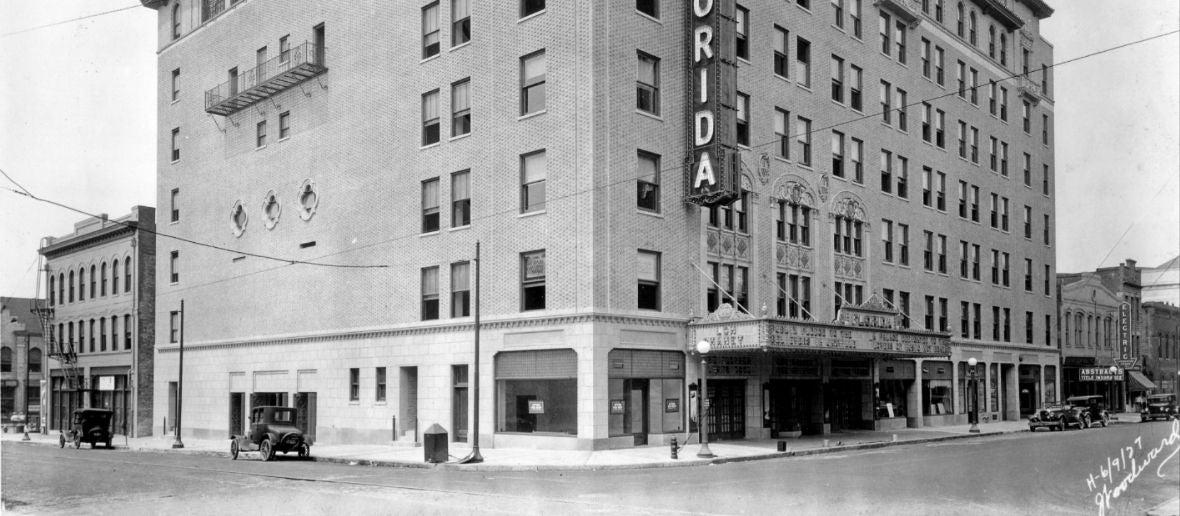
The theater was envisioned as part of a bold and expansive effort towards revitalizing Jacksonville’s downtown center and providing its residents and visitors with a cultural centerpiece for this emerging northernmost Florida community. The location had previously been the site of a very unspectacular old jail site and an eyesore at best. So it had to go.
Designed by architect Roy A. Benjamin and built for a whopping $ 1 million — a more than substantial sum for that era — the Florida Theatre opened its doors to a packed house on April 8, 1927. At the time, it was literally the largest such theatre in all of Florida. Its opening night featured the silent film Let It Rain, which was accompanied by a live orchestra. That opening night experience officially set the tone for the theatre’s dual emphasis on offering both the finest of hit movie films and dramatic live performances.
The theater’s design was imagined to be a bold reflection of the “Mediterranean Revival” style, symbolized by intricate ornamentation, vibrant colors, and a mix of classical and exotic motifs. Ultra elegant and characteristic of the grand nostalgic age of classic theatre interior architecture, its Mediterranean Revival concept typically combines elements drawn from the rich traditions of countries like Italy, Spain, and France; it even includes touches of Moorish architectural flavors.
To isolate that particular design motif in historical terms, it gained popularity in the United States during the 1920s and 1930s, and was especially embraced in Florida and California where many of America’s wealthier class were inspired to build their luxury first and second homes based on classic Mediterranean designs. From its very beginnings, the Florida Theatre quickly became a hub of cultural activity in Jacksonville during the 1930s and 1940s.
It’s only fitting and no coincidence that Jacksonville and its historic namesake theatre have a common turn-of-the-century heritage linked directly to the movie industry. But the story behind this linkage would likely be a surprise to anyone living outside of Jacksonville and — except for film historians—unknown to virtually anyone living in contemporary times.

Here’s the scoop: Beginning in the early 20th century, Jacksonville was literally a hotbed of movie-making in America… And definitely before Hollywood. In fact, it was famed as “The Winter Film Capitol of the World”. Before Hollywood, the American motion picture industry was headquartered in New Jersey. But New Jersey’s climate obviously had its limitations, and movie makers needed a warmer, more hospitable setting for year-round filming. So, given its warmer seasons, its exotic locations, its cheaper labor, and its easy railway access, Jacksonville became the city of choice.
t was all the way back In 1908 when the New York-based Kalem Studios became the first film company to open a full-time studio in Jacksonville. It soon gained commercial success in its release of the first-ever 15-minute short film production of Ben-Hur, to be followed by its film adaptation of Robert Louis Stevenson’s novel, Dr. Jekyll and Mr. Hyde. Over the next decade, more than 30 silent film companies also opened up studios in the growing town. These included Metro Pictures (later MGM), Edison Studios, Majestic Films, the King Bee Film Company, the Vim Comedy Company, Gaumont Studios, the Lubin Manufacturing Company, and the legendary Norman Studios.
In 1914, Oliver Norvell "Babe" Hardy — a comedic actor, a Georgia native, and soon-to-be one half of the legendary Laurel and Hardy comedy duo from 1927 to 1951 — began his motion picture career in Jacksonville. He starred in over 36 short silent films in his first year of acting. But, with the closing of the Lubin film company in early 1915, Hardy moved to New York and then to New Jersey in search of more film jobs. After landing a role with the Vim Company in early 1915, he returned to Jacksonville in the spring of 1917. Then, as fate would have it, in October of that same year, he relocated again, and this time to Los Angeles. And that’s where he was to eventually team up with Stan Laurel.

The burgeoning Jacksonville movie industry saw Joseph Engel’s Metro Pictures (MGM) opening in 1915. Two years later, the first U.S.-produced Technicolor film, which was also the first feature-length color movie entitled The Gulf Between, was filmed entirely on location in Jacksonville.
Ironically, as the busy movie-making economy began heating up, it was also crowding out more of Jacksonville’s public settings and facilities. In response, some of the more conservative residents and officials started raising strong and repeated objections to what they called “intrusions upon normal life and commerce throughout Jacksonville.”
Their cries of protest were directed towards the growing number of street car chases, simulated bank robberies, fire alarms, and other loud and intrusive action scenes (typical of films from that era) which would frequently interrupt otherwise normal town activities, hinder traffic flows and monopolize its basic operational infrastructure. Reacting to these increasingly public outcries and capitalizing on those concerns to win his election, the then Jacksonville Mayor, John W. Martin, vowed to fulfill his campaign promises to “tame the movie industry” and normalize town functioning.
Around the same time, California began emerging as the new preferred U.S. motion picture production center and was to witness many major film companies eventually relocate their primary headquarters to the more politically and economically friendly Los Angeles home base, where Hollywood was officially christened as “the movie-making capital of the world.”
However, that wasn’t the demise of Jacksonville’s film industry. On the contrary, Jacksonville has provided the ideal setting and backdrop for numerous TV productions plus major Hollywood films over the years. Some of these include the original Creature From the Black Lagoon, Cool Hand Luke, G.I. Jane, Lonely Hearts, The Manchurian Candidate, 3 ½ Minutes, 10 Bullets, The Devil’s Advocate, Tigerland, the New Adventures of Pippi Longstocking, Sunshine State, and many more.
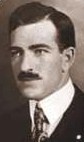

In retrospect, it was Richard Norman, head of Norman Studios (set in Jacksonville’s Old Arlington neighborhood), who, in 1920, launched his movie making operation and reigned for ten years as Jacksonville’s most prolific silent film making company. His run of successful box office silent films was a key driving force in establishing Jacksonville as a hot bed of movie production for turn-of-the-century.
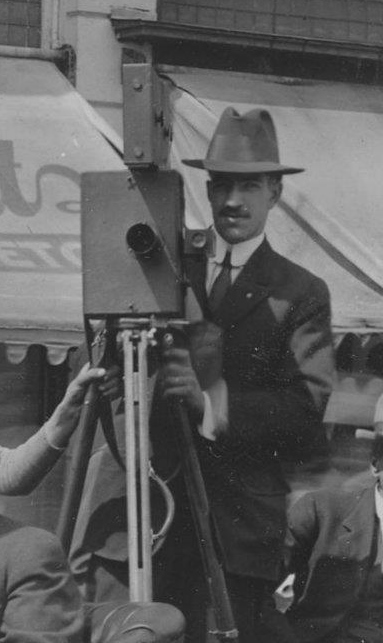
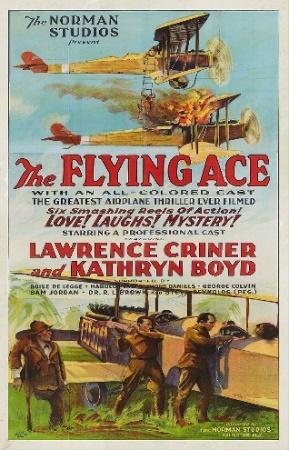
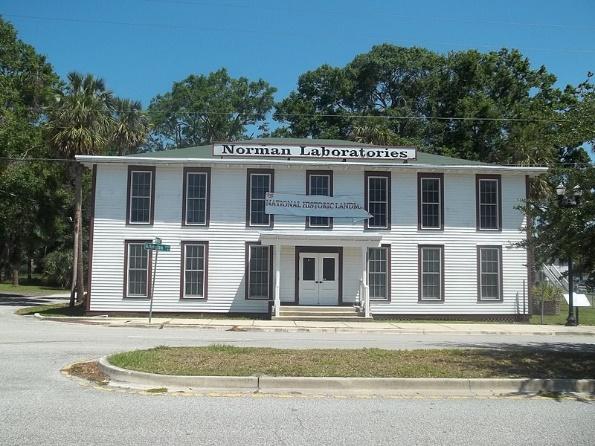
For over 100 years, Norman Studios has remained a longstanding testament to Jacksonville’s early cinematic leadership. And that status was further verified when, in 2003, Norman’s historic and ground-breaking 1926 film, The Flying Ace — featuring an all-African American cast — was officially honored during the annual Jacksonville Film Festival. This was the first time The Flying Ace had been shown to the public at large for three-quarters of a century.
The same Jacksonville Film Festival — which showcases both in-competition and out-of-competition American and international independent films — has evolved to become a hugely popular and industry-credited event that encourages new aspiring film makers to adopt Jacksonville as their movie production backdrop while, at the same time, honoring Jacksonville’s motion picture industry legacy.
Given all this movie-making history, one would have to consider it a kind of “destiny” that the Jacksonville Theatre would become a perfect venue for showcasing the many award-winning films and film stars that have been heralded within the movie industry. But, of course, it has never been just a movie theatre. Over its illustrious history, the theatre has proudly and regularly hosted operas, dance and theatre productions, trade shows, fashion shows, charity benefits, and civic meetings, all of which has helped authenticate the Florida Theatre as a vital, vibrant, and colorful hub of community activity.
Despite all the cinematic glory that has surrounded the Jacksonville Theatre and its local film industry heritage, time, trends and technology have always found a way to challenge long-established cultural traditions. And that fact left no escape for those few remaining grand theatres born in the early 1900’s.
Following decades of opulence and theatrical acclaim, the migration of upper middle class populations to the suburbs, along with the growing popularity of television as a newly dominant form of entertainment, took its toll on those once-grand theatres of yesterday, resulting in dramatic drops in attendance. By the 1960s and throughout the 1970s, Jacksonville’s Florida Theatre — like many others of its era — eventually fell into decline and disrepair, accompanied by offerings of mostly low budget films and less desirable audiences.
But there were many influential local government leaders and arts supporters who, nevertheless, felt that the Florida Theatre remained a historical treasure and a theatrical and architectural gem that deserved to be preserved, restored and rebirthed. In addition, many major urban renewal initiatives across the country were witnessing a dramatic economic revival of their downtown businesses, cultural centers, and entertainment attractions… All largely due to the restoration of classic theatre and arts centers. In other words… Re-enlivening those old center-city theatres was proving to pull people back downtown and, in turn, promote citywide economic development.
With that began a vigorous community-wide commitment to renovate and repurpose its Florida Theatre. Combining city and state grants along with area corporate support plus various fundraising programs, a massive restoration and renovation program was begun. The non-profit Arts Assembly of Jacksonville corporation purchased the theatre in October of 1981. The restoration project was officially launched with a “Kick-Off Party” on the night of September 25, 1982. There were 1,000 people in attendance, and the celebration came complete with a catered buffet and big band dance music from the 1930s and 1940s. As actual renovation work began, the Florida Theatre was formally accepted onto the National Register of Historic Places on December 29, 1982. Thus began Chapter Two in the life of the Florida Theatre, a reincarnation, so to speak.
Bringing all that history a little more up-to-date, the Florida Theatre Performing Arts Center, Inc. became a non-profit corporation in 1987. The actual building is owned by the city and has a 100-year lease in a public/private partnership with the City of Jacksonville. After a brief closing in mid-July of 2023 for additional major facility upgrades, interior facelifts, and restoration of original design elements, another $15 Million in renovations were completed, and the theatre reopened on October 28, 2023.
Complete with official ribbon cutting ceremonies and dedication by Jacksonville Mayor, Donna Deegan, the Florida Theatre reopened its doors to the delight of local dignitaries, theatre supporters and all of Jacksonville. Thus, the corporation’s mandate to manage, program and preserve the theatre’s rich historic legacy as a place of wonder and a stunning venue for outstanding theatrical performances was reinvigorated once again.
The dramatic legacy of Jacksonville’s Florida Theatre from 1927 to today can be attributed to both its grandeur as a performing arts palace and, of course, the iconic film and live performances it has attracted all along the way. Thus, it’s no wonder that famous national and international performers such as the aforementioned Elvis Presley have strategically chosen to include this specific theatre as an essential venue from which to showcase and record their legacy of stardom.
But Elvis was just one example of the countless superstars who’ve been featured at the Florida Theatre since its first opening. This legendary and iconic performer — who ultimately rose to worldwide fame and helped transform both music and culture over his relatively short 42-years and reign as “the King” of Rock and Roll — was among many true legends of music, drama, movie stardom, and the performing arts to grace the stage, to pack the house and to thrill audiences over the near century-long illustrious life of Jacksonville’s historic theatre. From Broadway quality productions to famed dance troupes, to opera singers, to jazz concerts, to classical orchestras… If it’s a “first rate show biz”, it’s found a perfect venue in the Florida Theatre.

Some of the ”who’s who” of live show entertainers include bygone legends like…Gregory Peck, Andy Williams, Burt Reynolds, Hal Holbrook, Leonard Bernstein, Lionel Hampton, Johnny Cash, Ray Charles, Richie Havens, comedian George Carlin, and the aforementioned Elvis. Contemporary musicians include Frankie Valli, Fleetwood Mac, Bon Jovi, America, Wynton Marsalis, Judy Collins, Peter Frampton, The Who’s Roger Daltrey, Gregg Allman, Lynyrd Skynyrd, Lyle Lovett, Judy Collins, Al Stewart, Livingston Taylor, any number of tribute performers featuring music from Elvis to the Bee Gees; plus a wide range of cultural performances from likes of White Oaks Dance Project, and comedians Pat Metheny and Chevy Chase.


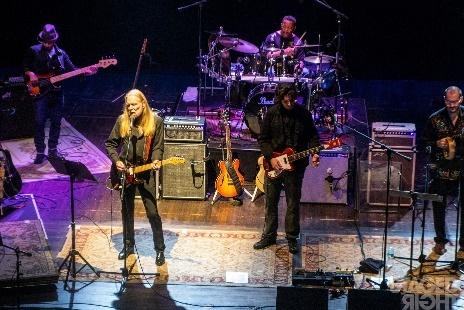

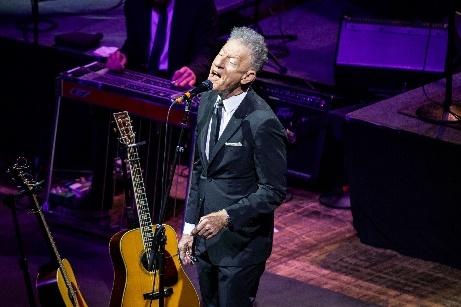
The caliber of entertainers, both on stage and on screen, who have been featured at the Florida Theatre is a lasting testament to its interior magnificence, its stage and acoustical design, its inviting and “walkable-friendly” downtown setting within eyesight of the beautiful St. Johns River Park and Friendship Fountain, and its statue amongst classic grand theatre venues all over the world.
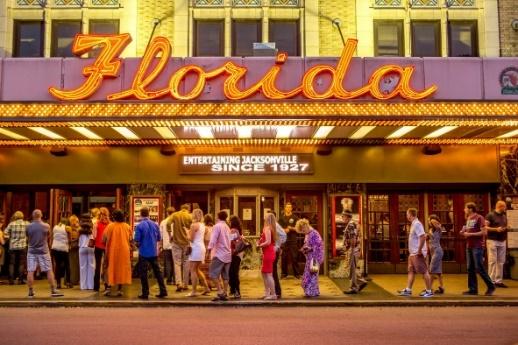

Today — with many renovations achieved and dressed to the “9’s” — the theatre’s interior opulence, technological sophistication, and magnificent historic grandeur all work to assure that the Florida Theatre continues to attract true superstars from across the country and around the world.


When it comes to attracting all those superstars—due credit must go to the theatre’s savvy management and staff, who are uniquely skilled at consistently attracting the highest level of live entertainment and film productions.
At the top of the ticket is its President, Numa Saisselin. A native New Yorker, a lover of music and drama, an arts management background, and previously a seasoned theatre head at the Count Basie Theatre in Red Bank, NJ, Numa joined the Florida Theatre as President in 2012.
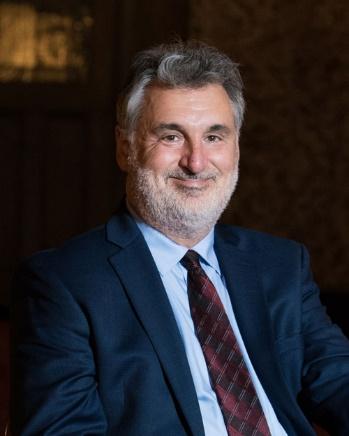
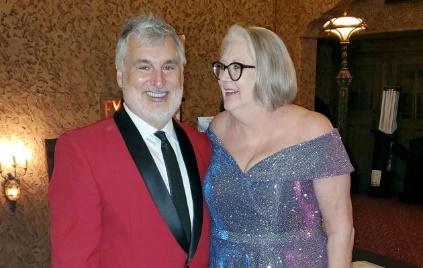
He and his wife, Laurie (plus their two dogs), found an ideal home and lifestyle in Jacksonville’s picturesque, charming, and neighbor-friendly Avondale community. Complete with nearby parks, restaurants, coffee shops, art galleries, and specialty boutiques, their Avondale homesite is also in close proximity to the Florida Theatre, allowing Numa to attend to long days and evenings managing the theatre’s operation and its extensive itinerary of performances, plus taking a leading role in Jacksonville’s downtown promotional initiatives.
Upon joining the Florida Theatre, Numa — who loves being in the center of the action and working together as a team — eagerly adopted his new leadership role and embraced the opportunity to work with his diverse theatre staff. “This is a team sport,” Numa often says. “Every night, there are stars on stage providing great entertainment. But backstage, it’s a team sport. Ours is a dedicated group of 30 people. Everyone has their own job to do, and everyone contributes to their job with the same goal and spirit,” he added.
As for being able to book the very best in live performers, Numa gives much praise to his Programming department and its Vice President of Programming, Kevin Stone. “Kevin is a real pro who leads a very sharp four-person team,” said Numa. “Kevin and his group research artists, stay on top of their stats, read all the trade journals, and look for those performers who would be an ideal fit for the Florida Theatre and our Jacksonville market.”
Along with Programming, there’s the whole technical side of putting on a live performance or theatre presentation with flawless precision. And that’s the job of the theatre’s Technical Director, Saul Lucio. Sound, lighting, set design and construction, rigging, production equipment, crew management, safety measures, and all the functional demands of delivering a seamless performance fall under the responsibility of Saul. From stage prep to first rehearsals and all the way to the final curtain drop, Saul and his team make sure everything is working properly for his performers and to the pleasure of the theatre audience.
The “team behind the scenes” also includes essential departments from Patron Services to Marketing, Development, Finance, Box Office (ticket sales management) all the way to the professional ushers who may escort theatre-goers to their seats and attend to their courtesy needs. It’s a first class operation in every aspect.
Despite a 10-month shutdown during the COVID pandemic, the theatre has consistently drawn great performing artists and grown theatre attendance during Numa’s tenure. “That Covid period was a pretty scary time,” noted Numa. “But we were very lucky to survive. Fortunately, local, state, and federal governments took things very seriously and supported us with funding. The government literally helped save the entertainment industry. Our first year back was a little rocky, especially since a lot of performers were hesitant to get back on the road, and audiences were reluctant to venture out into public venues. But, of course, performers always want to perform, and people naturally want to get out and socialize. So, we soon returned to normal and, as of now, 2024 turned out to be our busiest year since 2007. We booked 209 nights last year, and this 2025 year promises to be even busier,” Numa added.
Part of Numa’s ongoing responsibility is continuing with upgrades and renovations as they demand attention. “When I came on board, it had been almost 25 years since the last renovations were completed,” he pointed out. “So, it was obvious that more work was warranted. At the time, there were some programs in place, but they needed to be expanded.”
“Basically, there have been two types of renovations on our agenda, both the visible and the invisible,” he continued. “There’s always the need to keep the theatre beautiful and comfortable. But we also need to maintain long-term infrastructure upgrades. It’s a balance of assuring that the theatre is both elegant and enduring. That means we’re always in a fundraising mode,” Numa noted.
Fundraising has always been an ongoing part of Numa’s job, and the strategy behind that responsibility is multi-pronged, including corporate partnerships, grants, various promotions, “FT” brand merchandising, and membership incentives. To keep interest levels and participation at peak awareness, the theatre offers numerous fun and (where qualified) tax-deductible ways to show support and assure the theatre’s preservation for generations to come.
Their Adopt A Seat promotion allows patrons to make specific contributions to sponsor a seat in the orchestra, loge, and balcony sections. And each adopted seat comes with a handsome brass plaque engraved with the name of the donor or chosen loved one. There’s also the theatre’s legacy Brick promotion, where a donor can purchase an official commemorative brick with their name or that of a loved one permanently etched into the brick to be installed in the theatre’s Sidewalk of Fame. Similarly, there’s the option to purchase “replica bricks,” which allow supporters to actually take home a souvenir piece of the historic Florida Theatre as a special memento.
And, ultimately, you have the crème de la crème seven-tiered Remedy Lounge VIP membership program ranging from Cameo Role level all the way up to Director’s Circle. The stylish and elegant lounge is a 3,000 square-foot, member-exclusive space celebrating the nearly 100-year legacy of the Florida Theatre and offers those members a luxurious VIP experience unavailable at any other entertainment venue.

Each of these promotional programs fits with Numa’s overall strategy to encourage the community to play an intimate role and become a living part of the theatre and its legacy. At the forefront of this outreach strategy is maintaining a high profile within Jacksonville’s culture and business environment. “We’re very people-to-people oriented and try to stay involved with our community on all levels including being a good corporate citizen. We give away theatre tickets, attend each other’s special events, network with our community and business leaders, and work to maintain a high awareness of the theatre,” Numa emphasized.
As an active member of the JAX Chamber of Commerce, Numa is also the immediate Past Chair and strong participant with Jacksonville’s Downtown Vision, Inc. — a non-profit organization supported primarily by the town’s downtown property owners. That organization plays a key role in promoting Jacksonville’s Business Improvement District (BID) and, thus, provides an important vehicle for keeping the Florida Theatre front and center in the community’s awareness.
“Shortly after I came on board, we hosted our first gala dinner and, soon after, began our current corporate partnership program,” Numa recounted. This is an important part of Numa’s overall funding strategy. While 85 percent of revenues come from regular box office business (ticket sales), 15 percent comes from sponsor fundraising. So, offering a rich and varied programming schedule not only helps assure strong audience attendance it also further inspires those essential corporate partners to be ongoing supporters of the theatre. One of the theatre’s recent corporate partners is a long-established, highly rated, and premium-grade teak furnishings manufacturer called Westminster Teak.
With corporate offices in the U.S. and their own modern-day and eco-friendly manufacturing operation in Indonesia, Westminster Teak designs and manufactures an extensive line of teak furnishings for outdoor, patio, garden, poolside, oceanside, indoor, boating, and corporate office use.
Featured in multiple home and outdoor furnishings, interior design, and trade magazines, they have been Quality Rated “Best Overall” by the Wall Street Journal and regularly receive five-star ratings on Trustpilot for exceptional product quality, design, and customer service. Their easy-to-navigate online sales platform (www.westminsterteak.com) compliments their direct sales team, making customer shopping, ordering, and receiving their furnishings a smooth and reliable experience.
As Numa recalls, Westminster Teak’s President, Jim TenBroeck, initiated the company’s corporate partnership with the Florida Theatre. “It was really a very organic process for us,” Numa noted. “Jim and Shirley Tenbroeck have been coming to shows here for several years. Although we’d met in passing, we didn’t know each other that well. But, a few years ago, they made a personal membership contribution and continued to renew it a couple more times. Then last summer, the TenBroecks called us and said they wanted to introduce themselves, to tell us about their business and make a significant contribution to the theater over the next five years.”
“That was a very nice surprise,’ Numa continued. “So, we met for lunch, and they told us more about Westminster Teak, about how much they liked the Florida Theatre and what we offer, how they felt their clientele was very much aligned with the theatre’s clientele, how our mutual interests were a good match, and how all that fit within Westminster Teak’s company profile and growth strategy to help take the company to the next level.


on stage with Florida Theatre President Numa Saisselin*

From TenBroeck's perspective, the connection between the Florida Theatre and Westminster Teak was natural and offered many mutual benefit opportunities. “After more than a decade of attending shows at the Florida Theatre, my wife, Shirley, and I have developed an emotional connection to this remarkable venue. With fond memories of growing up near Jacksonville during the '60s and '70s, we quickly realized our desire to help preserve its rich history. “One afternoon, we had the unique opportunity to attend a youth show at the theatre, and upon witnessing the excitement of Jacksonville's young people in this historic place, the event truly captured our hearts,” Jim TenBroeck recalled.
Elaborating on his view of the strong link between the two enterprises, TenBroeck added, “Once inside the Florida Theatre, one gets a feeling of traditional ambiance. Strolling through the foyer and down an aisle, you walk in the footsteps of history. Similarly, Westminster Teak furniture embellishes tradition and history that is reflected in craftsmanship that has been passed down through generations. This union between the Florida Theatre and Westminster Teak seems natural and destined, as both reflect a timeless dedication to preserving tradition and history. We are excited about the future together and eager to play a small role in the ongoing journey and endeavors of the Florida Theatre for many years to come.”
From day one, Numa Saisselin hit the ground running, running a complex and historically renowned grand theatre, that is. “My average day is basically running a business that combines budgeting, finance, politics, sales, a creative team, and managing growth,” Numa offers. “And, even on a good day, managing a 100-year-old building and all that goes on inside of that building is not an easy task. But in the end, there’s a very special event, a show. Jacksonville gets a great show… And I am part of a team that helps provide that special event for our community. That is very gratifying.”
“The aesthetic benefits of being able to attend a great show in a grand theatre, to enjoy a wonderful three-hour getaway — a vacation of pure entertainment — is not only good for the psychology, it makes life better for everyone. It’s also great for our local and state economies by bringing people into downtown events. And that averages a $15 Million economic impact on Jacksonville, including household incomes, area restaurants, local commerce, and services, plus contributing to Florida sales taxes.” For Numa, the bottom line is, “To be able to preserve this historic theatre and bring great entertainment to our community is its own reward. And I love having a job that makes a real difference for our community and for our theatre”.
FOOTNOTE: There is, if you will, a sublime synchronicity at play that a successful former New Jersey theater manager would find himself as President of a living landmark theatre in Jacksonville, Florida, a town with a regal history of being the summer headquarters for many turn-of-the-century New Jersey movie industry icons.
So, aside for its historical significance, why invest millions to preserve a nearly 100-year-old theatre when it’s so easy to stream almost any form of entertainment on almost any electronic device from home or virtually anywhere? Because LIVE in-person and in-theatre is, and has always been, “magic”! There’s nothing quite like being there, in a magical place like the Florida Theatre, where everything is bigger than life, enveloped and surrounded by all the dazzling sites and reverberating sounds of the performance from start to finish. And for those in the audience… You have your own special seat to enjoy the show.

Literally any performance witnessed from such a privileged and luxurious setting as that of the Florida Theatre becomes a truly magical experience. And, from the moment the lights go down, and those plush 30-feet high by 44 feet wide, brick red with gold trim velour curtains rise up from that magnificent stage, the audience is given an intimate invitation to become a part of all that’s about to unfold before them. That's when the magic begins!

Since it first opened nearly a century ago, it has been valued as a major landmark of the city’s arts and entertainment scene. Standing as one of the few remaining examples of America’s grand movie palaces of bygone years, the Florida Theatre offers not only a time-travel glimpse into the opulent architectural designs of the past but continues to serve as a stunning and vibrant venue for contemporary performances and events. Its rich and illustrious history, architectural grandeur, and ongoing significance make it a beloved institution for both Jacksonville locals and visitors alike.

A permanent fixture in Jacksonville’s cultural and architectural landscape—and always reflecting the rich heritage of its hometown—the historic Florida Theatre stands as a living monument to the lavish and stately era of grand old theaters and theatrical productions of Americana. A marvel of its time and for all times. So, come take your seat. Because… It’s always Show Time!

*Photos courtesy of the Florida Theatre archives.


