

How Hotels Choose Outdoor Furniture: A Guide for Design-Conscious Homeowners
When a hotel designs its outdoor space, it’s not making isolated decisions or thinking short term. It’s projecting how that space will perform every day of the year, under constant use, continuous exposure to the elements, and high guest expectations.
When a hotel designs its outdoor space, it’s not making isolated decisions or thinking short term. It’s projecting how that space will perform every day of the year, under constant use, continuous exposure to the elements, and high guest expectations.
And while the context may differ, that way of thinking offers a clear benchmark for any homeowner looking to create an outdoor space that truly lasts.
In this guide, we explore what’s behind those decisions: the materials, the design principles, and the investment mindset that defines the hospitality sector, and how to translate that standard into a residential setting.
Real hospitality partners share their own experience in Why Industry Experts Choose Westminster Teak Furniture for Their Own Outdoor Spaces.
Why Hotel Outdoor Furniture Has to Last (And Yours Should Too)
In a hospitality setting, outdoor furniture is not an accessory; it’s a core part of the experience.
Terraces, pool areas, open-air dining spaces, and lounges are in constant use. Unlike residential environments, where use is occasional, hotel furniture is exposed every day, for hours at a time, and often year-round.
Then there’s the environment itself. Direct sun, humidity, rain, coastal salt air, or chlorine exposure in poolside settings, all of these accelerate the wear of any material not designed to withstand them.
That’s why hotels don’t choose based on initial price. They think in terms of cost per use.
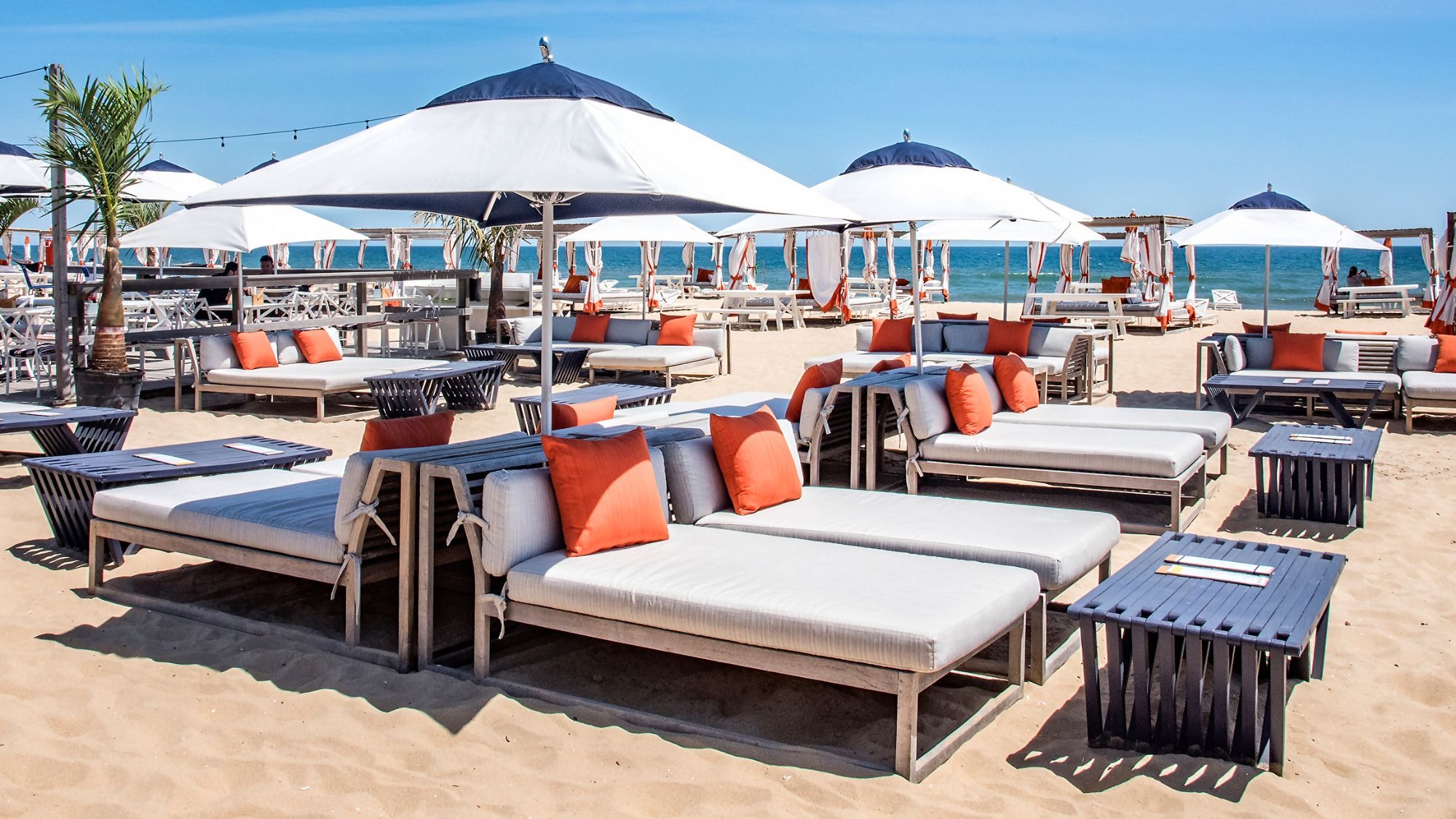
A piece that needs to be replaced within a few years is never truly economical, no matter how attractive the upfront cost may seem. By contrast, furniture that maintains its structure and appearance over decades becomes a far more efficient long-term investment.
That same logic applies directly to residential spaces. Because even if usage is lower, the environmental conditions are the same, and wear is inevitable.
The Materials Hotels Trust
When you look at the materials used in high-end hotel outdoor spaces, a clear pattern emerges: there’s very little variation.
This isn’t about trends or lack of creativity, it’s about proven performance.
Teak, in particular, has become the standard in luxury hospitality. Its high density, natural oil content, and structural stability allow it to withstand demanding environments with relatively low maintenance.
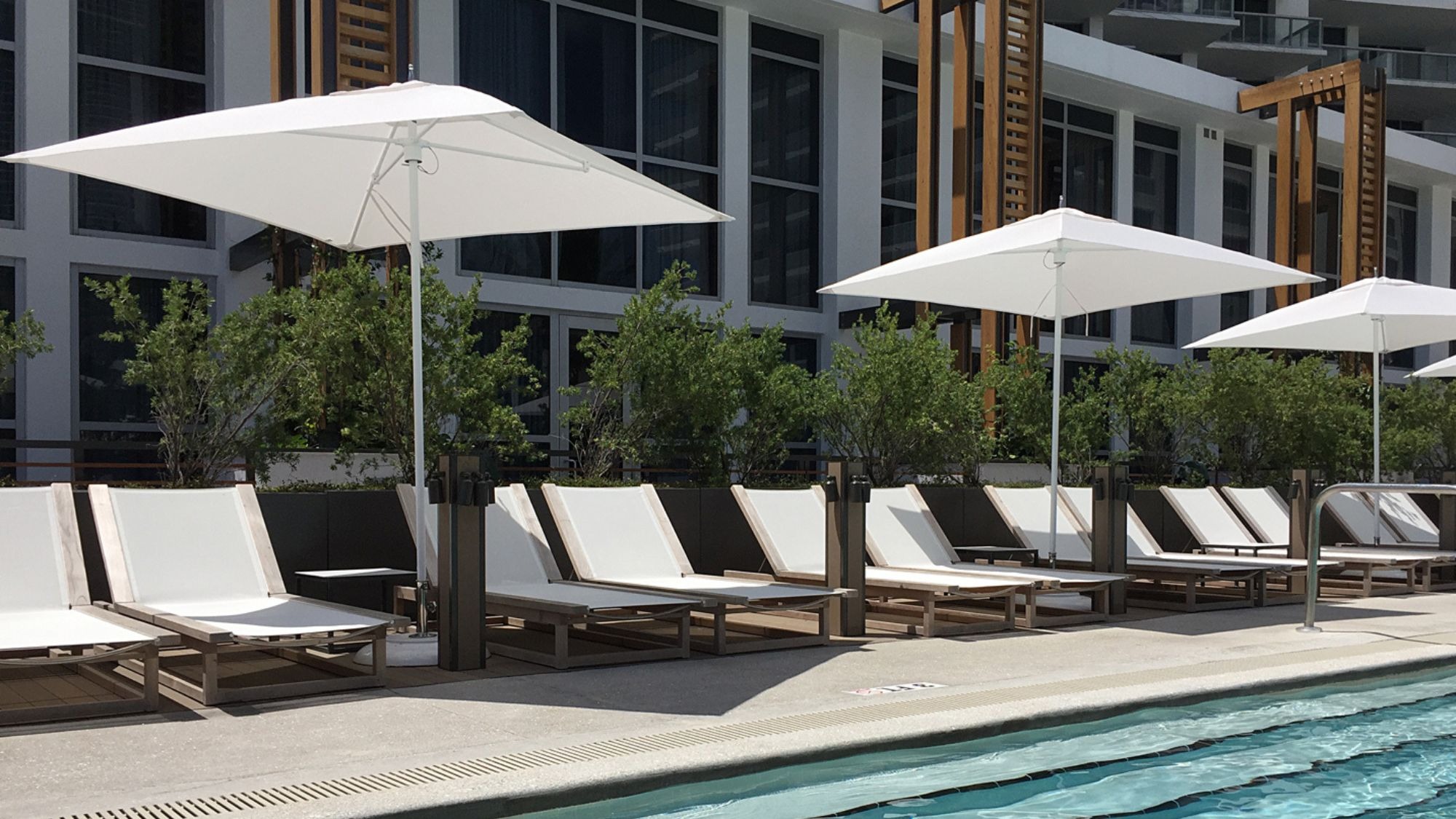
Unlike other woods, it doesn’t rely on constant treatments to remain stable. And unlike many industrial materials, it ages without losing integrity.
Another critical component is hardware. In coastal or poolside environments, the use of 316L stainless steel is not optional, it’s a requirement. Its resistance to corrosion from salt and chlorine makes it one of the few materials that performs reliably over time.
For the full explanation, read Why We Use 316L Stainless Steel Hardware.
It’s equally telling to look at what hotels don’t use in their highest-end outdoor spaces. Materials like aluminum or certain synthetic resins may work from a purely functional standpoint, but they are rarely chosen when the goal is to create a long-lasting, high-end experience.
Because ultimately, it’s not just about resistance, it’s about how materials age and how they are perceived over time.
Design Principles Hotels Apply to Outdoor Spaces
Beyond materials, there is a consistent design logic behind hospitality outdoor spaces.
One of the most important principles is continuity between indoors and outdoors. Outdoor areas are not treated as separate zones, but as extensions of the interior. Materials, proportions, and color palettes are designed to work together, creating a seamless transition.
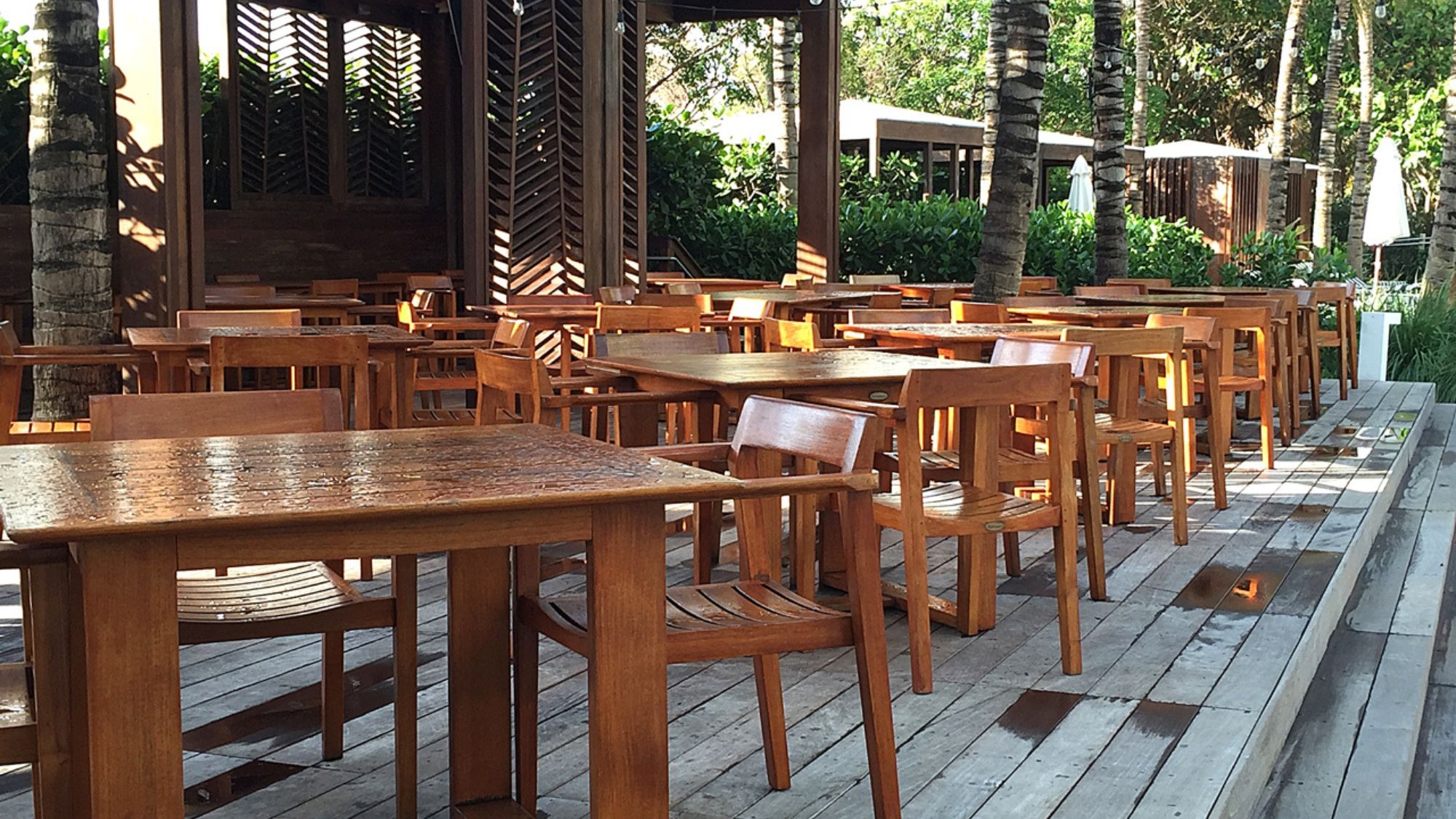
Scale is another critical factor. Hotels select pieces with enough presence to define the space. Furniture that is too small gets lost; oversized pieces can overwhelm. Achieving the right balance is part of the design process, not a secondary consideration.
Flexibility also plays a key role. Spaces must adapt to different uses, from intimate settings to larger gatherings. As a result, furniture is selected and designed with reconfiguration in mind, without compromising visual coherence.
These principles are not exclusive to large-scale hospitality projects. They can be applied to any outdoor space, regardless of size, including your own home.
Westminster Teak in Hospitality Projects
Behind many outdoor spaces in hotels, resorts, and high-end developments are decisions driven by very specific standards.
Westminster Teak has worked in this segment for years through its Contract & Hospitality division, developing furniture that meets both technical and aesthetic demands.
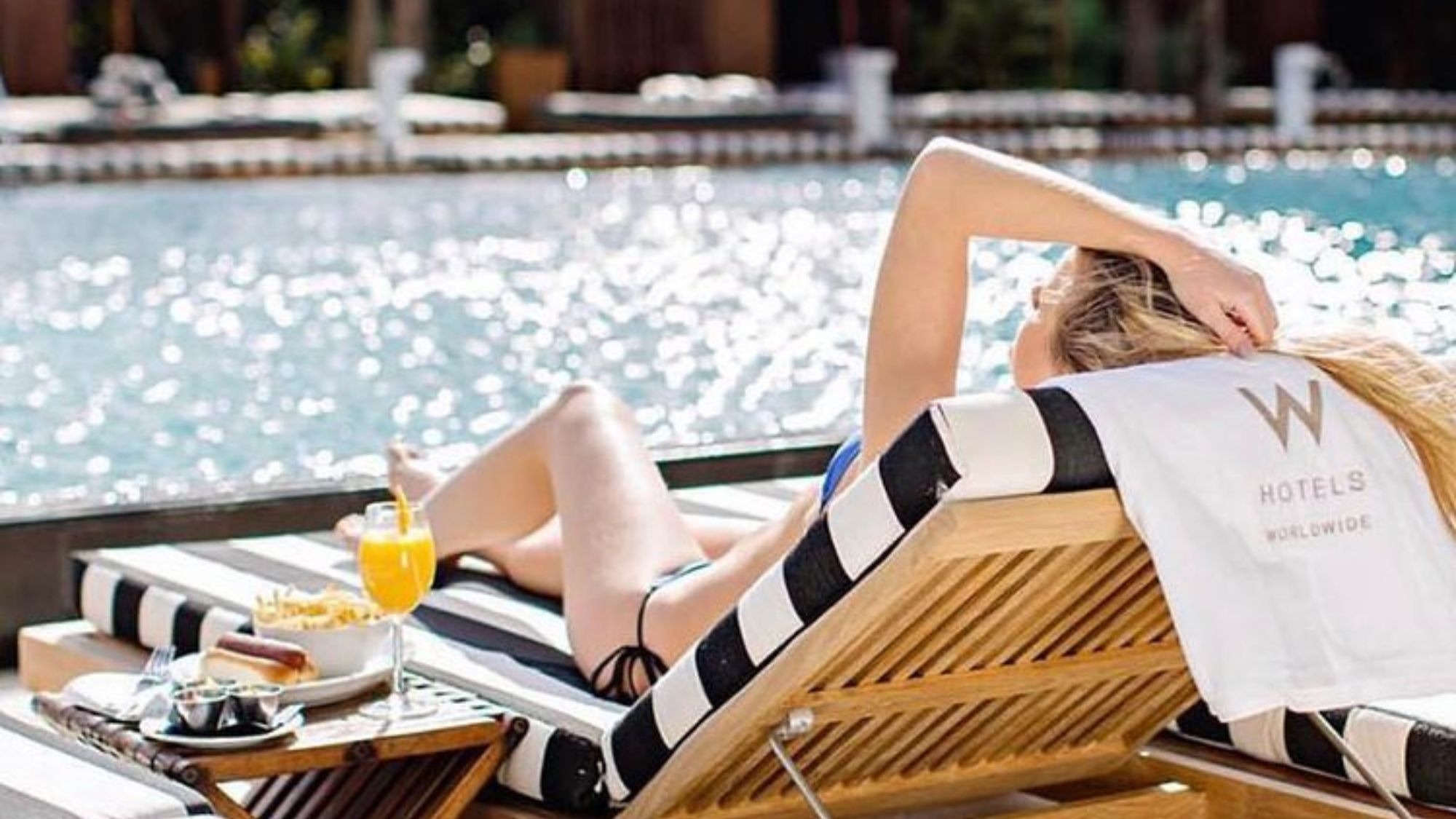
This involves carefully selected materials, such as high-quality heartwood teak and corrosion-resistant hardware, as well as manufacturing processes designed to ensure stability and durability under real-world conditions. But it also reflects a broader understanding: furniture is not an isolated object, it’s part of an experience.
That same approach carries over into residential collections. Because regardless of project scale, the standards for quality remain the same. For a closer look at what separates contract-grade furniture from residential pieces, read Outdoor Furniture for Hospitality Spaces: What Makes It Different.
Choosing outdoor furniture is not just an aesthetic decision. It’s a way of defining how a space will perform over time. And when you look at how the hospitality industry approaches it, a sector where mistakes are both costly and highly visible, you find a clear reference point.
Materials that endure. Designs that hold their presence. Decisions made with the long term in mind.
Understanding that logic changes the way you choose, and ultimately, the way an outdoor space is built and experienced.
Learn more about our Contract & Hospitality program.
Explore more about desiging spaces in our blog post: Coastal Outdoor Living: How to Design an Exterior Space That Truly Lasts
Related Posts


%20copia2%20copia.jpg.jpeg)
Stay in Touch
Oops! Something went wrong while submitting the form


