

Indoor Teak Furniture: What to Consider Before Bringing It Inside
How does indoor teak furniture perform compared to outdoor pieces and other hardwoods? A complete guide to finish, care, and choosing teak indoor furniture for your home.
For a long time, teak has been associated almost exclusively with outdoor spaces. Its strength, durability, and ability to withstand demanding conditions positioned it as a highly technical material, one designed for patios, gardens, and exposed environments.
But that association overlooks something important. Teak is not just a wood that performs outdoors. It is a material with aesthetic and structural qualities that, indoors, reveal themselves in a completely different way. That is not a new discovery. Teak's place indoors runs back to Mid-Century Modern design, and it never really left, it simply waited for the right moment to be told again.
With the expansion of its indoor line, Westminster Teak opens that conversation: what happens when a material designed to last decades outdoors is brought into a space where the environment is fully controlled. This guide covers what to expect from indoor teak furniture, how it compares to other woods, how it earned its place in interiors long before this expansion, and how to choose pieces that perform as well as they look.
Can Teak Furniture Be Used Indoors?
The short answer is yes. But what matters most is not simply that it can, it's how it behaves.
Indoors, teak indoor furniture is no longer exposed to the conditions that define its performance outside: UV radiation, constant humidity, and temperature fluctuations. That shift changes how the material evolves over time.

Maintenance is significantly reduced. The wood no longer needs protection from the elements, and its structure remains stable without ongoing intervention.
The finish also changes. At Westminster Teak, all indoor teak wood furniture is hand-finished with water-based, non-VOC (volatile organic compound) lacquer. This type of finish is not intended to artificially seal the wood, but to work with its natural behavior, enhancing its texture and depth.
Over time, the wood may reveal small variations: fine hairline splits, visible knots, joint lines. These are not flaws, but natural characteristics of a heartwood that keeps evolving without compromising its integrity.
If you want to learn how to take care of outdoor teak furniture, click here.
How Does Indoor Teak Furniture Compare to Other Woods?
Walnut and oak are the woods most commonly associated with interior furniture in North America, and for good reason: both offer rich grain and proven durability indoors. Teak brings a different set of advantages to that comparison.
Teak's natural oil content, the same property that makes it exceptional outdoors, also gives teak indoor furniture superior resistance to moisture, warping, and insect damage compared to oak or walnut. In a kitchen, a dining room, or any space with humidity swings, that density and oil content translate into a piece that holds its joinery and finish with less intervention over time.
In terms of look, teak's tone sits between the two: warmer and more golden than the cooler, straight grain of oak, with a smoother, more uniform grain than walnut's darker, more dramatic figuring. Because Westminster Teak uses only heartwood for its furniture indoor teak pieces, the grain stays straight and even, without the knots or color inconsistency found in lower grades of other hardwoods.
The tradeoff is availability of form. Walnut and oak dominate certain categories, such as desks, bed frames, and case goods, where teak has historically had a smaller presence. That is precisely why Westminster Teak's indoor line focuses where teak's advantages matter most: dining, seating, and modular pieces built to be lived with daily.
How Does Teak Behave Indoors vs. Outdoors?
The main difference lies not in the structure, but in exposure.
Outdoors, teak is in constant interaction with the environment. Sunlight gradually breaks down surface pigments, moisture accelerates certain processes, and oxygen triggers oxidation. This is what leads to the well-known silver-gray patina.
Indoors, that process is largely absent.
Without direct exposure to UV rays or rain, teak wood indoor furniture retains its warm tone for much longer. The silver patina does not develop, unless the furniture is placed in areas with intense, prolonged direct sunlight, and the wood maintains its original appearance without intervention.
This also changes the role of maintenance. While outdoor teak may require protectors to manage its aesthetic evolution, indoors, oils and treatments become largely optional. The wood does not need protection to perform, only, if desired, care to preserve a specific look. For a step-by-step look at how to clean teak indoor furniture, and when oil actually makes sense, see our indoor care guide.
What Should You Look for When Choosing Indoor Teak Furniture?
Even though the environment changes, quality standards should not.
The use of heartwood remains essential. It is the densest, most stable part of the tree, the one that ensures long-term performance and structural reliability.
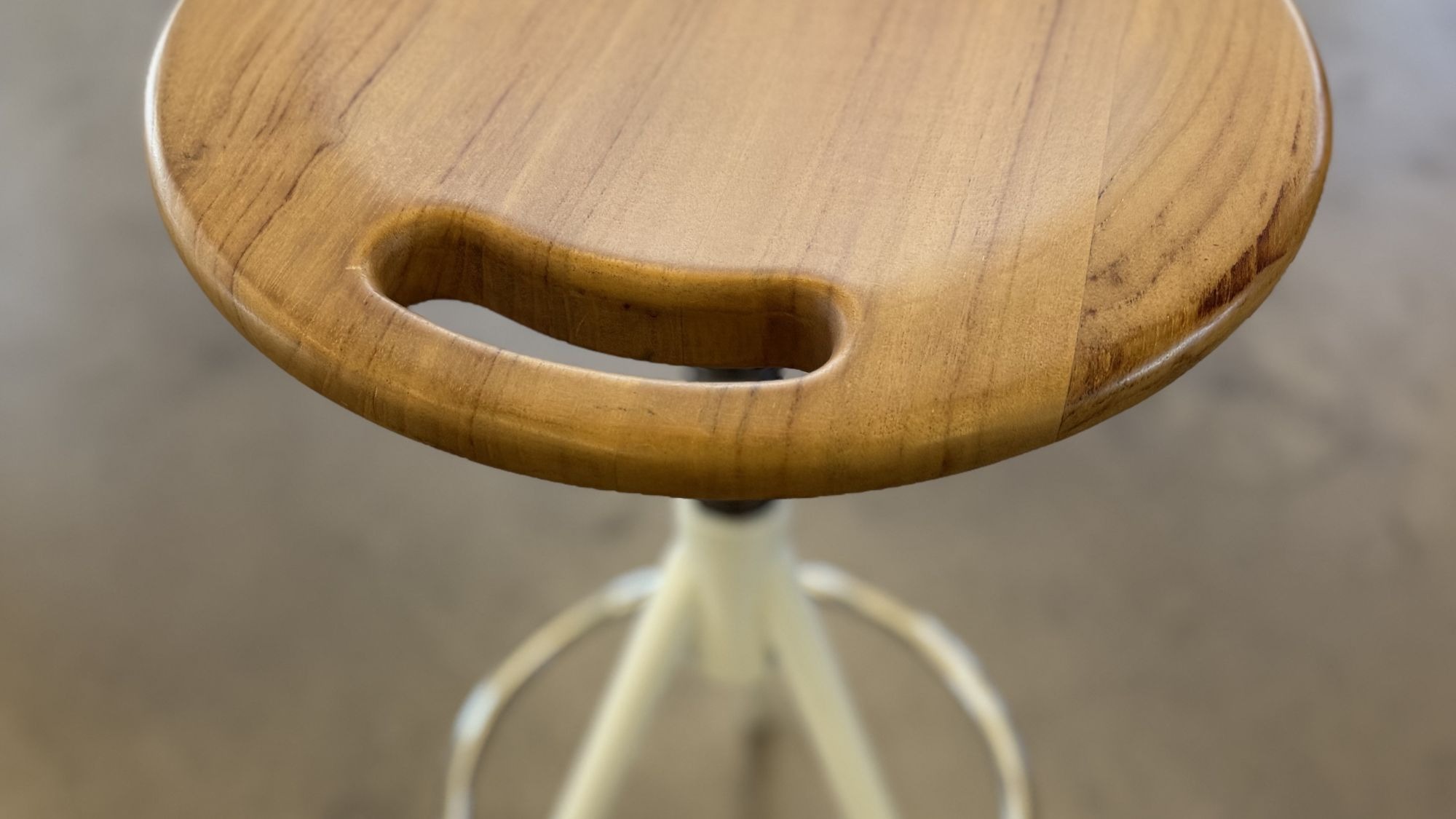
Kiln-drying is equally important. It reduces the internal moisture of the wood before fabrication, minimizing the risk of movement or deformation over time.
Joinery also becomes more critical in indoor settings, where details are more visible and exposed.
And there is one additional factor: the finish. Outdoors, performance comes first. Indoors, the finish defines the visual and tactile experience of the piece. It is what translates raw material into presence.
How Do You Integrate Teak Into Interior Design?
Beyond performance, teak brings something unique to interior spaces: warmth.
In environments dominated by cooler materials, such as marble, metal, or concrete, teak introduces balance. Not as a forced contrast, but as a layer that softens and humanizes the space.
Its versatility also plays a key role. Teak furniture indoor works as well in minimalist, contemporary interiors, where clean lines and controlled volumes define the aesthetic, as it does in more organic or culturally expressive spaces.
This is not new territory for teak. Long before it became synonymous with outdoor living, teak already had a place indoors. Its warmth, natural grain, and structural strength made it a defining material of Mid-Century Modern design in the 1950s and 60s, particularly within Danish and Scandinavian furniture making, valued for the same qualities that matter in a home today. Westminster Teak's indoor line does not bring outdoor furniture inside. It picks up that history and carries it forward, translating the same appreciation for grain, proportion, and craftsmanship into the interiors people live in now.
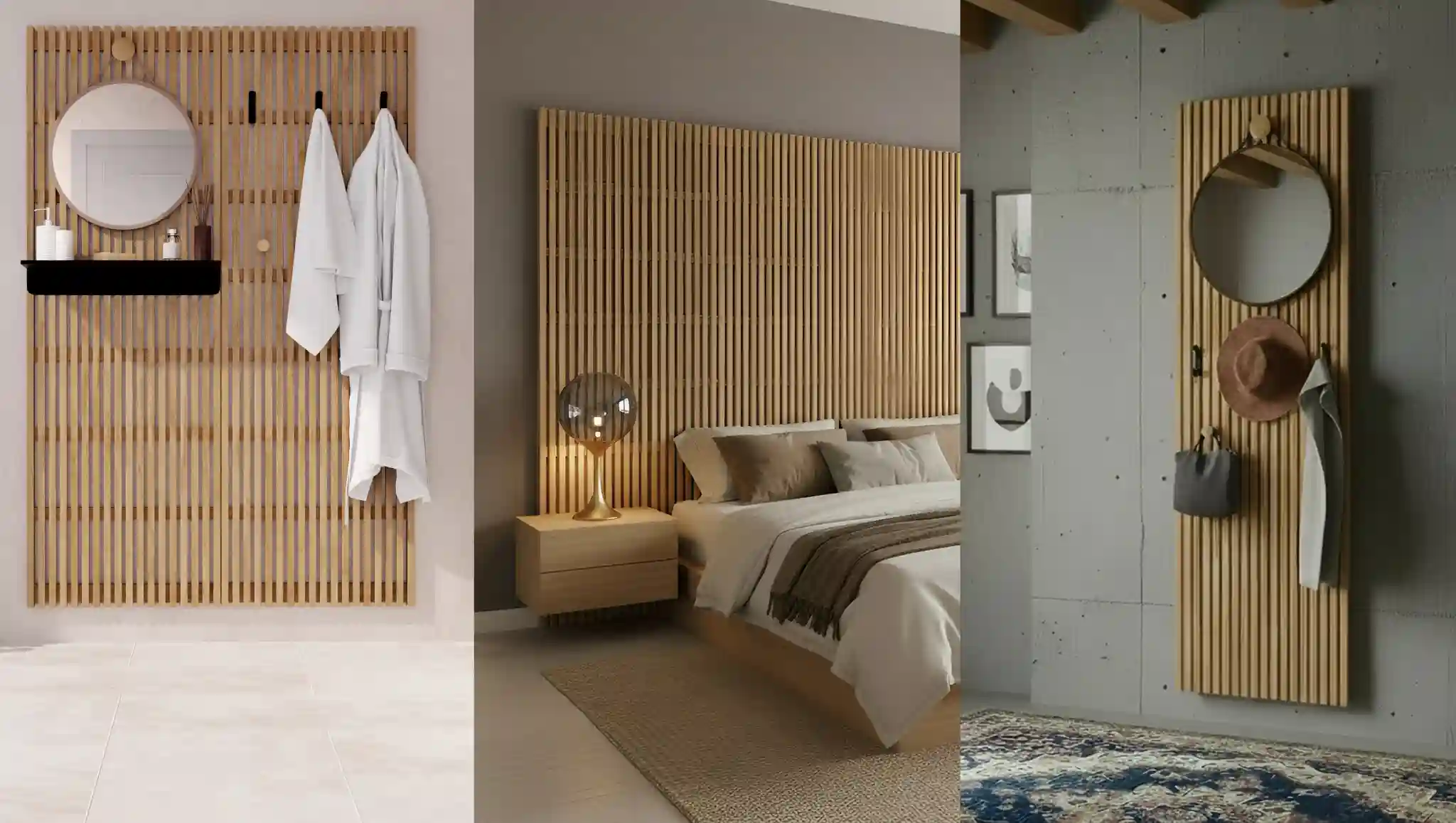
That continuity shows up in how the pieces are actually placed. The Dahlia table anchors a dining nook. A Horizon bench, more commonly seen outdoors, holds its own in an entryway, often the first piece a guest sees when walking in. And the Reed wall system reads less like furniture and more like architecture when it is used to bring texture to a bathroom or bedroom wall. None of these are outdoor pieces repurposed for indoor use. They are examples of how naturally teak moves between the two.
The Dahlia line takes that continuity further. Inspired by the Peranakan heritage of Singapore, it reinterprets traditional elements through a contemporary lens, achieving a balance between memory, form, and function. Read the full story behind the Dahlia collection.
How Does Indoor Teak Furniture Work for Trade and Hospitality Projects?
The same qualities that make teak work in a living room or entryway apply at a larger scale. Designers working on residential interiors, hospitality properties, restaurants, spas, and clubhouses turn to the same collections for the same reason: a material that reads as warm and considered in a private home holds up just as well in a space meant for many people to pass through.
For trade and commercial projects, indoor teak furniture carries the same standard of heartwood, joinery, and finish as any Westminster Teak piece, with the flexibility to sit alongside a wide range of materials and design languages, from a boutique hotel lobby to a wellness spa to a clubhouse amenity space. Learn more about the Westminster Teak Trade Program or explore our Hospitality & Contract division.
What Are Westminster Teak's Indoor Teak Furniture Collections?
Westminster Teak’s indoor line brings together different interpretations of the material, each with its own design language, and its own answer to why teak works indoors.
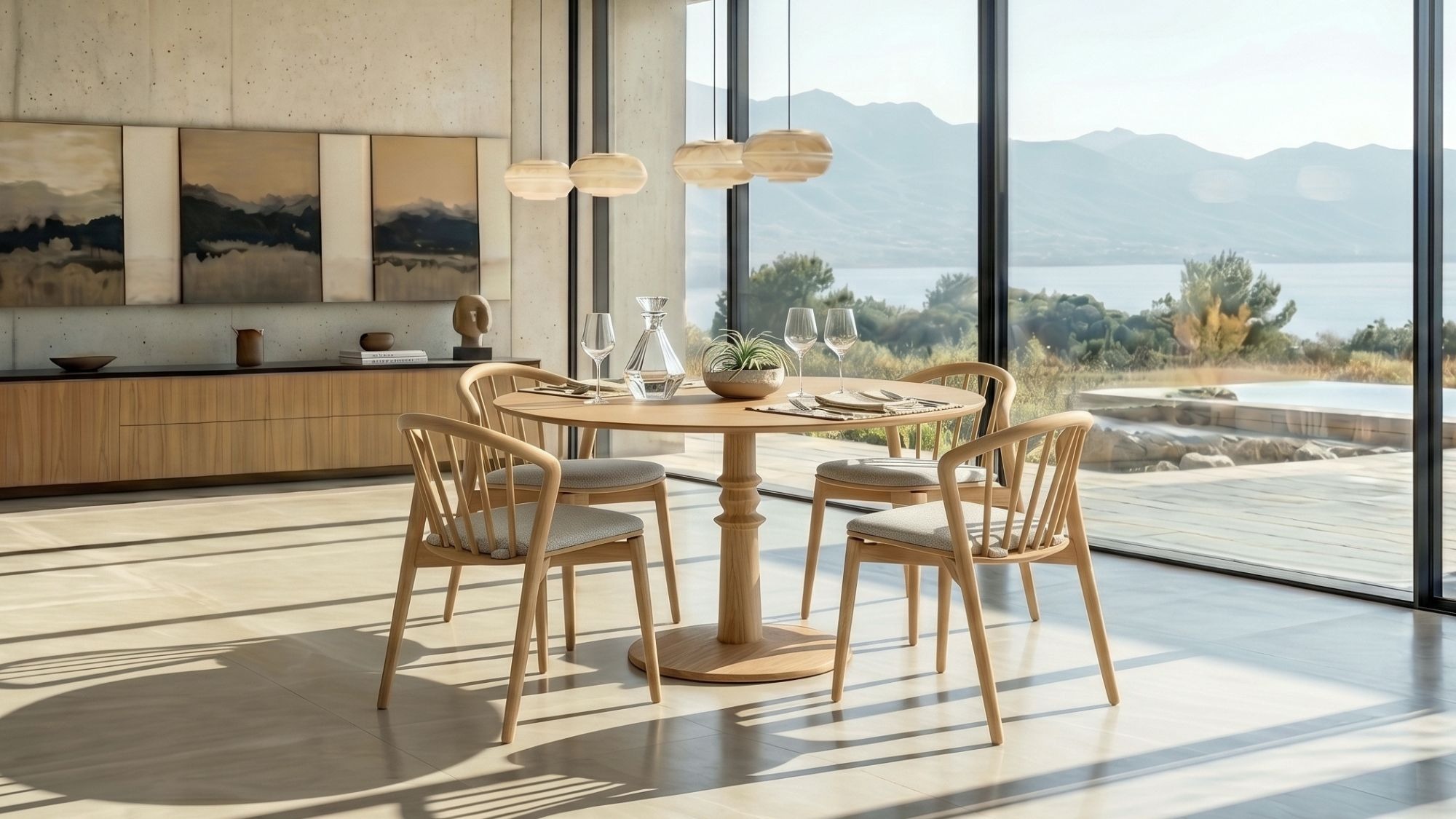
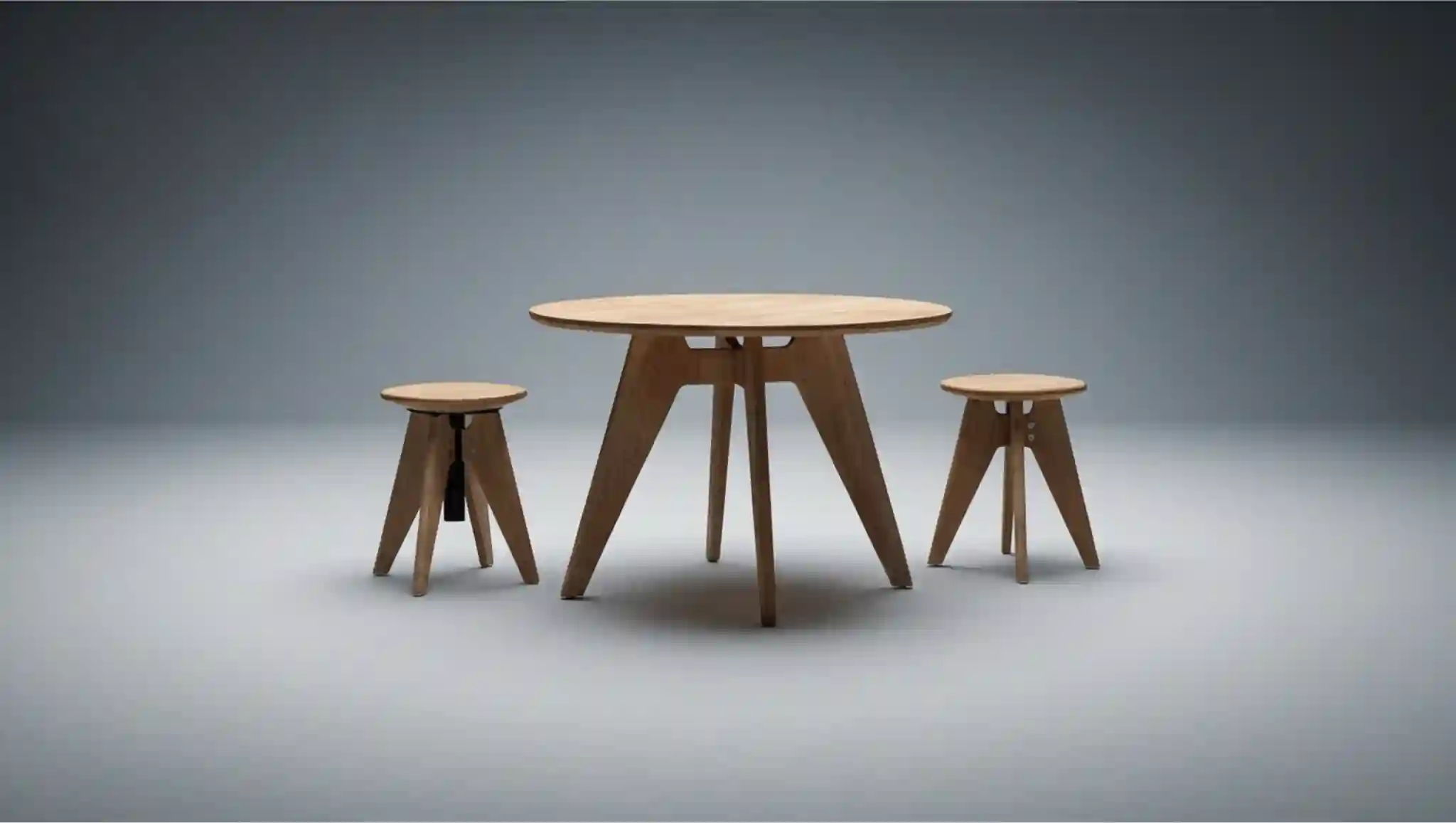
Dahlia is rooted in cultural inspiration, translated into contemporary forms where memory and function coexist in balance. The collection includes a round pedestal dining table and a Windsor-inspired side chair, both finished to bring out the warmth of the grain in dining and gathering spaces where the wood is seen and touched daily.
For guidance on sizing, clearance, and pairing chairs, see our guide to indoor teak dining room furniture.
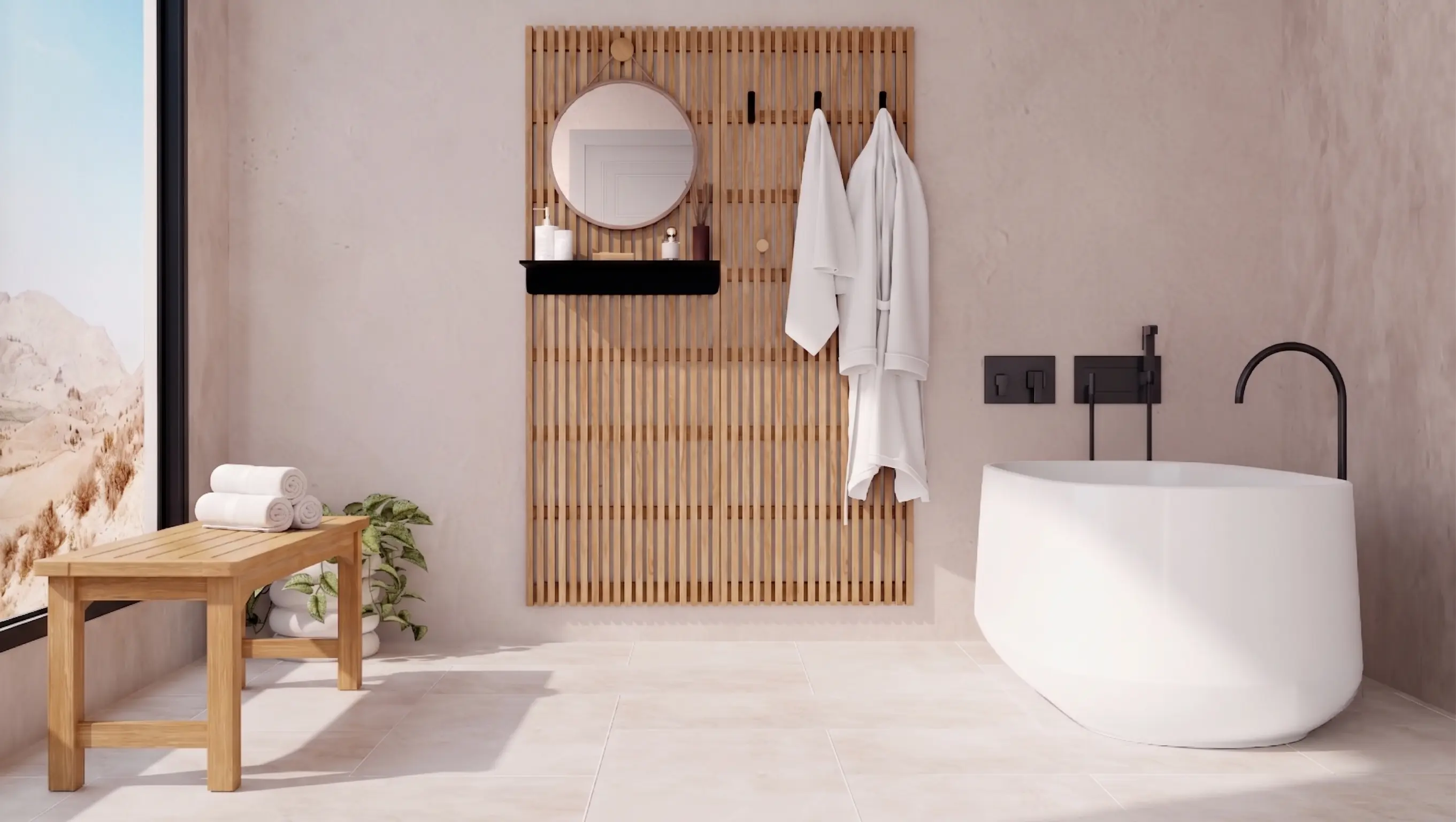
Reed brings teak wall panels into interior architecture, with a modular system built for teak paneling for walls rather than a permanent installation. The same heartwood standard as the rest of the collection applies here, giving architects and designers a way to bring the texture and warmth of solid teak wood wall paneling into vertical surfaces, from bathrooms to bedrooms to entryways, not just furniture.
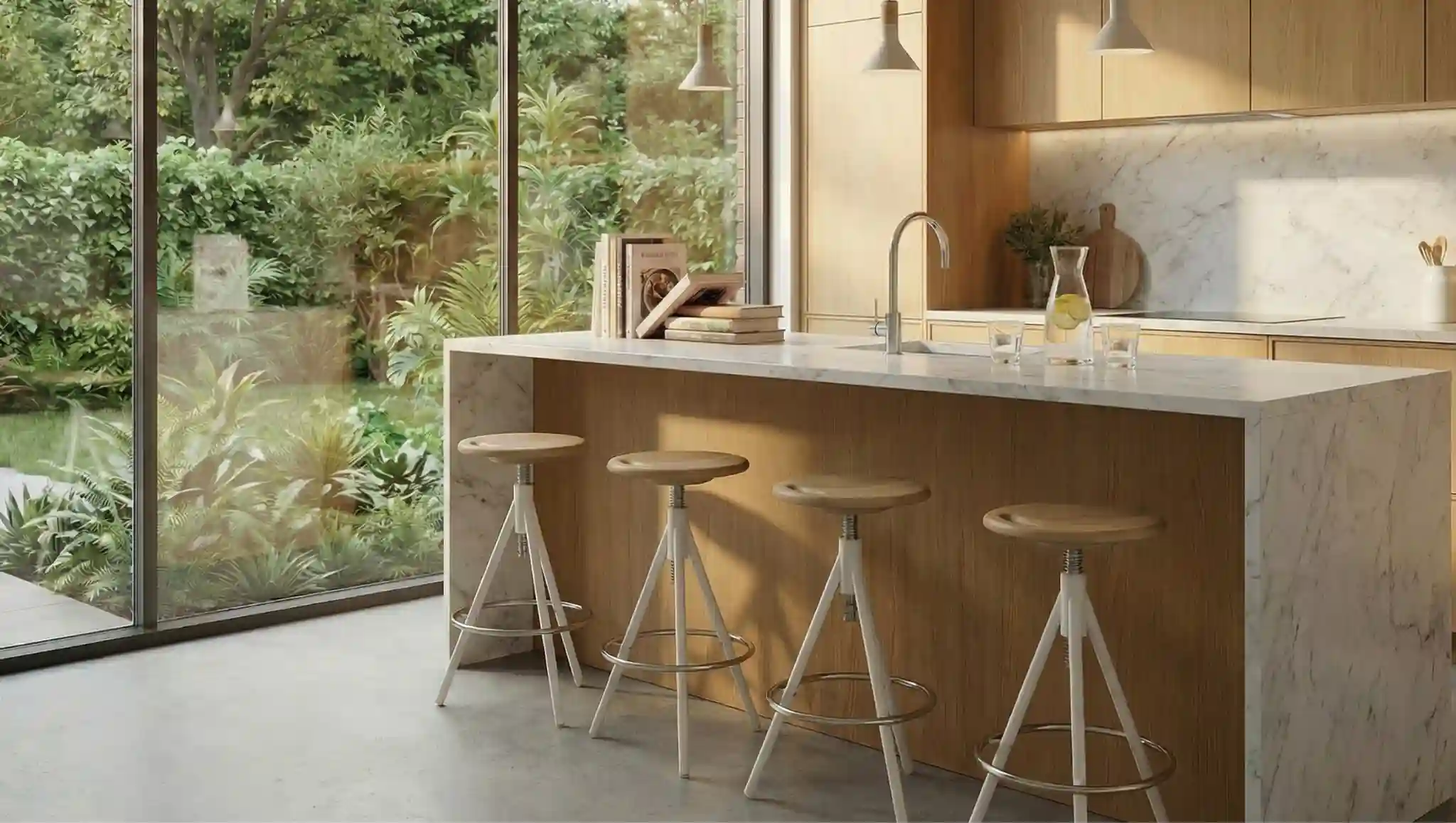
Swivy introduces greater dynamism, with more pronounced curves and a more sculptural presence, expressed in counter stools and seating designed for kitchens and bar areas where durability against daily use matters as much as design.
Nexus focuses on the relationship between elements, combining structure and design in pieces that emphasize connection, well suited to living and dining spaces that call for a more geometric, Scandinavian-influenced silhouette.
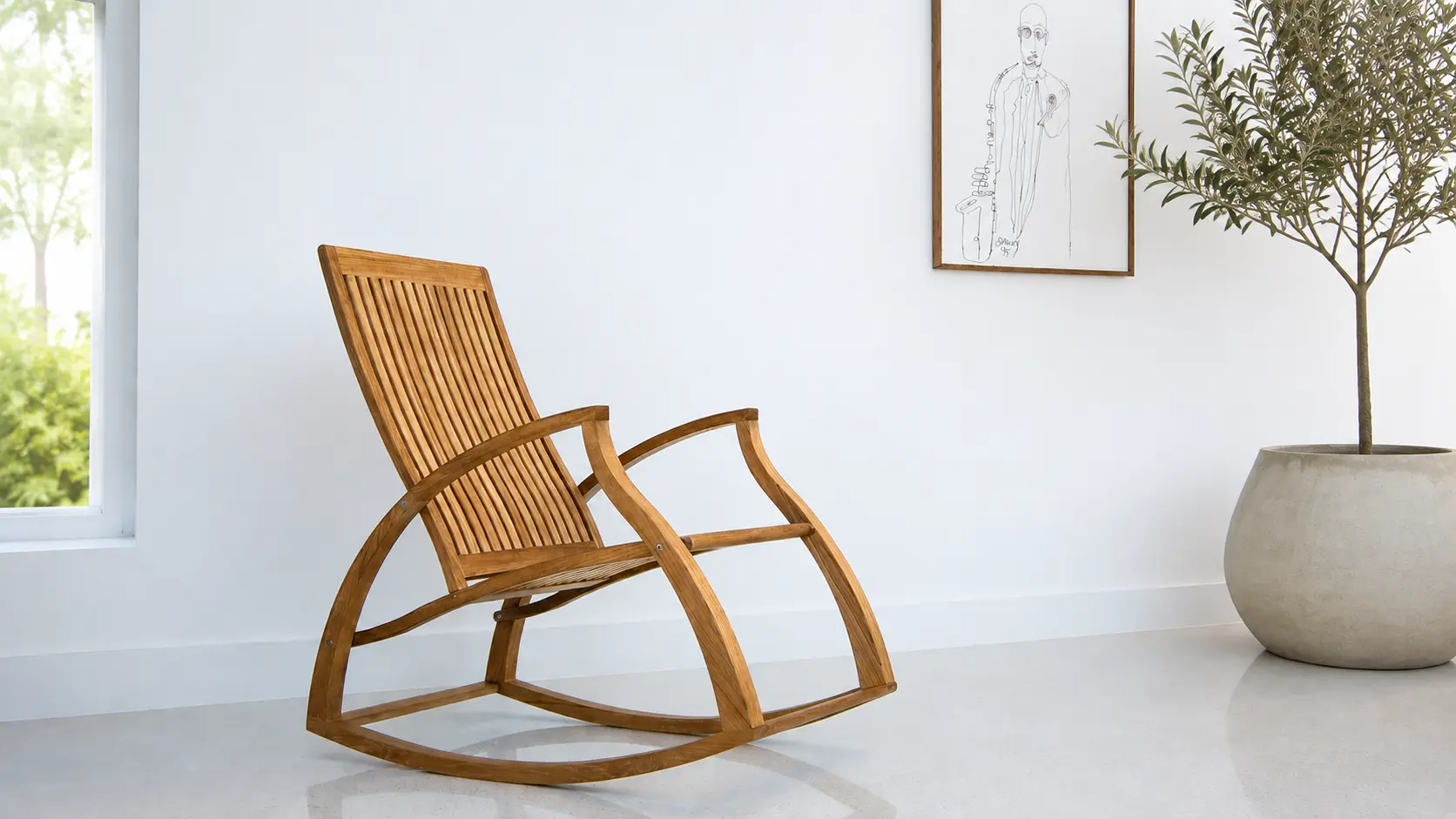
Aria carries its sculptural, contoured form indoors as a rocking chair, built for hours of comfortable seating in a reading corner or living room.
Pacifica brings a spa-inspired minimalism to indoor bath and wellness spaces, where teak's natural resistance to humidity becomes an advantage even without outdoor exposure.
Each of these collections reflects a different design language, yet all share the same standard of material and craftsmanship: heartwood, precision joinery, and a hand-finished, non-VOC lacquer built for how the piece will actually be used.
Bringing teak furniture indoors is not simply a change of context. It allows the material to express itself without the conditions that typically challenge it. In that setting, durability becomes less visible, while other qualities emerge: texture, tone, presence. And that is where the decision stops being purely functional and becomes spatial.
Teak found its place indoors long before it defined outdoor living, and it never really left. Naturally at home, indoors or out.
Explore Westminster Teak's indoor collections.
See how teak performs in a dining room in Indoor Teak Dining Room Furniture.
Frequently Asked Questions About Indoor Teak Furniture
Is indoor teak wood furniture durable?
Yes. Teak's natural oil content and tight grain make indoor teak wood furniture more resistant to moisture, insects, and daily wear than most hardwoods used indoors, without needing the protective treatments outdoor teak requires.
Does furniture indoor teak need to be oiled?
No, not to perform. Indoor teak does not need oiling to stay structurally sound. Oiling indoors is a style choice, used only to maintain the deep, honey tone of the wood rather than to protect it. Read the full care guide in Teak Oil for Indoor Furniture?
What is the difference between indoor and outdoor teak furniture?
The wood itself is the same premium teak. The difference is in the finish and hardware: indoor pieces use a hand-applied, non-VOC lacquer built for appearance rather than weather resistance, while outdoor pieces are built and finished to withstand sun, rain, and temperature swings.
Related Posts


Stay in Touch
Oops! Something went wrong while submitting the form


