

What is the Difference Between Heartwood and Sapwood in Teak Furniture?
In this blog post, we talk about the difference between heartwood and sapwood in teak furniture. Benefits, differences, and how to identify sapwood in furniture.
When evaluating the quality of teak furniture, most people focus on design, finish, or even origin. But there is a much more defining, yet less visible, factor that determines how that piece will perform over time.
It comes down to the difference between heartwood and sapwood.
At first glance, two teak furniture pieces may look identical. But what defines how they behave is not what you see on the surface; it’s the part of the tree the wood comes from.
Understanding this distinction is not a minor technical detail. It’s what separates a piece that will last for decades from one that, despite looking similar at first, is not built to withstand outdoor conditions over time.
What is Heartwood?
Heartwood is the inner core of the tree, formed over decades of growth. In the case of high-quality teak, this process can take 35 years or more.
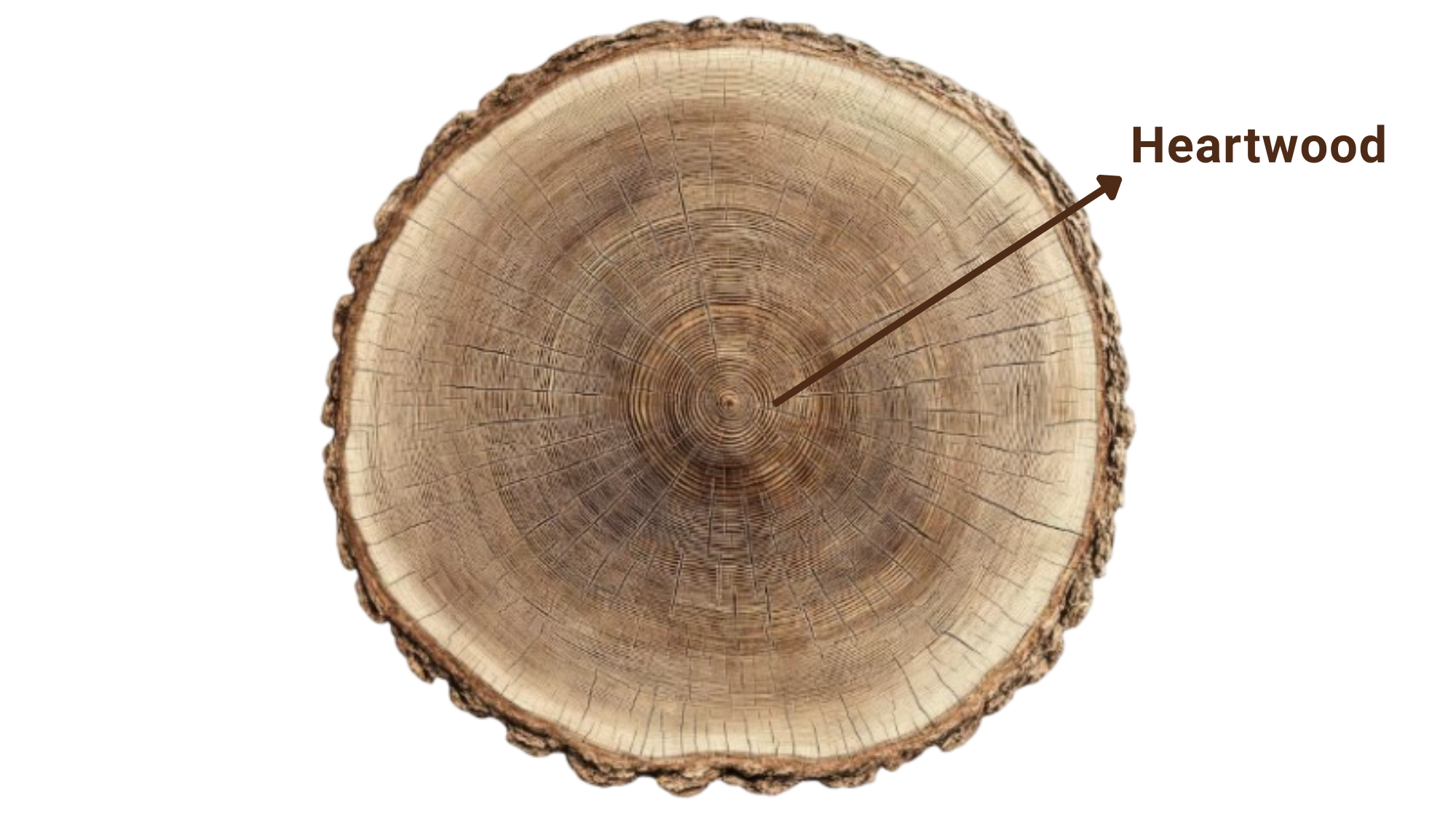
As the tree matures, its internal cells transform. They lose moisture, become denser, and begin to accumulate natural oils and silica. These oils and silica from the ground are not added; they are an inherent part of the wood’s structure.
The result is a material with unique properties. What does this mean in practice? It means a denser, more stable wood that naturally resists moisture and mold, protects itself against pests and decay, and ages over time without losing its integrity.
Visually, heartwood is also distinct, with a richer, more uniform color that gradually evolves into teak’s characteristic silver-gray patina when left outdoors, untreated, over time.
.jpg)
For this reason, when discussing teak furniture quality, what truly matters is the proportion, or exclusivity, of heartwood in the piece.
For more information about teak quality, visit our blog post Teak Wood Quality: What Really Defines It (And Why It’s Not What Most People Think).
What is Sapwood—And Why is It Used in Lower-Cost Furniture?
The sapwood of a tree is the outermost layer of the tree. The younger, active part responsible for transporting water and nutrients. Unlike heartwood, it has not gone through the maturation process that gives teak its defining properties.
.png)
This results in clear differences: lower density, higher porosity, and a lack of protective natural oils. In practical terms, this means sapwood is not suited to withstand demanding outdoor conditions in the same way heartwood is.
So why is it used?
The answer is straightforward: efficiency and cost. Incorporating sapwood allows manufacturers to use a larger portion of the tree, reducing waste and lowering the final price. It is an economic decision, not a quality-driven one.
But over time, the consequences become evident.
In outdoor environments, sapwood tends to fade unevenly, absorb moisture and expand, develop cracks, and lose structural stability.
What may seem like a minor difference at first ultimately has a direct impact on the furniture’s lifespan.
How to Identify Sapwood in a Piece of Furniture
While it may not always be obvious at first glance, some signs can help identify the presence of sapwood in a teak piece.
- Color is one of the most visible indicators. Sapwood tends to appear lighter, with pale or yellowish tones that contrast with the richer, more consistent color of heartwood.
- Weight can also provide a clue. Pieces with a higher proportion of heartwood tend to be denser, and therefore heavier.
- Another key area to observe is joints and edges. In these exposed structural points, variations in color or texture are often easier to detect.
These differences are not merely aesthetic. They are indicators of how the material will respond over time and with continued outdoor use.
In many cases, these distinctions go unnoticed at first. But once you know what to look for, they become difficult to ignore.
Westminster Teak’s Heartwood Standard
At this point, it becomes clear that not all teak is the same, and not all manufacturers apply the same standards when selecting their materials.
At Westminster Teak, only heartwood is used in the construction of its furniture. This decision requires a more rigorous selection process and a more selective use of the raw material, prioritizing quality over yield per tree.
This is complemented by a slow process of natural air and sun-drying, and a carefully controlled kiln-drying process, which reduces internal moisture content and enhances the wood’s structural stability before production begins.
The result is not simply a better-finished piece that is also aesthetically pleasing in tone and color, but one designed to perform over time in real outdoor conditions.
Learn more about our production and design process in our blog posts: Teak Wood Quality: What Really Defines It (And Why It’s Not What Most People Think) and What Defines Furniture Design? The Process Behind Westminster Teak.
.png)
The difference between heartwood and sapwood is not always visible at first glance. But over time, it becomes both evident and significant.
Because beyond design or finish, what truly defines the quality of teak furniture is the material it is made from.
This is why two pieces that may look similar today can perform very differently after years of outdoor exposure.
And once you understand that difference, the way you choose changes completely.
Related Posts


Stay in Touch
Oops! Something went wrong while submitting the form


