

Why Tectona Grandis Is the Only Teak You Should Be Buying
In the outdoor furniture market, the word “teak” is used with a level of ease that is rarely questioned. It is assumed to refer to a single material, with consistent behavior and uniform quality.
In the outdoor furniture market, the word “teak” is used with a level of ease that is rarely questioned. It is assumed to refer to a single material, with consistent behavior and uniform quality. But in practice, not everything sold as teak is teak in the strict botanical sense, and that distinction has a direct impact on how a piece of furniture ages, performs, and holds up over time.
Understanding what Tectona Grandis actually is is not a botanical detail. It is the foundation for distinguishing between genuine teak and commercial substitutes that may look similar at first glance, but do not deliver the same long-term performance in outdoor environments.
The Problem Behind the Name “Teak”
The first layer of confusion starts with the market language itself.
“Teak” does not always mean Tectona Grandis. In many cases, it is used as a commercial label for woods that do not belong to this species but share superficial traits such as hardness or initial color.
This has led to naming conventions that create a misleading sense of equivalence:
- “Cape teak”, associated with African species unrelated to true teak
- “Brazilian teak”, a commercial name for dense South American hardwoods
- “Plantation teak” with unclear traceability or mixed species composition
The issue is not only technical; it is functional.
Because while these woods may appear similar when new, they do not share the internal structure that defines real teak performance: its stability, its natural oil content, and the way it behaves outdoors over time.
As a result, they are often compared as if they were the same material, when they are not. Learn more about the best wood for outdoor patio furniture here.
What Makes Tectona Grandis Unique
Tectona Grandis is the only species recognized as true teak. Its value does not lie in a single property, but in the combination of natural characteristics that make it exceptionally stable in outdoor conditions.
Its behavior is explained by its internal composition, which includes a high concentration of natural oils that act as an intrinsic barrier against moisture, fungi, and insects. It also features a highly stable dimensional structure that remains consistent even under constant climatic variation, along with a tight, uniform grain that significantly reduces water absorption. Finally, it undergoes a gradual and controlled aging process that allows it to develop a natural patina without compromising structural integrity. Learn more about this process in our post.

Unlike other hardwoods used outdoors, such as eucalyptus, acacia, or iroko, the difference does not appear immediately, it becomes evident over time. These alternatives may perform adequately in the short term, but their long-term behavior is less predictable and more dependent on ongoing maintenance.
With teak, performance is not built through external treatment. It is embedded in the wood itself.
Why the Origin of the Wood Matters
Even when the species is the same, not all Tectona Grandis is produced under the same conditions. Origin determines traceability, consistency, and long-term reliability.
One of the global benchmarks for controlled teak production is Indonesia, where cultivation is managed under state forestry systems with long-term planning. Within this framework, Perum Perhutani, the state-owned forestry enterprise, manages teak plantations under a model that integrates production with environmental governance.
This system is based on four key pillars: state-managed and planned forestry operations that ensure long-term resource control; regulated plantation rotation cycles that support sustainable growth; integration of agroforestry practices that balance production with ecological systems; and biodiversity conservation within productive areas, ensuring that forestry activity does not compromise surrounding ecosystems.
It is also supported by SVLK certification, which guarantees legal compliance and full traceability across the supply chain. At this point, origin is no longer a secondary detail, it becomes part of the material itself.
How to Recognize Real Reak
While not always obvious at first glance, there are consistent indicators that help distinguish Tectona Grandis from woods marketed as “teak.”
Key characteristics include:
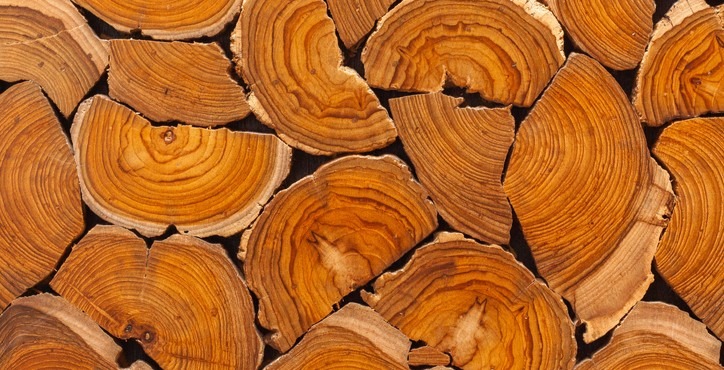
- A uniform golden tone that gradually evolves into an even silver-gray patina
- High density and noticeable weight relative to volume
- A subtle, oily aroma characteristic of its natural oils
- Relatively straight grain and homogeneous structure
- A light natural oiliness in untreated Wood
More important than visual cues are the questions you ask the seller:
- What is the exact species of the wood?
- Where does it originate from?
- Is there traceability certification?
- Is it solid teak or a mixed-species product?
Learn more about this in our blog post "Teak Wood Quality: What Really Defines It (And Why It’s Not What Most People Think)".
Westminster Teak and Tectona Grandis
At Westminster Teak, material definition is not flexible. All products are made exclusively from Tectona Grandis sourced from Perum Perhutani-managed plantations in Indonesia, under regulated forestry systems and SVLK legal certification.
This ensures three levels of consistency: material consistency, through the exclusive use of a single species without substitution; origin consistency, through full traceability from forest to final product; and performance consistency, ensuring predictable structural and aesthetic behavior over time.
In practical terms, this means that the standard is not defined by the finished product, but by what it comes from.

Choosing teak should not be a decision based on the name alone, but on the species behind it. Because what defines quality is not how a material looks when it is new, but how it performs over time.
And in that sense, Tectona Grandis is not just another category within the market. It is the reference point, and the origin of every Westminster Teak product.
Related Posts


Stay in Touch
Oops! Something went wrong while submitting the form


