

Teak Wood Quality: What Really Defines It (And Why It’s Not What Most People Think)
The truth is, teak wood quality isn't defined by a label. It's built long before the furniture is made, through a chain of decisions that very few brands can consistently claim and execute.
When people start researching teak outdoor furniture, a common assumption follows: teak is teak.
Even informed buyers who dig deeper often find grades and technical terms that appear clear at first, but rarely explain why some furniture lasts decades while other pieces show wear within a few seasons.
The truth is, teak quality isn't defined by a label. It's built long before the furniture is made, through a chain of decisions that very few brands can consistently claim and execute.
Maturity Matters: Is Teak a Hardwood?
So what type of wood is teak, exactly? It's a tropical hardwood in the Tectona grandis family, native to Southeast Asia. Yes, teak is a tropical hardwood. However, not all teak used in furniture comes from trees that have reached full maturity.
For teak to develop the properties it’s known for (moisture resistance, structural stability, and long-term durability), the tree must grow for decades before being harvested. In most cases, this means around 40 years to reach the proper diameter and density.
When harvested prematurely, even if it comes from the same species, it lacks the same concentration of natural oils and structural integrity. Over time, that difference becomes visible.
Sourcing from Perum Perhutani: Ensuring Legal Teak
One of the most critical, and least visible, factors in teak wood quality is its origin.
Westminster Teak sources exclusively from Perum Perhutani, the Indonesian government-owned forestry company responsible for managing millions of hectares of teak plantations under a structured agro-forestry system. This ensures not only legal teak, but also full traceability. Every log can be tracked back to its specific plantation.
In a market where wood can often come from uncertain, or even illegal, sources, this level of control makes a fundamental difference in consistency, sustainability, and long-term performance.
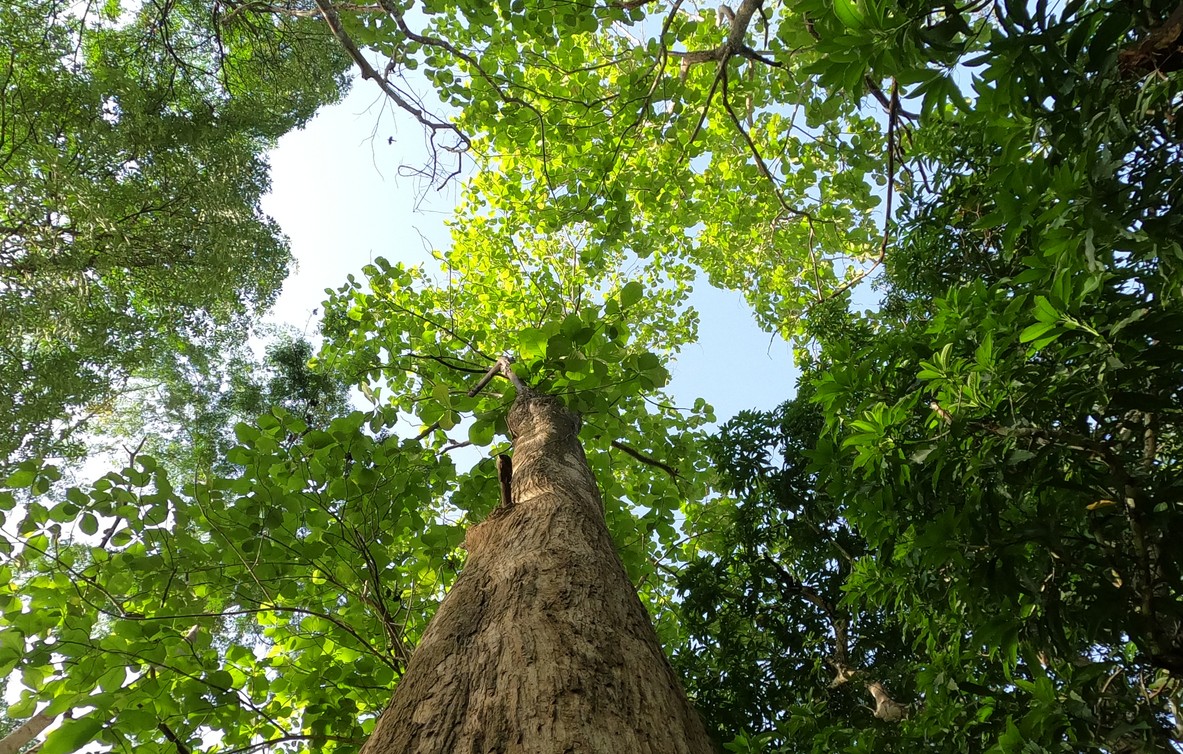
The journey from felled teak tree to finished furniture involves a series of controlled steps, each critical in determining the performance, stability, and longevity of the final product.
1. Log Breakdown
Freshly felled teak typically has a moisture content in the range of about 50–70% (measured relative to oven-dry weight), with some variation depending on age, growing conditions, and the proportion of heartwood versus sapwood. Sapwood tends to carry higher moisture, while mature heartwood is somewhat lower due to its oil content.
2. Log storage before sawing (in open yards)
Teak logs are often held in log yards for a relatively short period, typically a few weeks to a few months (4–12 weeks), before conversion into sawn timber. This stage is less about fully drying the wood and more about:
- Allowing natural moisture reduction
- Relieving internal stresses
- Managing logistics (sorting, grading, scheduling for milling)
3. Selection and Grading
Timber is sorted based on age, density, grain quality, and the proportion of heartwood versus sapwood before being cut into boards in the sawmill. Higher-grade material (rich in natural oils) is reserved for premium applications.
4. Drying (Seasoning)
Freshly cut teak contains significant moisture and must be dried to stabilize it:
- Air Drying: Boards are stacked and left to dry gradually over months.
- Kiln Drying: In a large-scale teak factory, kiln drying ovens are insulated industrial chambers designed to reduce the moisture content of timber to 8-10% in a controlled, uniform manner, which is essential for preventing warping, cracking, or other defects. Temperature, humidity, and airflow are precisely monitored and adjusted throughout the drying cycle. These advanced kilns feature pre-set drying programs specifically designed to match the teak’s thickness, grade, and ensure the drying rate is slow and even, minimizing stress in the wood. We go deeper into this stage, and what can go wrong when it's rushed, in What Is Kiln Drying and Why It Defines the Quality of Your Teak Furniture.
Proper drying is essential to prevent warping, cracking, or shrinkage later. Lower-quality operations often rely on improvised methods, such as uneven heat in small sheds, and the results tend to show quickly: furniture that shifts, opens, or loses stability within the first year.
5. Moisture Reabsorption and Structural Stability
After drying, the wood is left to rest, allowing it to gradually reabsorb moisture from the surrounding environment and regain internal equilibrium. This vitally essential step ensures a stable and uniform moisture content prior to machining. If this step is skipped and the material is used in an overly dry state, it becomes far more prone to cracking, movement, and deformation when exposed to fluctuations in temperature and humidity.
6. Rough Milling
Boards are planed, cut, and shaped into individual components, such as legs, frames, and slats. At this stage, dimensions are intentionally left slightly oversized to accommodate subsequent sanding and refinement.
7. Precision Craftsmanship: Mortise and Tenon Joinery
The quality of teak furniture doesn’t depend on the quality of wood alone. It also depends on how it’s built. Time-honored joinery techniques, such as mortise-and-tenon and doweling, are applied where appropriate, now executed with the precision of modern CNC machinery. These methods create strong, enduring structural connections, though they demand a high level of attention to detail, time, and expertise. While not the fastest approach, they remain among the most reliable for ensuring long-term structural integrity and durability.
8. Fine Sanding & Detailing
Surfaces are meticulously refined through a progressive sanding process, starting at 80–120 grit and advancing to 220 grit. Edges are gently eased and details fully resolved to achieve a smooth, consistent finish, with each piece meticulously finished by hand. This stage reflects a balance between artisanal craftsmanship and modern precision tooling.
9. Assembly
Individual components are meticulously fitted and assembled to ensure precise alignment, structural integrity, and tight, consistent tolerances.
10. Quality Control and Final Inspection
Each piece is checked for structural soundness, finish quality, and overall craftsmanship before being approved.
In the luxury segment we serve, true distinction comes not only from the material, but from the careful craftsmanship applied at every stage, from controlled drying to exacting joinery, ensuring furniture that remains functional and beautiful for generations.
Marine-Grade 316L Stainless Steel Hardware
Finally, there’s a detail that often goes unnoticed: the hardware. Westminster Teak uses marine-grade 316L stainless steel, the same standard used in marine environments. This ensures long-term resistance to corrosion, even in coastal or high-humidity conditions.
It may seem like a small component, but in outdoor furniture, durability depends on every material involved.
Hardware deserves its own chapter: read Why We Use 316L Stainless Steel Hardware on Our Teak Outdoor Furniture.
There’s a simple way to understand all of this.
Mal Haddad, president and designer of Westminster Teak, often compares teak production to fine winemaking. The quality doesn’t come from the raw material alone, it comes from the combination of material, process, and expertise.
You can have excellent grapes, but without the right process, the wine won’t reflect it. The same is true for teak.
Sustainable Teak Wood
Today, talking about quality also means talking about sustainability. Not just from an environmental perspective, but because sustainable sourcing is directly tied to consistency and traceability.

What is SVLK and Why Does it Matter for Indonesian Wood?
SVLK (Sistem Verifikasi Legalitas Kayu) is the Indonesian government-backed certification system that verifies the legality of exported wood. It is also designed to stop illegal logging and contribute to sustainable forest management
Unlike private certifications, SVLK is a state-regulated system that oversees the entire supply chain: from plantation to export.
For the end customer, this means something very concrete: the wood is legal, traceable, and verifiable.
What is FSC Certified and How Does it Protect Forests?
FSC (Forest Stewardship Council) is an international certification that promotes responsible forest management and sustainability.
In practical terms, it ensures that wood comes from sources that meet environmental, social, and economic standards.
When a brand works with FSC-certified wood, it signals not only quality, but also a long-term commitment to sustainability.
How to Check Teak Wood Quality Through Production?
Understanding the process makes it easier to evaluate quality—and to question some of the most common assumptions in the market.
The Myth of "Grade A" and Other Teak Wood Grades
So which teak wood is best? Not the one with the fanciest label, but the one that went through the right process from tree to furniture, which is exactly what the "Grade A" claim tends to obscure. The term “Grade A” does exist and technically refers to real characteristics such as higher density, uniform color, and higher oil content.
The problem is that there is no global authority regulating its use.
Historically, top-quality teak was labeled FEQ (First European Quality) during the Dutch colonial period in Indonesia. Over time, that term was replaced by “Grade A.”
During the 1980s, as informal furniture exports increased, the term began to be used broadly, often without any real quality control behind it.
Today, virtually any manufacturer can claim to use “Grade A” teak, regardless of the actual quality.
That’s why Westminster Teak does not rely on this term. Because a label alone doesn’t guarantee anything. The process does. Learn more about why the species itself, not the grade label, is what truly matters in Why Tectona Grandis Is the Only Teak You Should Be Buying.
Heartwood vs. Sapwood: What is the Difference?
Another important distinction in teak wood quality is the difference between heartwood and sapwood, and it goes far beyond appearance.
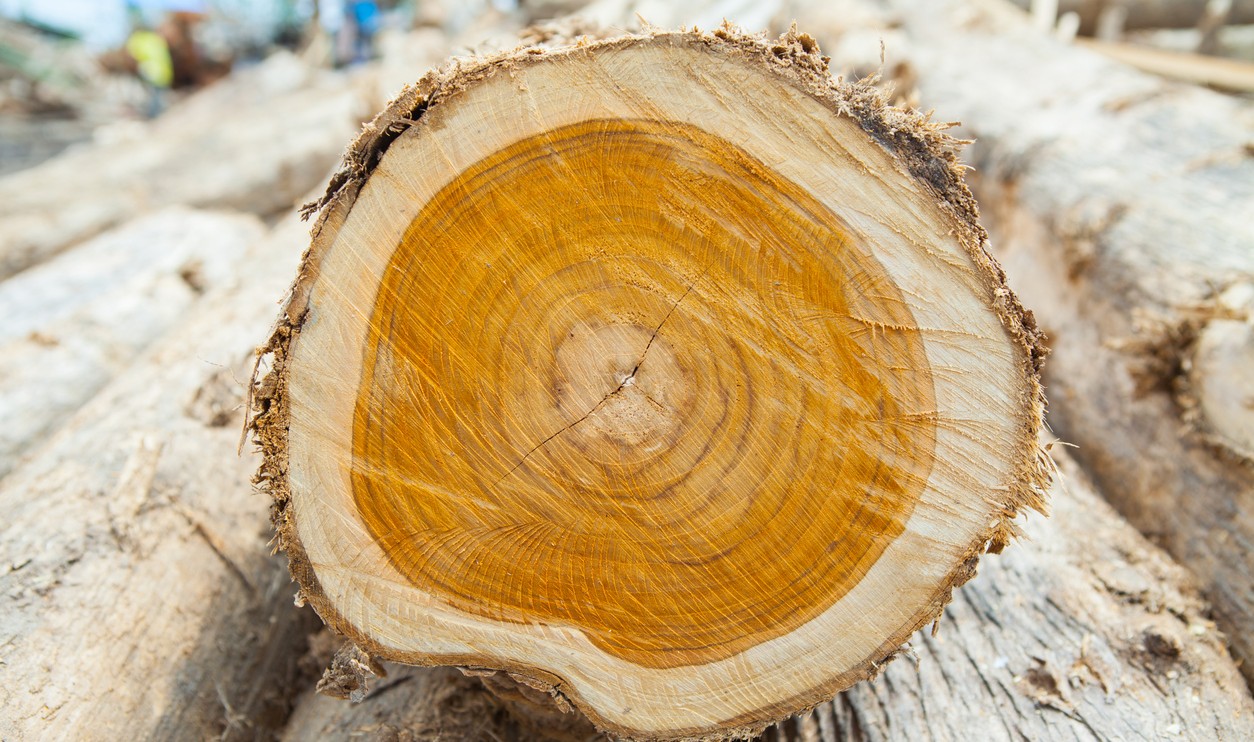
Heartwood is the inner, mature core of the tree. Over decades of growth, it accumulates natural oils, resins, and minerals that give teak its characteristic density, strength, and resistance to outdoor conditions. This natural process is also what explains its deeper, richer color. This is also the most direct answer to what color is teak wood: fresh heartwood ranges from a warm golden brown to deep amber, while sapwood looks noticeably paler and less saturated.
Sapwood, by contrast, is the younger, outer layer of the tree. It hasn’t undergone the same transformation, which is why it appears lighter, contains fewer natural oils, and is significantly less durable when exposed to moisture, insects, and changing weather conditions.
So, why is heartwood darker in color than sapwood? Simply put, time. The longer the tree matures, the more these natural compounds concentrate in its core, gradually deepening its tone while strengthening its structure.
Knowing how to identify teak wood in a finished piece comes down to reading these same signals: color depth, grain tightness, and weight in the hand. This difference isn’t just visual, it directly impacts how teak furniture performs over time. For a closer look at how to spot the difference in a finished piece, see our full guide: What is the Difference Between Heartwood and Sapwood in Teak Furniture?
At Westminster Teak, only heartwood from properly matured trees is selected. Not as a marketing claim, but as the natural result of following the right process from the very beginning.
Investing in Excellence: Why is Teak Wood So Expensive?
One of the most common questions is why teak furniture comes at a higher price. The answer lies in everything that happens before the product reaches you.
Teak quality begins with decades of tree growth, followed by long and carefully controlled drying and stabilization processes that ensure durability. It requires industrial-scale equipment to achieve precise moisture levels, as well as strict quality control at every stage of production. On top of that, premium teak furniture incorporates high-performance materials, such as marine-grade hardware, that enhance long-term performance.
It’s not just the material. It’s the time, the process, and the precision.
That’s why, rather than a short-term expense, high-quality teak furniture is often a long-term investment.
Finding the Best Quality Teak Outdoor Furniture
Finding the best quality teak outdoor furniture isn't about choosing a product; it's about understanding what's behind it.
Once you know how teak is sourced, processed, and crafted, the difference becomes easier to recognize: how the joints are built, how the finish responds, how the furniture performs after seasons of real use.
That's where Westminster Teak stands out. Not because of a single feature, but because every piece reflects the same approach, from material selection to final assembly.
Because the best teak wood furniture isn't defined by how it's presented, it's something you experience, long after trends are forgotten.
Frequently Asked Questions Teak Wood
What Is Teak Wood?
Teak wood, or Tectona grandis, is a tropical hardwood native to Southeast Asia, valued for centuries in shipbuilding and outdoor furniture. Its high natural oil and silica content make it exceptionally resistant to moisture, rot, and insects without needing any artificial treatment.
What Type of Wood Is Teak?
Teak is a dense tropical hardwood, botanically classified as Tectona grandis. Unlike many outdoor woods, it doesn't rely on chemical treatments for durability. Its performance comes from what's naturally inside the wood: oils and minerals built up over decades of growth.
Where Does Teak Wood Come From?
Teak grows primarily in Indonesia, where government-managed plantations under Perum Perhutani produce the majority of the world's commercially harvested teak. Westminster Teak sources exclusively from these SVLK-certified plantations.
What Color Is Teak Wood?
Fresh teak heartwood ranges from golden honey to deep amber brown. Left outdoors and untreated, that color gradually shifts to a silver-gray patina within a year or so, a natural process that doesn't affect the wood's strength.
How Hard Is Teak Wood?
Teak is considerably harder and denser than common outdoor woods like pine, cedar, or eucalyptus. That density is part of why it resists dents, scratches, and moisture penetration so well, and why it holds up to decades of outdoor use with minimal wear. Learn more in our guide: What is The Best Material for Patio Furniture?
What Does Teak Wood Smell Like?
Teak has a distinct, mild leathery scent, most noticeable when the wood is freshly cut or sanded. That smell comes directly from its natural oils, the same ones responsible for its resistance to water and insects. The scent fades over time and has no bearing on the wood's quality or performance.
How Do You Identify Teak Wood?
Genuine teak has a tight, straight grain, an oily texture to the touch, and a golden brown tone that darkens with maturity. Heartwood, the most durable part of the tree, is noticeably richer in color and denser than sapwood. For a closer look at spotting the difference in a finished piece, see our guide on heartwood versus sapwood.
Which Teak Wood Is Best?
The best teak isn't defined by a grade label like "Grade A," which has no regulated standard behind it. It comes down to maturity (heartwood from properly aged trees), legal and traceable sourcing, and controlled kiln drying. Those three factors matter far more than any label on a spec sheet.
How Do You Take Care of Teak Wood?
Teak needs very little maintenance: an occasional clean with mild soap and water is usually enough to keep it looking its best. For the full routine, including whether to oil or seal it, see our complete guide on how to take care of teak outdoor furniture.
How Do You Clean Teak Wood Furniture Outdoors?
A soft-bristle brush, mild soap, and water are all you need for routine cleaning; avoid pressure washers, which can raise the grain. For a full step-by-step routine and product recommendations, see our guide on cleaning teak outdoor furniture.
Related Posts


Stay in Touch
Oops! Something went wrong while submitting the form


