

What Defines Furniture Design? The Process Behind Westminster Teak
In a world driven by trends, fast consumption, and constant visual overload, design often becomes reactive, responding to what’s popular rather than what truly lasts.
In a world driven by trends, fast consumption, and constant visual overload, design often becomes reactive—responding to what’s popular rather than what truly lasts.
When it comes to furniture meant to endure, that’s not enough.
At Westminster Teak, design is not approached as a surface decision or a response to trends. It is understood as a process, one that begins long before the product exists.
What Is Timeless Furniture Design?
Timeless furniture design is often mistaken for something purely aesthetic, neutral, classic, or understated. In reality, it goes much deeper.
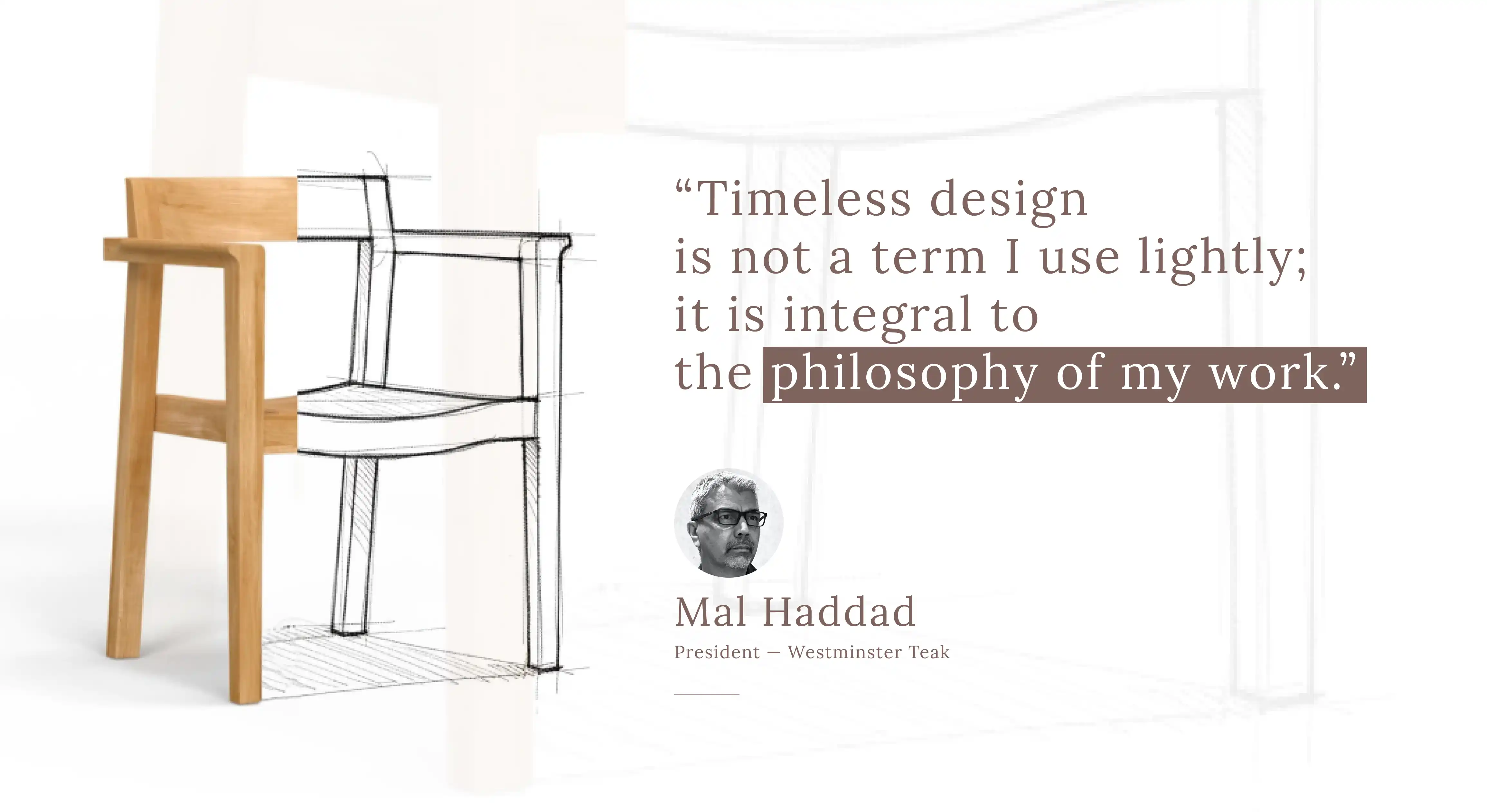
As Mal puts it: “Good design should be as relevant now as it was 50 years ago and will be 50 years from now.”
A timeless design doesn’t aim to follow trends. It is created to remain relevant over time, years, even decades.
In that sense, timeless furniture design also responds to a culture of disposability. Instead of creating objects meant to be replaced, it creates pieces meant to stay.
“When a piece of furniture is thoughtfully conceived and carefully crafted, it invites longevity—meant to be lived with, cared for, and ultimately passed on to the next generation.”
Timeless design is inherently integral to sustainability. It is neither an added feature, a marketing ploy, an exercise in compliance, nor a political gesture. It is the natural outcome of doing things right from the beginning—even when that process takes longer.
How Does the Design Process Influence Furniture Quality?
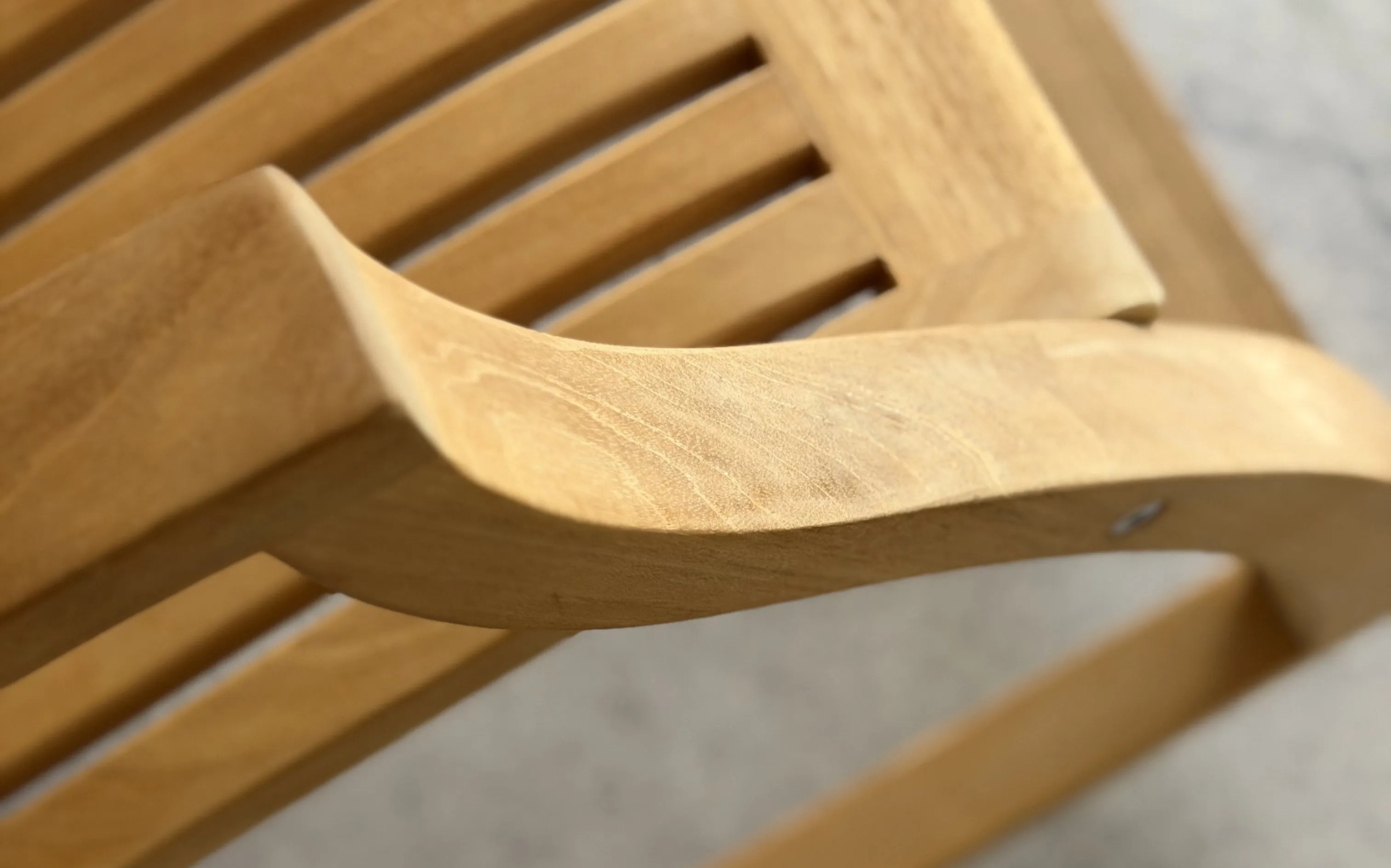
One of the defining aspects of Westminster Teak is that design is not limited to form. It is part of a process.
Mal’s background in industrial and ocean engineering plays a key role in this perspective: “Everything is interconnected… materials, systems flow, manufacturing, branding, logistics, and distribution.”
What does this mean in practice? That every design decision has an impact across multiple stages of a product’s life:
- How a piece is manufactured
- How it performs in everyday use
- How it is packaged and transported
- How it ages over time
The result is an approach where aesthetics and performance are not separate considerations, but fully integrated.

Where Does Inspiration Come From in Furniture Design?
When trends are not the starting point, inspiration tends to come from unexpected places.
“I saw things we use daily, the pencil, soup bowls, dining chairs, all in a different light.”
This ability to reinterpret everyday objects leads to designs that feel both familiar and refined.
Over time, influences from design masters such as Hans Wegner, Finn Juhl, and the Eames also become part of the process—each known for balancing form, function, and longevity.
Discover teak modern furniture.
Why Is Material Essential in Furniture Design?
In furniture design, material and design cannot be separated.
Teak is aesthetically appealing, easy to work with, and delivers exceptional longevity. But those qualities only translate into long-term performance when the design works with the material, not against it. To know more about teak, visit this post.
"A design should aspire to endure, at the very least, for as long as the material from which it is made.”
This means:
- Proportions must respect structural behavior
- Ergonomics must respond to real use
- Construction must support durability
Because good design doesn’t force the material into shape or use, it works with it.
How Do You Design Furniture for Different Users?
One of Mal Haddad’s core principles is that design does not exist in isolation, it must connect. “Designing for a broader audience requires an understanding of purpose, context, and user reception.”
In the Dahlia chair, this takes the form of a reinterpretation of the Windsor chair, a widely recognized and familiar typology.
The challenge lies in balancing the familiar with the new: maintaining recognizable elements while evolving them into a more refined, comfortable, and contemporary expression.
Why Does Timeless Design Matter in Furniture?
Furniture is constantly exposed to use, time, and constant change. Designing for this context requires more than aesthetics. It requires anticipation. When design is truly well resolved, it stops calling attention to itself. It simply works. And that’s where the real difference lies.
Because in the end, the best furniture isn’t defined by how it looks in a photo or on day one, but by how it performs over time. And that’s not something you’ll find on a label, it’s personal, something you experience.
Explore more about the Westminster Teak difference, here.
Related Posts


Stay in Touch
Oops! Something went wrong while submitting the form


