

Outdoor Lounge Furniture: Chaise, Sectionals and Loungers Guide
A guide to teak outdoor lounge furniture: how chaise lounges, sectionals, loungers and daybeds compare, and how to choose for sun, conversation or rest.
A dining table has one job. Lounge furniture has several: a morning coffee in the sun, a long conversation after dinner, an afternoon nap by the pool. That is why choosing it feels less obvious. A chaise, a sectional, and a daybed can all look inviting in a photo, but each one is built for a different way of resting outside.
This guide walks through the main types of teak outdoor lounge furniture, how they compare, and how to choose the right mix for the way you actually use your space. To browse as you read, start with our chaise loungers and lounge chairs.
What Counts as Teak Outdoor Lounge Furniture?
Lounge furniture is anything designed for resting rather than eating. It sits lower than dining furniture, reclines further back, and is meant to be used for hours at a time rather than for the length of a meal.
In practice, an outdoor teak lounge area is built from five main pieces: chaise lounges for stretching out, lounge chairs for sitting back, sofas and modular sectionals for groups, daybeds for full rest, and low coffee or side tables that keep drinks and books within reach. Most spaces use two or three of these, not all five.
Planning the whole patio, not just the lounge? Start with Teak Patio Furniture Sets: The Complete Guide.
How Do You Choose Between a Chaise, a Sectional and a Lounger?
Choose by how you plan to rest, not by the piece itself.
If your goal is soaking up the sun—especially beside a pool, a chaise lounge is the natural choice. It lets you lie fully back, adjust the angle through the day, and sits comfortably in a row along the water.
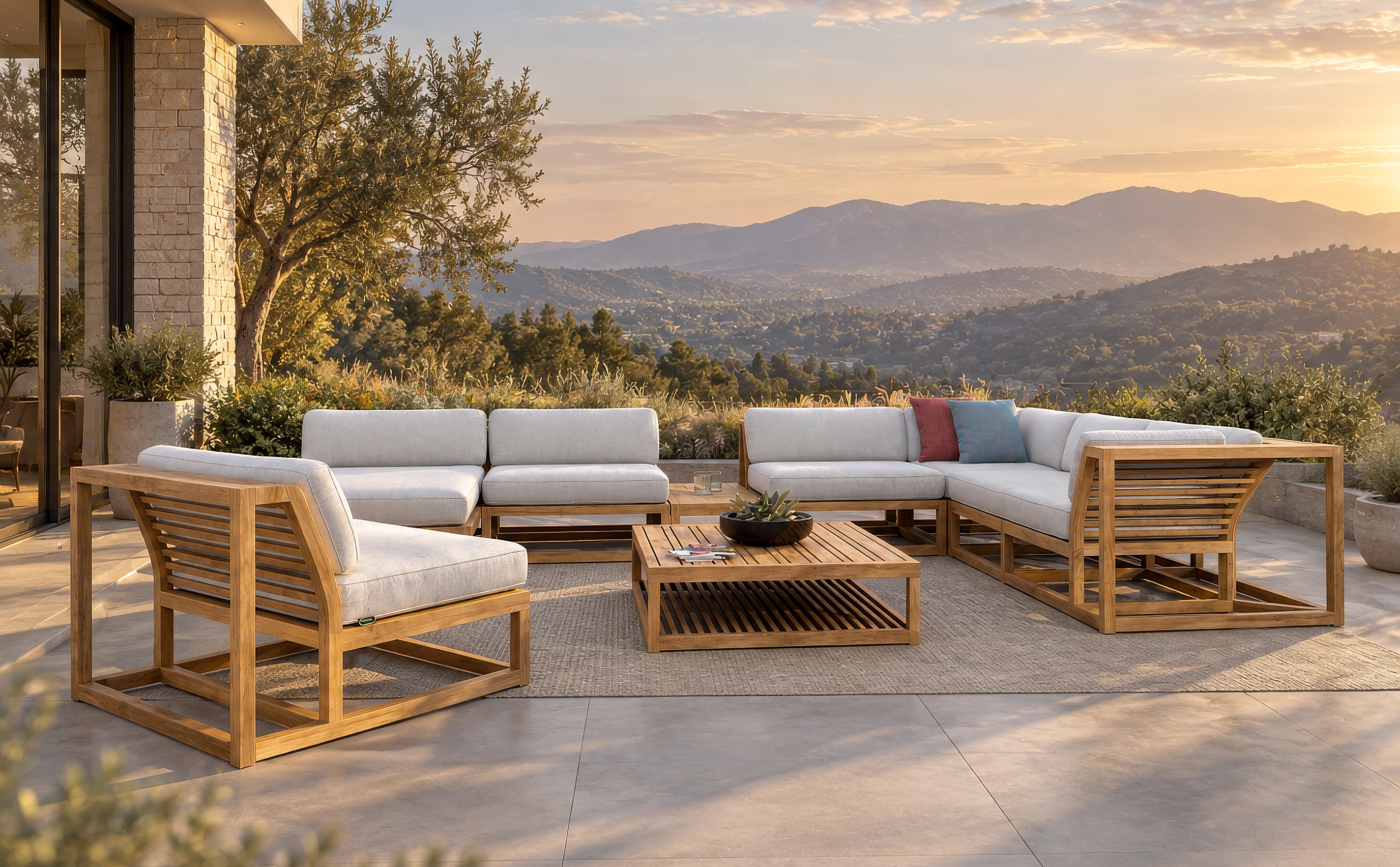
If the goal is conversation, a sofa or sectional works better. It keeps people facing each other at the same height, and it turns a patio into a place where guests stay after dinner rather than drifting back inside.
If the goal is reading or a quiet hour alone, a single lounge chair is often enough. It takes up little floor space and works in corners, on balconies, and on porches.
If the goal is full rest, a daybed is the piece built for it. It offers the space of a bed with the presence of a sofa, and it becomes the focal point of any area it sits in.
What Should You Look For in a Teak Chaise Lounge?
Start with the backrest. A multi-position back lets you move from reading to lying flat without getting up, and it is the feature you will use most. Then consider the seat surface. A sling seat, like the one on the Maya Teak Sling Chaise Lounger, stretches a single piece of Textilene mesh across a teak frame; it flexes with the body and dries quickly after rain. A woven option such as the Malaga Wicker Chaise Lounger adds a softer texture and a lighter visual weight. A solid teak chaise with a cushion offers the most structure and the most classic look.
If you plan to move your chaise to follow the sun or to clear space for guests, wheels at the foot make a noticeable difference. Browse the full range of teak chaise loungers to compare backrests, seats, and sizes.
When Does a Modular Sectional Make More Sense Than a Sofa?
A fixed sofa is the simplest answer for a straightforward layout: one wall, one view, one coffee table. A modular sectional earns its place when the space is irregular or when its use changes from season to season. Corner pieces fit an L-shaped terrace, armless units can be pulled apart into separate seats, and the whole arrangement can be reshaped for a large gathering and then closed up again.
The Maya collection was designed around this idea of flexibility, with clean, modular pieces and plush Quick Dry Foam cushions in Sunbrella fabric. You can read more about how it was developed in the design behind Maya. For a lower, more sculptural profile, Aman Dais builds sectionals with long, architectural lines. For deep seating with a resort feel, Kafelonia pairs generous cushions with substantial teak slats. See all outdoor sofas and couches to compare.
For pairing a lounge with a dining area when guests arrive, see The Weekend Host’s Guide to Outdoor Entertaining.
Where Do Daybeds and Lounge Chairs Fit In?
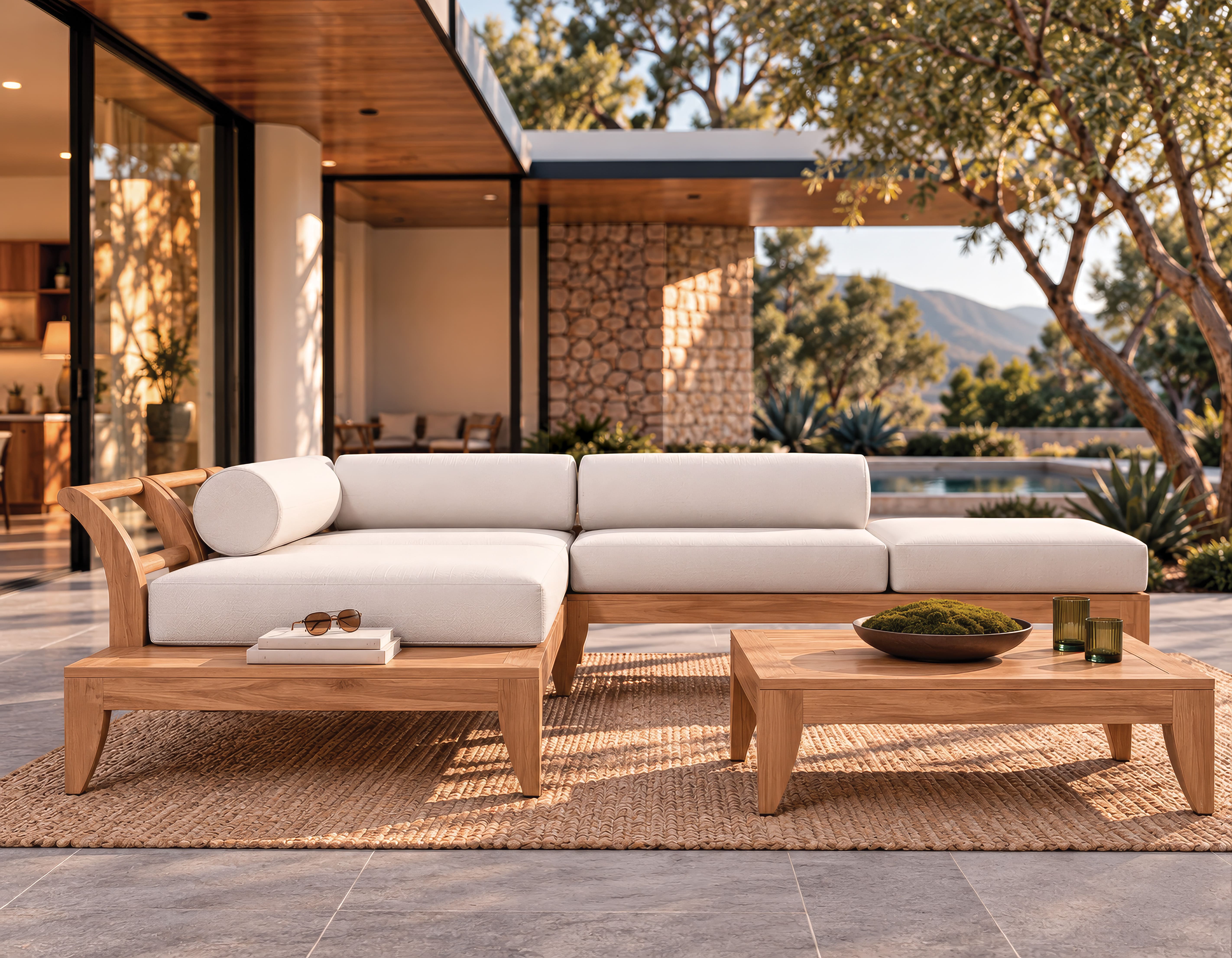
A daybed is the most dedicated resting piece in outdoor furniture. It is deep enough to lie across, often with a back and sides that make it feel enclosed, and it works best as the anchor of a quiet corner or a poolside cabana. Browse our teak daybeds.
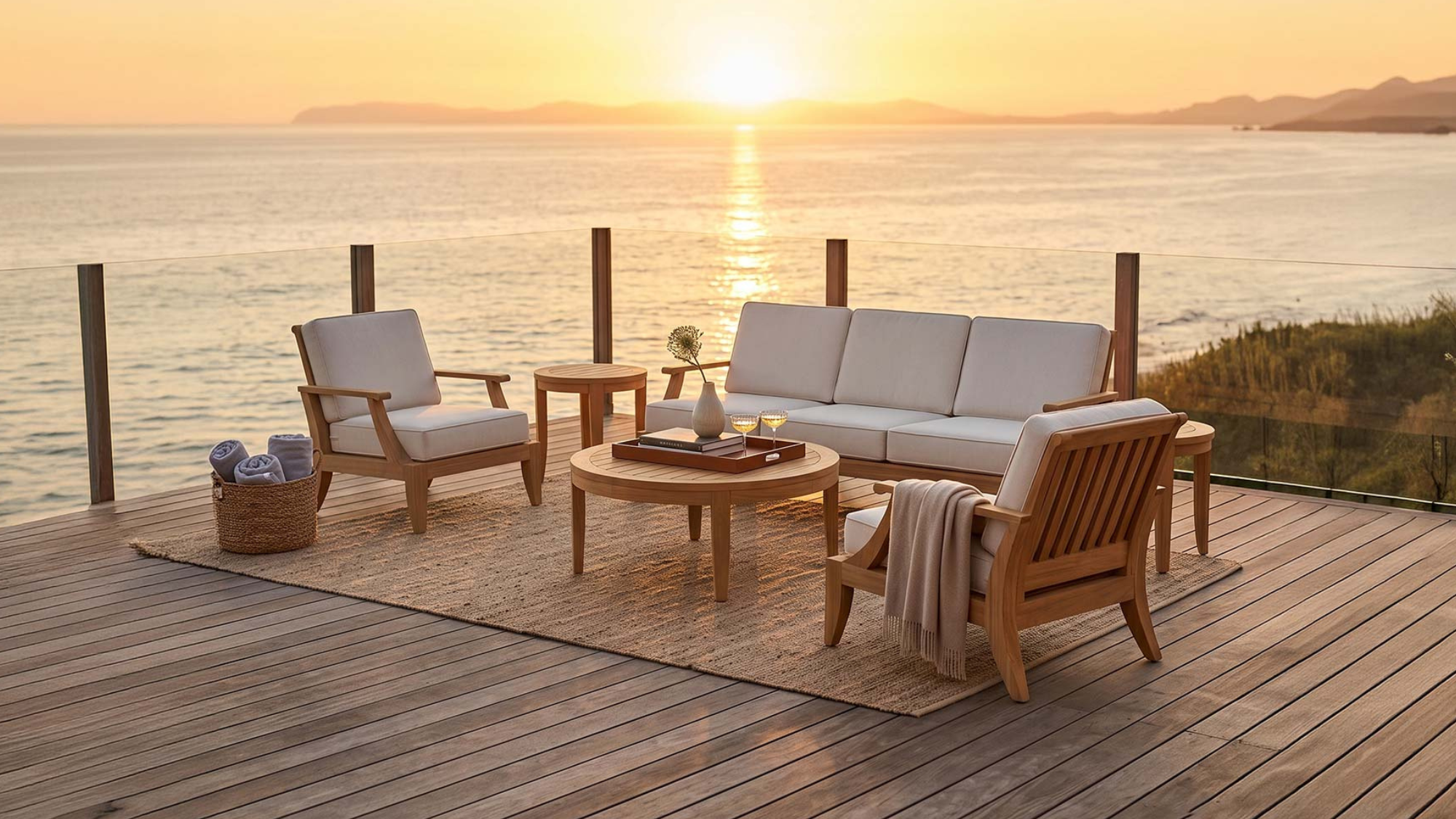
Lounge chairs do the opposite job. They are the flexible pieces that fill gaps: one beside a sectional to add a seat, a pair facing each other for conversation, or a single chair on a small balcony. Because they are easy to move, they are often the first lounge piece people buy and the one they rearrange most. See all teak lounge chairs, and compare sling, wicker and solid teak options in our outdoor teak chairs guide.
How Should You Lay Out an Outdoor Lounge Area?
Start with orientation. Decide where the sun falls through the day and what you want to look at, then face the main seating toward the view and away from the harshest afternoon light. For a pool area, placing a row of chaises along the water with a shaded seating group behind it is a layout that works in most spaces; our guide on how to design a poolside space goes further.
Next, keep circulation clear. Leave a direct path through the area so no one has to step over legs to reach a seat, and place a coffee or side table within easy reach of every seat. For small patios, one sofa and one chair usually feel more open than a full sectional; see how to design a small outdoor space that feels much larger.
Finally, treat your outdoor teak lounge as a room. A defined area with a rug, lighting, and a clear edge feels more inviting than furniture scattered across a deck. Our guide on how to create an outdoor living room covers this in detail, and it is also the approach many resorts follow, as we explain in how hotels choose outdoor furniture.
How Do You Keep Lounge Cushions in Good Shape Outdoors?
Cushions are where lounge furniture gets its comfort, so they deserve the same attention as the frame. Look for a quick-drying foam core paired with a solution-dyed outdoor fabric such as Sunbrella, which resists fading and lets water drain through rather than holding it.
After heavy rain, stand cushions on edge so they drain and dry, and store them indoors during long stretches of bad weather or the off-season. A cushion that stays damp against the wood slows the drying process for both the fabric and the wood. Furniture covers help keep the whole set clean between uses, and our fabric care products help remove everyday marks. For replacements, browse our outdoor cushions.
Frequently Asked Questions About Outdoor Lounge Furniture
Can Teak Outdoor Lounge Furniture Stay Outside Year-Round?
Yes. Teak can stay outside through rain, sun, and snow. Over time, the surface weathers to a soft silver gray, which does not affect its strength. Cushions are the part that should come inside during long periods of bad weather. For care tips, see how to take care of teak outdoor furniture.
What Is the Difference Between a Chaise Lounge and a Daybed?
A chaise lounge is built for one person to recline, usually with an adjustable backrest, and is often used in rows beside a pool. A daybed is larger and deeper, closer to a bed than a chair, and works as the centerpiece of a resting area.
Is Teak Lounge Furniture Comfortable Without Cushions?
Many pieces are. Contoured teak frames and sling seats are designed to be comfortable on their own. Cushions add softness for longer sessions and are essential on deep-seating sofas, sectionals and daybeds.
How Much Space Do You Need for an Outdoor Sectional?
Measure the sectional itself, then add room around it. Plan for a coffee table within easy reach of every seat and a clear walkway around the outside of the arrangement. Check the dimensions of each module before ordering, since corner and chaise units take more depth than standard seats.
Ready to create your outdoor lounge? Explore our chaise loungers, sofas and couches and teak daybeds to find the pieces that fit how you like to rest outside.
Related Posts


Stay in Touch
Oops! Something went wrong while submitting the form


