

How to Choose Outdoor Furniture That Actually Lasts
Discover how to evaluate outdoor furniture quality: material, joinery, hardware, and sourcing. See why premium teak furniture is built to last for decades.
Buying outdoor furniture should be a decision that lasts for many years. Yet for many homeowners, it becomes a purchase they have to repeat much sooner than expected.
At first glance, many outdoor tables, chairs, and lounge pieces look remarkably similar. They share comparable shapes, colors, and even materials. But once they're exposed to sun, rain, humidity, and changing temperatures, the differences quickly become apparent.
Some pieces maintain their structure and appearance for decades. Others begin to deteriorate after only a few years of use.
Price alone rarely explains that difference. What truly matters is often less visible: the material itself, the quality of the wood, how each piece is constructed, the hardware, and the confidence the manufacturer has in its own products.
This guide explains the key factors to evaluate before investing in outdoor furniture, helping you make a decision based on long-term performance rather than first impressions.
What is the best material for outdoor furniture?
There is no single perfect material for every outdoor space. The right choice depends on your climate, how you'll use the furniture, and how much maintenance you're willing to perform.
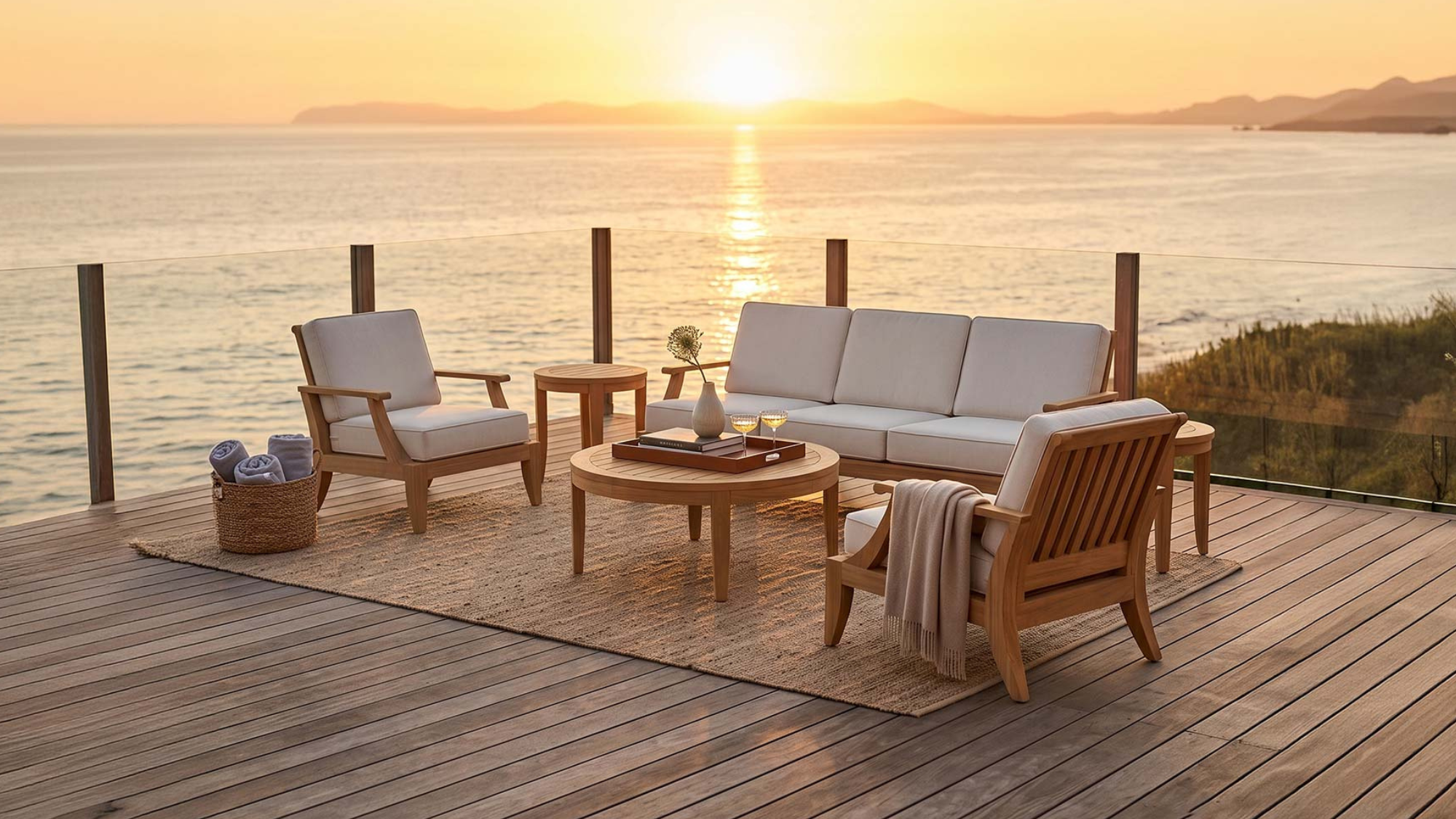
Teak is widely considered the benchmark for combining durability, stability, and natural beauty. Its high concentration of natural oils allows it to withstand moisture, sunlight, and changing temperatures without relying on permanent sealants. Over time, it develops the distinctive silver-gray patina that has no impact on its structural integrity.
Eucalyptus offers an attractive balance between cost and appearance but generally requires more regular maintenance to maintain its stability and protect against moisture.
Acacia is another appealing option thanks to its warm appearance. However, it typically demands more frequent care to prevent warping and weathering when exposed to outdoor conditions for extended periods.
Among non-wood materials, aluminum stands out for being lightweight, corrosion-resistant, and easy to maintain. It's an excellent choice for contemporary designs, although it doesn't offer the same natural warmth as wood.
Synthetic wicker can also be a good option, particularly in covered or partially protected spaces. It offers excellent design flexibility, but its long-term performance depends heavily on the quality of both the resin fiber and the supporting frame.
Ultimately, the best material depends on the type of outdoor space you want to create and the level of maintenance you're comfortable with. For a more detailed comparison of these materials, read our guide.
What should you look for when buying wooden outdoor furniture?
Not all wood performs equally well outdoors.
If you're looking for furniture that can last for decades, it's worth looking beyond appearance alone.
The first consideration is the wood species. When discussing premium teak, the benchmark is Tectona grandis, renowned for its exceptional natural resistance to moisture and weathering.
It's also important to verify that the wood has been properly kiln-dried. Correct moisture content minimizes the wood's natural movement and significantly improves its long-term dimensional stability.
Another critical factor is the difference between heartwood and sapwood. Heartwood contains the highest concentration of the natural oils that make teak exceptionally durable, while sapwood offers considerably less natural resistance.
To learn more about these topics, explore our detailed guides:
How can you recognize high-quality construction?
The quality of outdoor furniture depends on far more than the material itself. Construction methods are equally important.
One of the first things to inspect is the joinery.
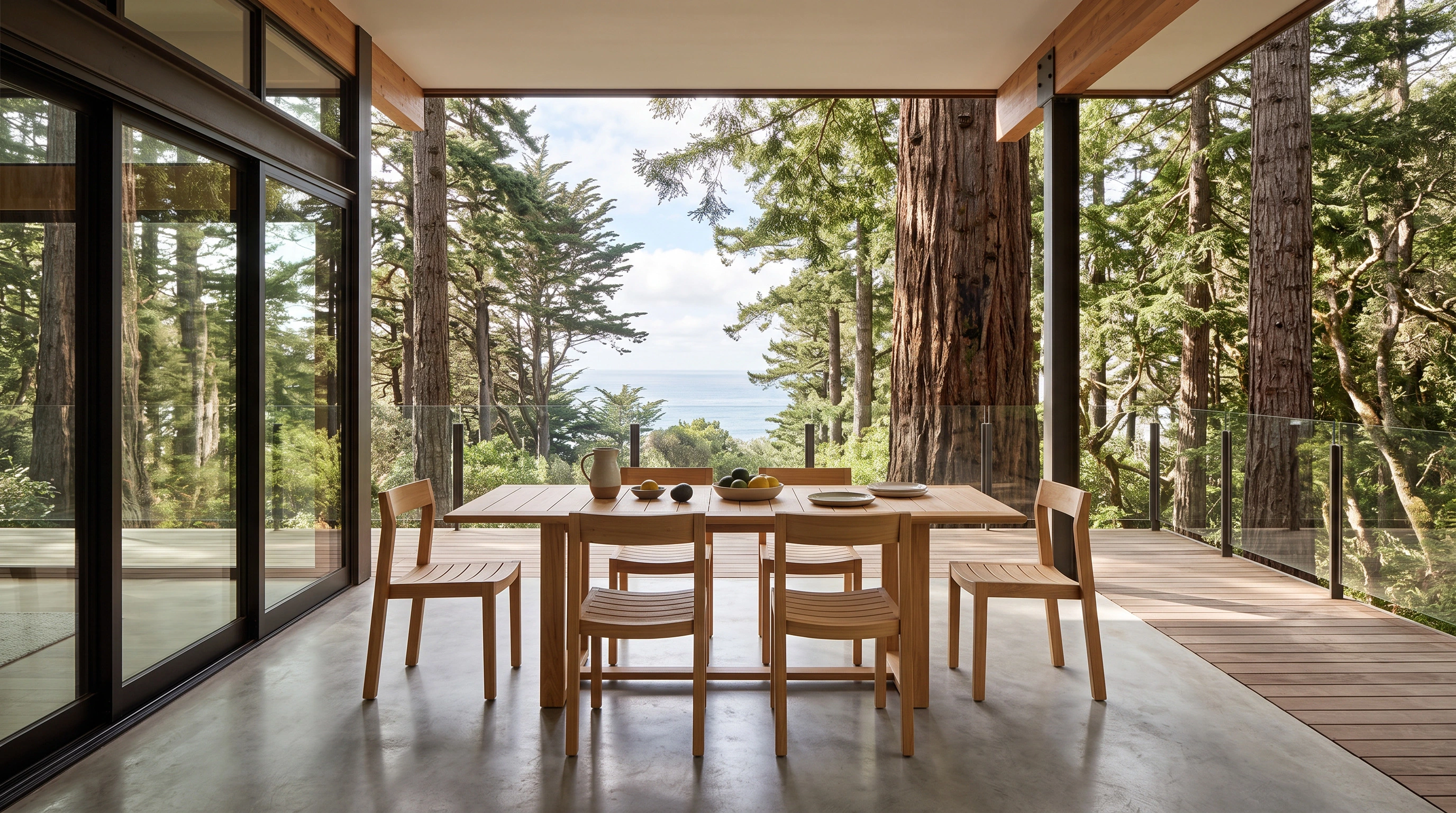
Traditional mortise-and-tenon joinery distributes stress more effectively and helps furniture remain structurally stable for decades. Furniture that relies primarily on screws or staples is generally more prone to loosening under continuous use and prolonged exposure to the elements.
Hardware is another important indicator.
For coastal environments or poolside installations, 316L stainless steel hardware provides significantly greater corrosion resistance than standard stainless steel or lower-grade alternatives.
The finish deserves equal attention.
A well-crafted piece should feel smooth to the touch, be completely free of splinters, and preserve the wood's natural texture rather than hiding it beneath thick coatings.
These details may seem minor when shopping, but they often determine how furniture performs years later. Learn more about the Westminster Teak difference.
We explain the difference between grades in Why We Use 316L Stainless Steel Hardware.
What should a good warranty include?
A comprehensive warranty says a great deal about the confidence a manufacturer has in its own products.
But beyond the warranty period, it's important to understand exactly what is covered.
A meaningful warranty should protect against manufacturing defects and structural failures, clearly explain the claims process, and avoid restrictive conditions that make it difficult to use.
It's also worth paying attention to return and replacement policies. When a manufacturer even covers the shipping costs for defective products, it demonstrates a level of commitment that relatively few companies are willing to provide.
Ultimately, a warranty should not be viewed as a marketing tool—it should simply reflect the quality of furniture that was designed to last. Learn more about our lifetime warranty.
Why does the origin of the wood matter?
The source of the wood influences both product quality and supply chain transparency.
Furniture made from certified plantation-grown timber provides greater traceability and allows buyers to understand exactly where the material originated.
At Westminster Teak, all teak comes from plantations managed under Indonesia's SVLK (Sistem Verifikasi Legalitas Kayu) certification system, ensuring the legality and traceability of the wood from forest to finished product.
Beyond environmental responsibility, controlled sourcing helps maintain consistent quality standards and ensures every piece originates from a responsibly managed source.
Why is high-quality teak outdoor furniture usually the better long-term investment?
It's natural to compare prices when shopping for outdoor furniture.
What people often overlook, however, is how much that purchase will actually cost over the years. Thinking long term is essential.
An inexpensive furniture set that needs to be replaced every three to five seasons can ultimately cost far more than premium furniture designed to last for decades.
That cost also includes maintenance, repairs, replacement parts, and the time spent shopping for furniture you've already had to replace once before.
The true value of outdoor furniture is not measured solely by its purchase price, but by how long it continues to provide the same level of functionality, stability, and beauty.
From that perspective, investing in high-quality furniture is often the more economical decision.
Before making your purchase, we recommend reviewing this simple checklist:
- Is it made from a material that is truly suited for outdoor use?
- Are the wood quality and construction designed to last for decades?
- Does it feature traditional joinery and corrosion-resistant hardware?
- Does the manufacturer offer a clear warranty backed by experience?
- Do you know where the wood comes from and how it was sourced?
Answering these questions before you buy will help you look beyond the price tag and choose outdoor furniture that will continue to enhance your outdoor living space for many years to come.
Frequently Asked Questions
How long should high-quality outdoor furniture last?
The lifespan depends on the materials, construction, and maintenance, but well-built outdoor furniture made from premium materials can last for decades, even when exposed to the elements.
What are the signs of well-made outdoor furniture?
Look beyond appearance. Quality outdoor furniture should feature durable materials, solid joinery, corrosion-resistant hardware, and carefully finished surfaces that are built to withstand long-term outdoor use.
Is premium outdoor furniture worth the investment?
In many cases, yes. Higher-quality furniture typically lasts much longer, requires less maintenance, and reduces the need for frequent replacements, making it more cost-effective over time.
How much maintenance does teak furniture require?
Teak is naturally low maintenance. Regular cleaning is usually enough to preserve its performance. If left untreated, it will gradually develop a beautiful silver-gray patina without affecting its structural integrity.
How can you compare two outdoor furniture sets that look similar?
Instead of focusing only on appearance, compare the wood species, construction methods, hardware quality, warranty, and material sourcing. These factors have a much greater impact on long-term performance than design alone.
Related Posts


Stay in Touch
Oops! Something went wrong while submitting the form


