

Reed: The Complete Guide to Teak Wall Panels, From Cladding to Decor
Teak Wall Panels that do more than cover a surface. Discover Reed, a modular solid teak system for walls, headboards, and hospitality spaces.
A wall is the largest surface in almost any room, and often the least considered.
Reed changes that. Crafted from solid teak and defined by its vertical slatted profile, Reed brings warmth, texture, and depth to an otherwise static surface. But it is more than wall cladding. Reed is a modular architectural system designed to be arranged, adapted, and lived with.
The concept is simple: individual 24-by-72-inch panels mount to the wall with a French cleat, allowing them to be installed without permanent adhesive and repositioned when the space or its purpose changes.
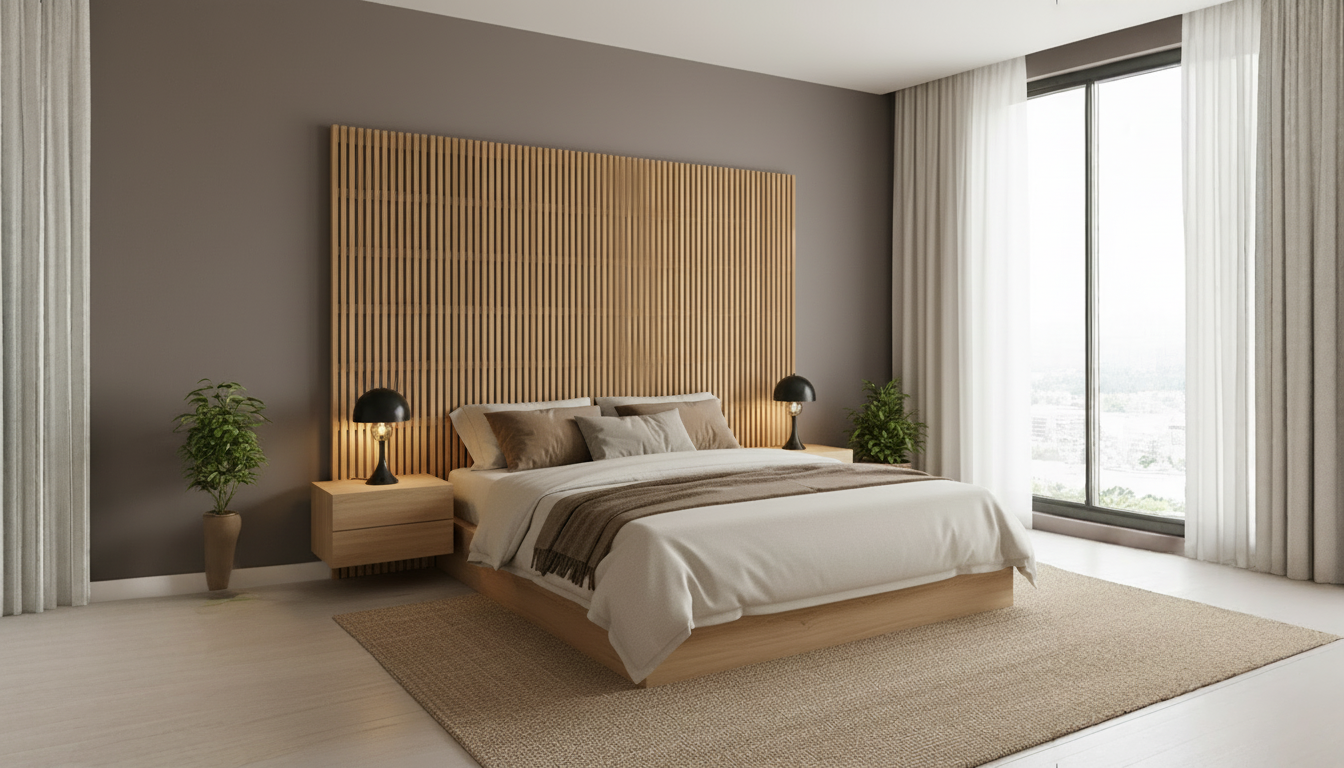
Use several panels to create an entire feature wall. Install one as an architectural accent. Turn two panels horizontally behind a bed to create a distinctive headboard. Add hooks, a shelf, or a picture (or mirror) hanger, and the wall becomes functional as well as beautiful.
The material is the same. The intent is what changes.
What is teak paneling for walls?
Teak paneling for walls is a wall surface built from solid teak, installed either as continuous cladding or as a modular panel system that hangs directly on the wall. It is a design decision before it is a construction one. Where tile reads as clean and plaster as neutral, teak reads as warm, and that warmth carries across contemporary and traditional rooms alike.
Westminster Teak's approach to teak paneling for walls is the Reed collection, a modular system rather than a permanent build.
What is Reed?
Reed is a modular wall system made from premium solid teak slats, designed to bring the warmth and natural character of teak into interior architecture.
That distinction matters. The market is now filled with slatted wall products that may look similar at first glance but are made from very different materials, including wood veneer over MDF, engineered composites, acoustic panels, and even faux-wood alternatives.
Reed starts with the real thing: premium solid teak throughout the visible slat, not a teak veneer or composite applied over another substrate.
Each panel is 24 inches wide by 72 inches high and hangs from a French cleat, making it possible to install, remove, or reposition individual panels without permanently bonding them to the wall.
The vertical slats create a subtle rhythm of light and shadow that changes throughout the day. Viewed up close, the natural grain, variation, and texture of solid teak become part of the experience; from across the room, the repeating lines give the wall an architectural presence.
Reed can be used sparingly or dramatically. A single panel can define a small area, while multiple panels can transform an entire wall.
More than teak wood wall paneling
Traditional wall cladding is primarily about covering a surface. Reed, as a piece of teak wood wall paneling, is designed to do more.
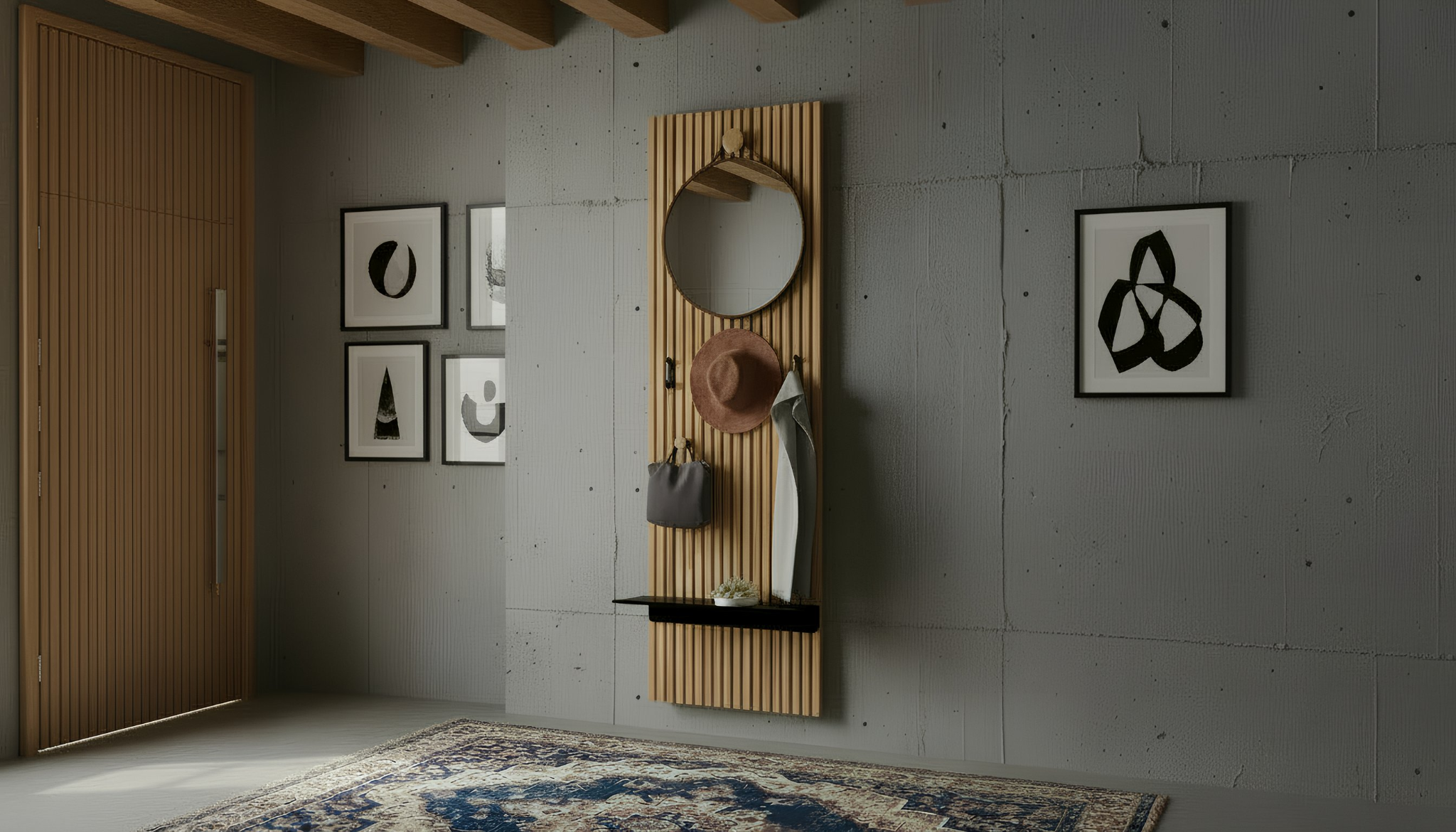
The slatted surface accepts a range of accessories, including teak knob hangers, wall hooks, a metal shelf, and a picture hanger. This allows the same architectural element to provide storage, display, or organization without sacrificing its visual simplicity.
A Reed wall in an entryway can hold coats and keys. In a bedroom, it can become a headboard. In a living space, it can display artwork or objects. In a hospitality environment, it can provide both architectural definition and practical function.
The result is a wall system that can evolve with the space.
Where can you use teak wall panels?
Reed is particularly effective in spaces where natural warmth can balance harder architectural materials, or where an otherwise unused wall can take on a more meaningful role.
Bathrooms and spa spaces
Teak has a long history in marine and other moisture-prone environments because of its dense grain, natural oils, and resistance to moisture. It's the same reason teak wall panels bathroom applications, along with teak shower wall panels and teak duckboards, have been standard in steam rooms, saunas, and yacht interiors for generations.
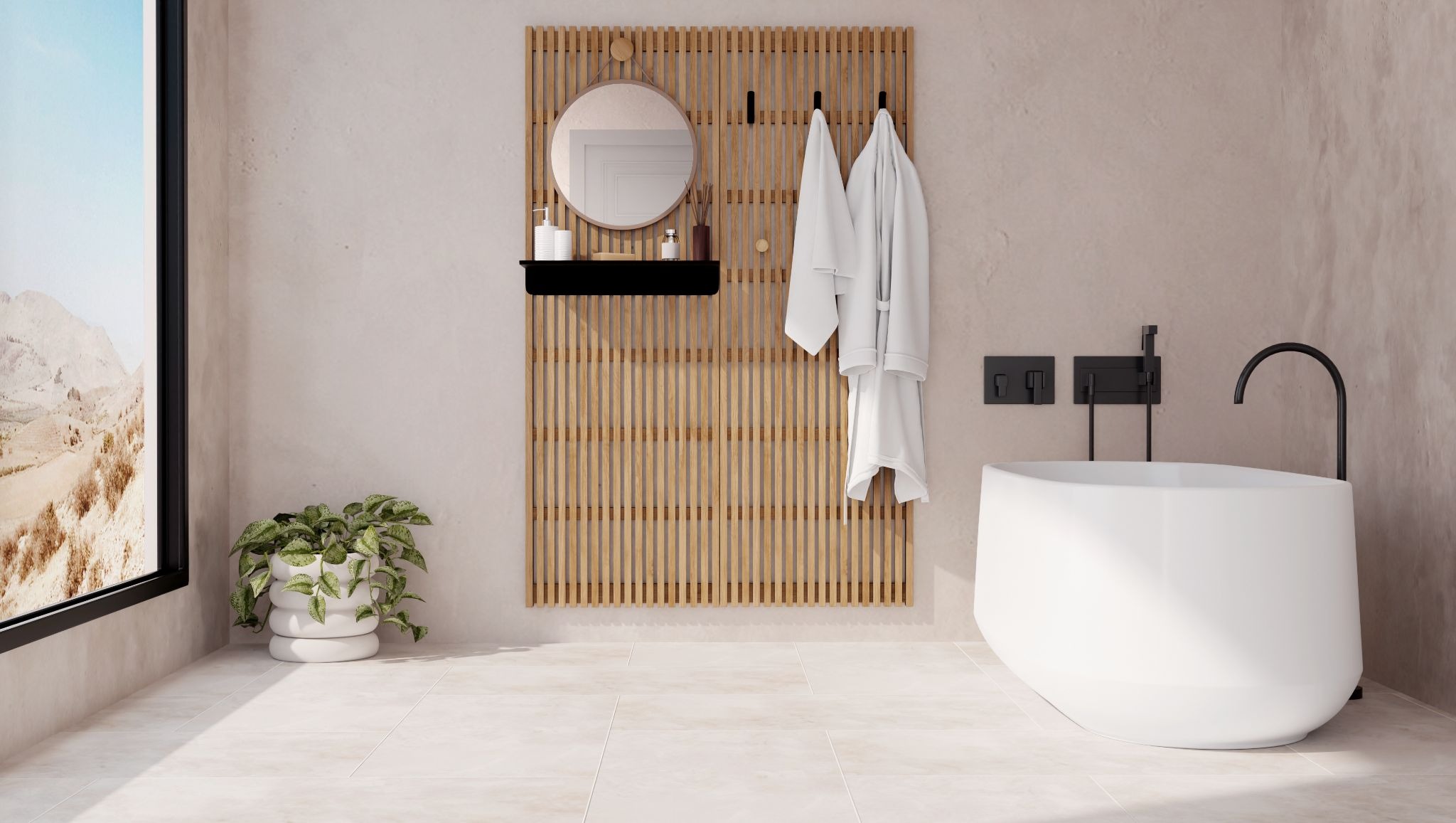
In a bathroom or spa, the warmth of solid teak provides a natural counterpoint to stone, tile, glass, and metal. A slatted teak wall can make a bathroom feel less clinical and more like a private retreat.
Add hooks for bathrobes or a shelf for towels, and the wall becomes functional without looking like storage.
As with any natural wood application in a wet environment, proper installation, ventilation, and the appropriate finish are important.
Kitchens
Kitchens often combine a concentration of hard, reflective materials: marble, quartz, stainless steel, glass, and tile. Teak introduces something those materials cannot: the warmth and variation of natural wood.
A Reed panel behind a coffee station, along a banquette, or on an otherwise unused wall adds texture without competing with the kitchen's primary surfaces.
The vertical slats can also draw the eye upward, giving a room a stronger sense of height and proportion.
Bedrooms
A bedroom is one of the natural settings for Reed.
Installed horizontally behind a bed, two panels can create a substantial architectural headboard with the warmth of solid teak and the visual rhythm of vertical slats. Used vertically, a single panel can define the bed area without requiring a conventional headboard.
Unlike a built-in treatment, Reed can be removed or reconfigured as the room evolves. It's part of a broader shift worth exploring further in Indoor Teak Furniture: What to Consider Before Bringing It Inside, which covers how teak fits naturally into interior spaces beyond the wall itself, including collections like Dahlia.
Entryways and mudrooms
Entryways are often the first and last spaces we experience, yet they are frequently treated as an afterthought.
Reed can give the entry both structure and purpose. Hooks provide a place for coats, hats, and bags, while a shelf can hold keys and everyday essentials. The result is organized without feeling utilitarian.
And because the panels mount with a French cleat rather than permanent adhesive, the installation can be changed as needs change.
Why choose solid teak wall paneling?
Teak has earned its reputation as one of the world's most durable woods. Its dense grain and naturally occurring oils provide excellent resistance to moisture, decay, and insects.
But there is another reason the choice of material matters when specifying teak cladding: solid teak remains solid teak for the life of the piece.
Many slatted wall systems on the market achieve the appearance of wood using a thin veneer over MDF or another engineered substrate. Others use composite or acoustic materials with a wood-look surface, while faux-wood systems are designed primarily to reproduce the appearance of timber.
These products can have their place. But they are not the same material as a solid teak panel.
With Reed, the teak is not simply a surface treatment. The slats themselves are solid teak. That means the natural grain, color variation, density, and tactile character of the wood are present in the material itself, rather than printed, laminated, or simulated on top of another substrate. We break down exactly what separates real teak from look-alikes in Teak Wood Quality: What Really Defines It.
It is a distinction you can see, but more importantly, one you can feel.
Sourcing is the part most buyers never see. Every Reed panel is made from premium teak grown on SVLK-certified plantations managed by Perum Perhutani, the Indonesian state forestry body, which means the wood is legally harvested and replanted under government oversight. You can read more about how this works on our Sustainability page.
For interior applications, Reed panels are hand-finished with a water-based, non-VOC lacquer designed to protect the surface while preserving the character of the wood. Mortise-and-tenon construction and careful hand sanding complete the system.
When a wall is intended to be a lasting architectural element, the material underneath the surface matters.
What makes teak decorative wall panels different?
A wall does not have to be completely covered to make an impression.
One Reed panel can function much like a large piece of artwork, creating a focal point without competing with everything else in the room. The vertical slats introduce a fine architectural rhythm, while changing daylight creates subtle variations of shadow across the surface.
This makes teak decorative wall panels particularly effective in spaces where restraint matters. Rather than filling a wall with decoration, a single panel can give the wall enough character to stand on its own.
And unlike artwork, it can become functional whenever the room calls for it.
How do you create outdoor privacy with teak panels and screens?
Teak paneling isn't limited to interior walls. The same qualities that make Reed work indoors, density, natural oils, and dimensional stability, make solid teak one of the strongest materials for outdoor privacy.
Wooden privacy walls for patios tend to be built and regretted, because a permanent structure fixes a decision most outdoor spaces outgrow within a season. Wood privacy screens solve the same problem and move with the sun, the wind, or the guest list.
Metal screens corrode near a pool or the coast, fabric fades and tears within a few summers, and softwood goes soft at the base where it meets damp ground. Teak simply weathers. The Westminster Teak Privacy Screen and Room Divider is a folding partition fitted with 316L stainless hardware and floor glides, finished smooth enough that it won't snag a towel. It arrives assembled and works indoors and out, as useful screening a dressing corner as it is shielding a hot tub.
For decks and terraces, outdoor privacy wood panels earn their place by defining space rather than closing it. Set one at an angle to block a neighbor's sightline and the rest of the view stays open. The same applies to wood privacy screens for decks used to hide equipment or storage, and to teak outdoor wall panels set against a bare exterior wall to give a courtyard a finished edge.
Reed for trade, contract, and hospitality projects
The qualities that make Reed compelling in a residence also make it well suited to hospitality, commercial, and multi-unit residential environments.
Hotels, restaurants, spas, senior living communities, and other high-use spaces increasingly seek materials that are durable enough for demanding environments while still providing a distinctive design character.
At project scale, the choice between solid wood and wood-look alternatives becomes particularly meaningful. A specification may cover dozens of rooms and remain in place for years, making material quality, consistency, and long-term serviceability important considerations alongside initial cost.
Reed's solid teak construction gives designers a genuine natural material rather than a wood appearance applied to an engineered substrate. Its modular format also allows designers to work with the system as an architectural element rather than treating it simply as a finished wall covering.
Westminster Teak has worked with designers, architects, developers, and hospitality professionals for nearly three decades. Our Trade & Contract team can assist with specifications, finishes, quantities, and lead times from the early stages of a project through installation, and design professionals can also explore the broader Trade Partner Program for account-level benefits.
A different way to think about a wall
Reed begins with a simple idea: a wall can be more than a background.
It can bring warmth into a room, create architectural rhythm, provide storage, display objects, define a space, or simply give the eye something beautiful to rest on.
Crafted from solid teak and designed as a modular system, Reed combines the permanence of a natural material with the flexibility of contemporary design.
In a market increasingly filled with wood-look alternatives, Reed makes a simpler proposition:
Use real wood. Use solid teak. Build it to last.
It is teak wall paneling, reimagined as architecture. Explore the full Reed collection to see panel options and accessories.
Frequently asked questions about teak wall panels
Are teak wall panels waterproof?
No wood is completely waterproof. Teak is, however, exceptionally resistant to moisture because of its dense grain and natural oils. This makes it well suited to wet or humid environments and applications where occasional exposure to water or steam is expected. In bathrooms and other moisture-prone areas, proper installation, ventilation, and finish selection remain important.
Can Reed be used outdoors?
Teak is exceptionally well suited to permanent outdoor exposure. Properly constructed teak can withstand sun, rain, and humidity without requiring a protective coating simply to preserve its structural integrity. However, Reed's standard interior panels are finished for interior applications, so outdoor installations should use a product and finish specifically designed for the environment. Like other unfinished teak, outdoor teak will naturally transition from its original golden-brown color to a silver-gray patina over time. This change is cosmetic and does not compromise the wood's structural performance.
Can teak panels be used as a privacy screen outdoors?
Yes. Teak's resistance to moisture and decay makes it one of the strongest materials for outdoor privacy screens and folding partitions, holding up in conditions where metal corrodes and fabric fades.
How do you clean and maintain teak wall panels?
Interior panels require very little maintenance. Dust the surface as you would other wood furniture and occasionally wipe it with a soft cloth and mild soapy water. Avoid abrasive pads and harsh cleaning products, which can damage the finish. Outdoor teak can be periodically washed to remove dirt and environmental buildup.
Does teak need to be sealed or oiled?
Teak does not require oiling to remain durable. Its natural oils provide inherent resistance to moisture and decay. For interior applications, Reed is finished to protect the surface and maintain its appearance. If your preference is the natural silver-gray character of weathered teak, allow unfinished outdoor teak to develop its patina naturally. If you prefer to maintain the original golden-brown color, you can use an appropriate teak finish. The choice is primarily aesthetic, not structural. For the full indoor care routine, see Teak Oil for Indoor Furniture?
Related Posts

Stay in Touch
Oops! Something went wrong while submitting the form


