

Outdoor Furniture for Hospitality Spaces
Discover what sets teak furniture and hospitality outdoor furniture apart, from contract-grade construction to durability, low maintenance, and sustainability.
The outdoor spaces of a hotel, restaurant, or resort are used very differently than a residential backyard. What represents a few hours of weekly use for a family can mean continuous occupancy, seven days a week, throughout an entire season in a hospitality setting.
Yet one of the most common mistakes is still furnishing these high-traffic environments with furniture designed for residential use. At first glance, the decision may seem reasonable. The design is appealing, the price is competitive, and the differences appear minimal. But over time, the problems become clear: frames begin to loosen, hardware is affected by constant moisture, finishes require ongoing maintenance, and pieces need to be replaced much sooner than expected.
Choosing outdoor furniture for hospitality is about much more than selecting a style. It also means evaluating how the furniture will perform under continuous commercial use, what maintenance it will require, and how well it will preserve the guest experience over time.
In this guide, you'll learn what truly separates hospitality outdoor furniture from residential furniture and the questions every buyer should ask before specifying furniture for a hospitality project.
Learn more about our Design Trade Program or Contract and Hospitality Program.
For the homeowner's side of this same standard, see How Hotels Choose Outdoor Furniture: A Guide for Design-Conscious Homeowners.
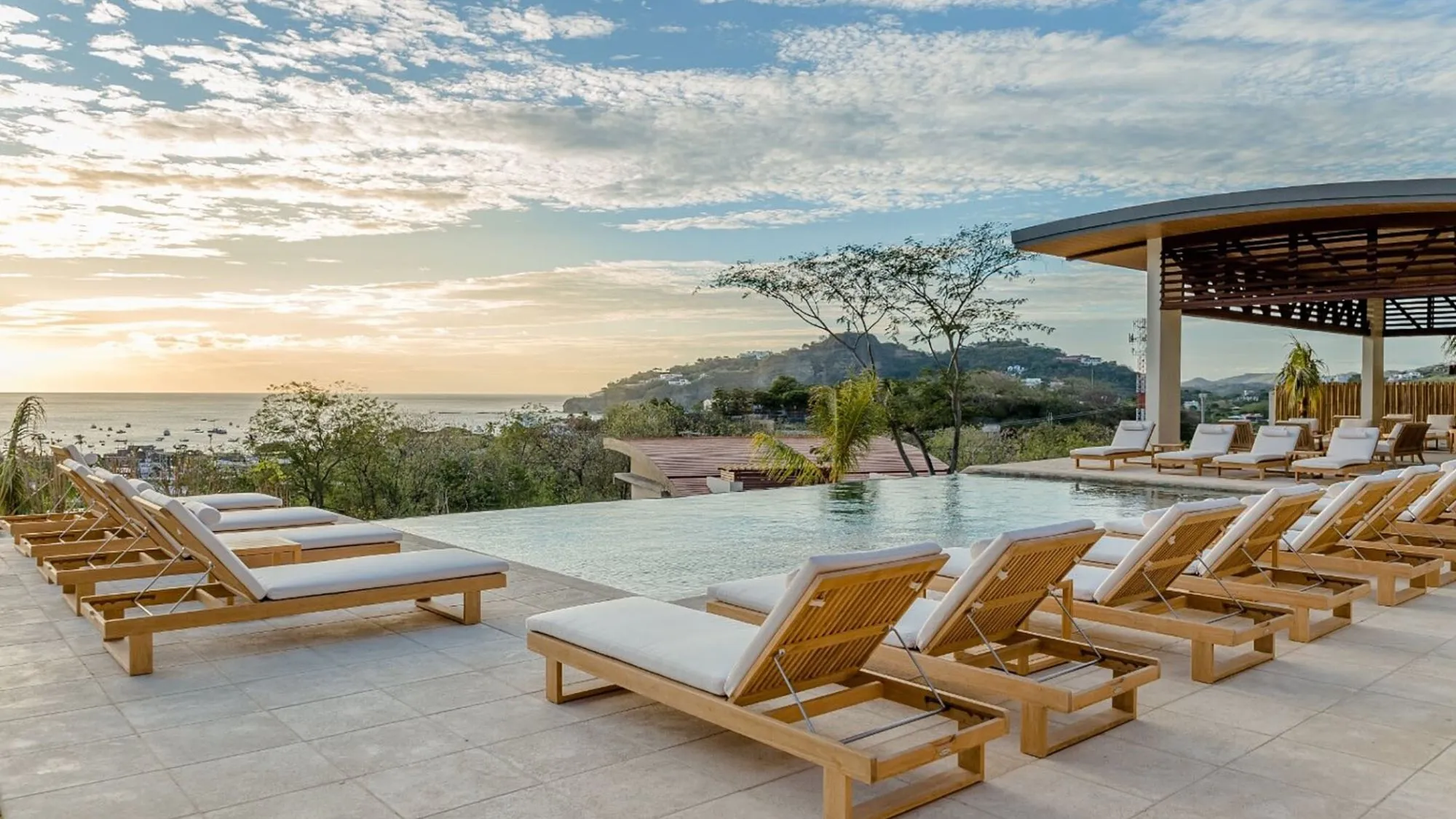
Why do Hospitality Spaces Require Different Outdoor Furniture?
The biggest difference between a residential project and a hospitality project is the level of use. In a private home, a chair may only be used for a few hours each week. In a hotel, pool area, or restaurant, that same chair may be occupied ten or twelve hours a day, every day. Add constant movement, frequent cleaning, exposure to sunlight, humidity, pool chemicals, and, in many cases, coastal environments with high salt content, and the demands become entirely different. Learn why teak is your best option for coastal outdoors in our post: Coastal Outdoor Living: How to Design an Exterior Space That Truly Lasts
That level of use changes every requirement the furniture must meet. Frames must withstand repeated stress for years. Materials need to remain stable despite constant weather exposure. Finishes should not depend on frequent maintenance to maintain their appearance. Every component, from the wood itself to the hardware, must continue performing reliably after thousands of uses.
For that reason, hospitality furniture isn't defined solely by how it looks. It's defined by its ability to deliver consistent performance year after year under commercial conditions.
Every collection developed for Westminster Teak's Contract & Hospitality division is designed with exactly that objective: providing commercial outdoor furniture that meets both operational demands and the level of comfort and quality guests expect.
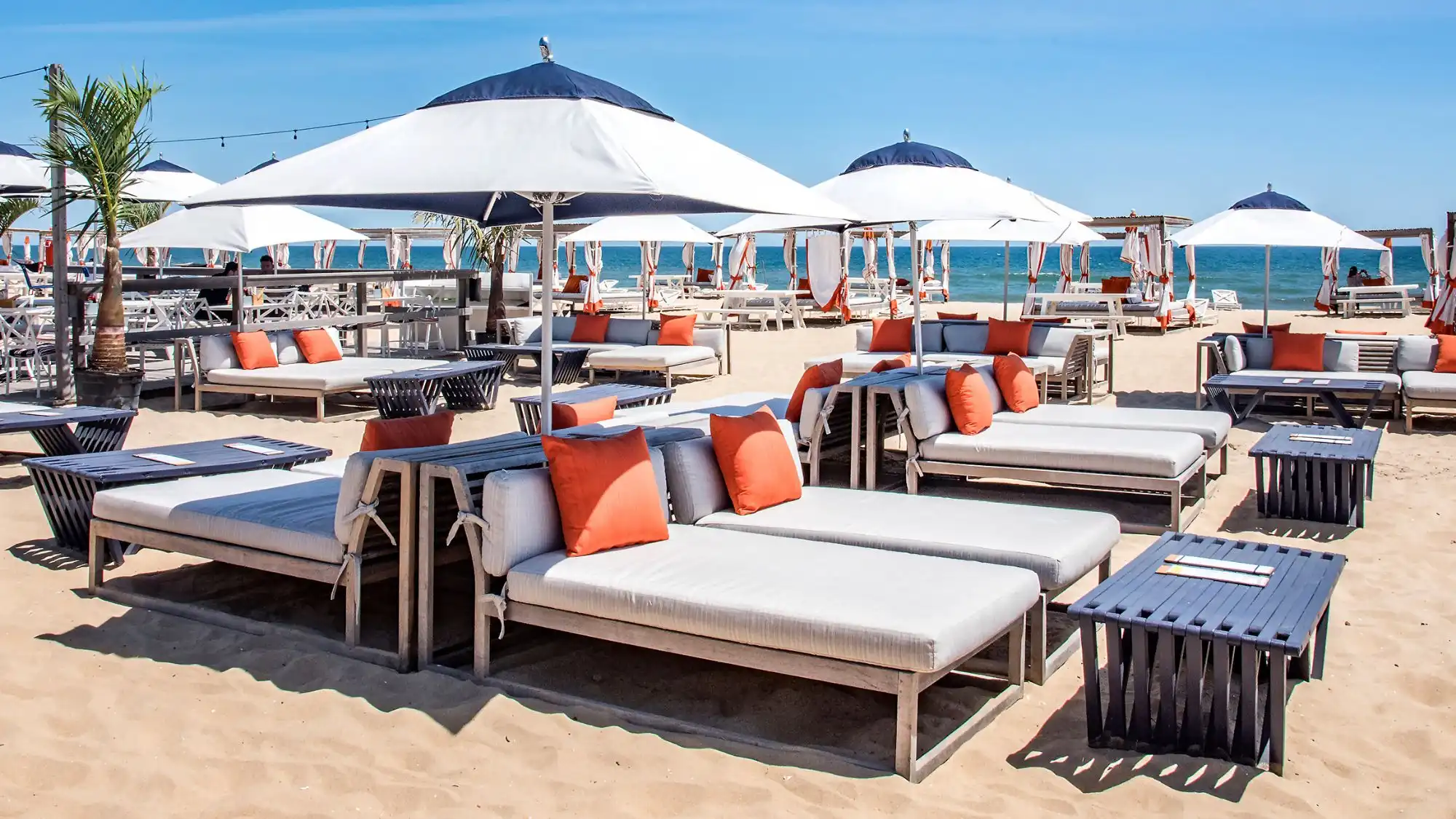
What Separates Contract-Grade Outdoor Furniture from Residential Furniture?
Not all outdoor furniture is built to withstand the same level of demand. While two pieces may appear similar at first glance, the real differences often lie beneath the surface: the joinery, the quality of the hardware, the manufacturing process, and the long-term stability of the materials.
In hospitality environments, these details are anything but minor. They determine how long the furniture will last and how much maintenance it will require throughout its service life.
Why does the joinery matter?
In commercial environments, every chair, dining table, or chaise lounge experiences thousands of movements over its lifetime. When a frame relies primarily on screws or mechanical fasteners, joints are more likely to loosen as years of continuous use take their toll.
That's why Westminster Teak contract furniture is built using traditional mortise-and-tenon joinery, a woodworking method renowned for its structural strength and its ability to distribute stress evenly throughout the frame. Learn more about the Westminster Teak difference.
The result is furniture that remains solid and stable, even after years of continuous use.
Why does 316L stainless steel make a difference?
Hardware is often one of the first components to fail when furniture is installed near pools or coastal environments. Constant exposure to moisture, chlorine, and salt air accelerates corrosion in lower-grade metals, affecting both the appearance and structural integrity of the furniture.
For that reason, outdoor furniture for hotels, resorts, and restaurants should incorporate 316L stainless steel hardware, an alloy specifically engineered to resist corrosion in highly demanding environments. Although largely hidden from view, this detail has a direct impact on product longevity and significantly reduces the need for premature replacements.
For the full explanation, read Why We Use 316L Stainless Steel Hardware.
What does a high-quality finish contribute?
In commercial settings, the finish serves a purpose far beyond aesthetics. Surfaces must withstand continuous use without splintering, remain smooth and comfortable to the touch, and allow housekeeping staff to clean them efficiently every day.
At Westminster Teak, every piece receives a proprietary micro-finish that creates an exceptionally smooth surface while preserving the natural beauty of the wood without relying on artificial coatings.
When hundreds of guests use the furniture every week, that level of craftsmanship becomes part of the overall guest experience.
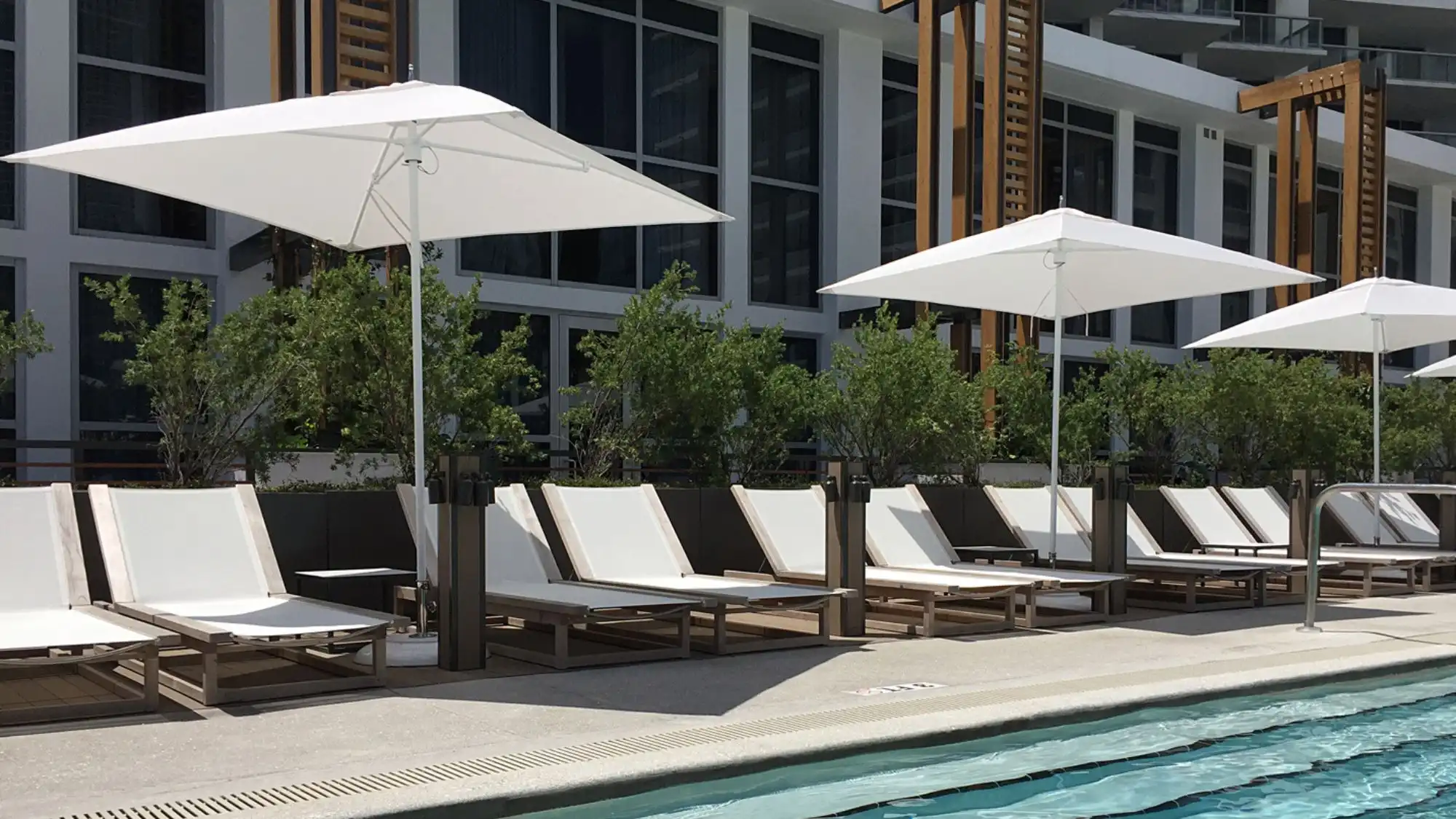
Why is Low Maintenance an Operational Advantage?
When a hotel manages two hundred chairs, fifty dining tables, and dozens of loungers spread across pools, restaurants, and terraces, maintenance stops being an aesthetic concern. It becomes an operational one.
Every hour spent repairing, sanding, refinishing, or replacing furniture represents labor, cost, and resources that could be dedicated elsewhere. That's why choosing naturally durable materials can have a much greater impact than many buyers realize.
Teak contains natural oils and resins that protect the wood from moisture, UV exposure, and temperature fluctuations without requiring sealants or constant treatments. That protection is built into the material itself rather than depending on surface coatings that need regular reapplication.
If left untreated, teak gradually develops its distinctive silver-gray patina. This natural aging process does not compromise the wood's structural performance. Instead, it reflects the character of a material designed to last for decades.
For maintenance teams, that means fewer repairs, fewer replacements, and greater predictability in long-term operating costs.
Ultimately, the real value of hospitality outdoor furniture isn't measured only by how long it lasts. It's measured by its ability to maintain the same quality, performance, and appearance year after year, even under continuous commercial use.
Learn how easy it is to maintain your teak furniture in our post: How to Take Care of Teak Outdoor Furniture?
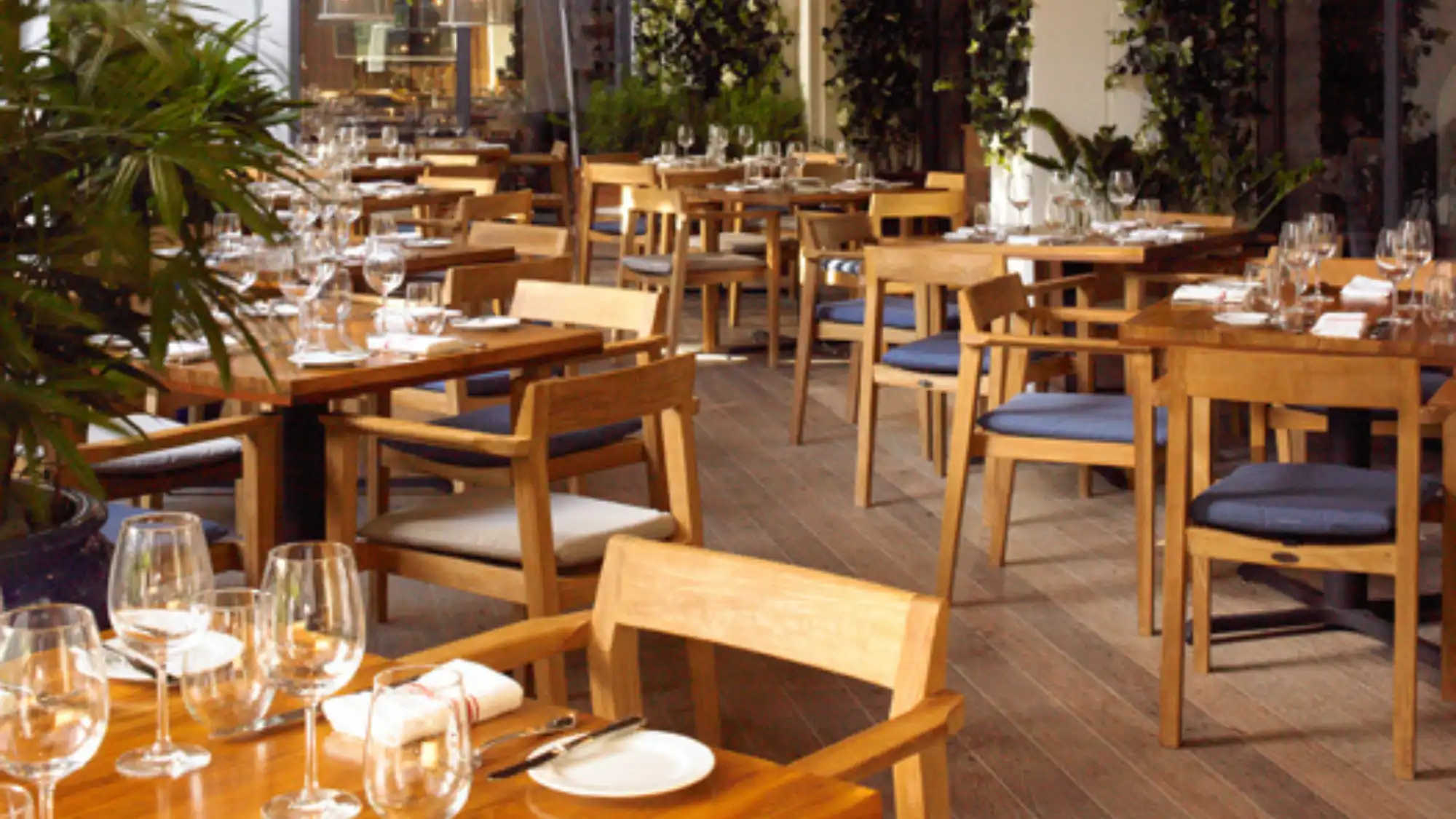
What Should You Evaluate in a Large-Scale Hospitality Project?
When a project involves dozens or even hundreds of pieces, selecting outdoor furniture is no longer just a design decision. It also becomes a matter of planning. Production lead times, coordination between suppliers, the ability to customize specifications, and ongoing project support can make just as much difference as the quality of the furniture itself.
That's why hospitality projects often benefit from working with manufacturers that specialize in the Contract market and understand how to support projects of different sizes and levels of complexity. Every project comes with its own unique requirements.
A hotel may need to furnish multiple pool decks and terraces at the same time. A restaurant may require furniture designed for a compact layout or high table turnover. A resort, meanwhile, often combines a variety of outdoor environments, from open-air dining areas to lounge spaces and spa facilities.
Working with a specialized supplier makes it possible to tailor furniture specifications to each project, coordinate production schedules, and ensure consistency in both quality and aesthetics across every piece.
Beyond the furniture itself, this level of support helps reduce unexpected issues during installation and streamlines coordination between architects, designers, developers, and procurement teams.
Not every project calls for standard solutions. In many cases, dimensions, configurations, or production quantities need to be adapted to meet the specific requirements of the space.
Partnering with a manufacturer capable of accommodating custom specifications allows projects to optimize both functionality and the integration of the furniture with the overall architectural vision.
Westminster Teak's Contract & Hospitality division supports projects of every scale, providing specialized guidance from planning through delivery to help make every stage of the process more efficient.
Why Do Sustainability and Traceability Matter?
Sustainability is no longer simply an added benefit. For many hospitality projects, it has become an essential purchasing criterion. Hotels, resorts, and restaurants increasingly incorporate Environmental, Social, and Governance (ESG) goals into their operations, and supplier selection plays an important role in achieving those commitments.
For that reason, understanding where materials come from is just as important as evaluating how they perform.
At Westminster Teak, all teak is sourced from plantations managed under Indonesia's SVLK (Sistem Verifikasi Legalitas Kayu) program, which ensures legal harvesting and full traceability from the forest to the finished product.
This level of traceability provides greater transparency throughout the purchasing process and allows architects, designers, and procurement professionals to specify materials whose origin can be independently verified.
Beyond regulatory compliance, choosing responsibly sourced materials also helps reinforce the connection between a property's design and the sustainability values that many hospitality brands seek to communicate to their guests.

What Questions Should You Ask Before Specifying Outdoor Furniture?
Before selecting a supplier for a hospitality project, it's worth asking a few key questions that reveal the true quality of the furniture beyond its appearance.
- Is the furniture specifically designed for contract use, or is it intended primarily for residential applications?
- What type of joinery is used in the construction?
- Does it incorporate 316L stainless steel hardware suitable for coastal environments and pool areas?
- Where does the teak come from, and is its origin fully traceable?
- What level of maintenance will the furniture require after installation?
- Can the manufacturer accommodate custom project specifications?
- What level of support is provided throughout the project, from planning and delivery to after-sales service?
- What warranty backs the furniture?
Answering these questions early in the specification process helps avoid unexpected costs, simplifies long-term operations, and allows buyers to make decisions based on long-term performance rather than first impressions.
Frequently Asked Questions About Hospitality Outdoor Furniture
What does contract-grade outdoor furniture mean?
Contract-grade furniture is specifically engineered for continuous commercial use. It incorporates materials, construction methods, and hardware designed to withstand the demands of hotels, restaurants, resorts, and other high-traffic environments.
Can residential outdoor furniture be used in hotels?
It can, but it is generally not recommended. The continuous use typical of hospitality environments accelerates wear on residential furniture, often leading to higher maintenance costs and more frequent replacement.
Why is teak one of the preferred materials for hospitality projects?
Teak contains natural oils that protect it against moisture, UV exposure, and changing weather conditions, offering an exceptional combination of durability, low maintenance, and timeless beauty that improves with age.
Why is 316L stainless steel important for outdoor furniture?
316L stainless steel provides superior resistance to corrosion caused by moisture, chlorine, and salt air, making it the preferred choice for coastal hotels, pool areas, and spa environments.
How much maintenance does teak furniture require in a hotel?
Teak is naturally low maintenance. Routine cleaning is generally enough to keep it performing well. If left untreated, it will gradually develop its signature silver-gray patina without affecting its structural integrity.
Why is SVLK certification valuable?
SVLK certification verifies the legality and traceability of the teak used in the furniture, providing greater transparency for hospitality projects that prioritize responsible sourcing and sustainability initiatives.
Choosing the right hospitality furniture is both an operational and a strategic decision. Outdoor furniture shapes a guest's first impression of a hotel, contributes to guest comfort, and influences how efficiently a property operates every day.
It also affects maintenance costs, replacement cycles, and a property's ability to maintain a consistent appearance over time.
For that reason, specifying furniture for a hospitality project goes far beyond selecting an attractive design. It means choosing materials, manufacturing methods, and a partner capable of meeting the real demands of commercial environments.
Westminster Teak's Contract & Hospitality division was built with exactly that purpose: supporting architects, designers, procurement professionals, and hospitality operators with furniture solutions engineered to deliver performance, durability, and lasting quality for decades.
Related Posts


%20copia2%20copia.jpg.jpeg)
Stay in Touch
Oops! Something went wrong while submitting the form


