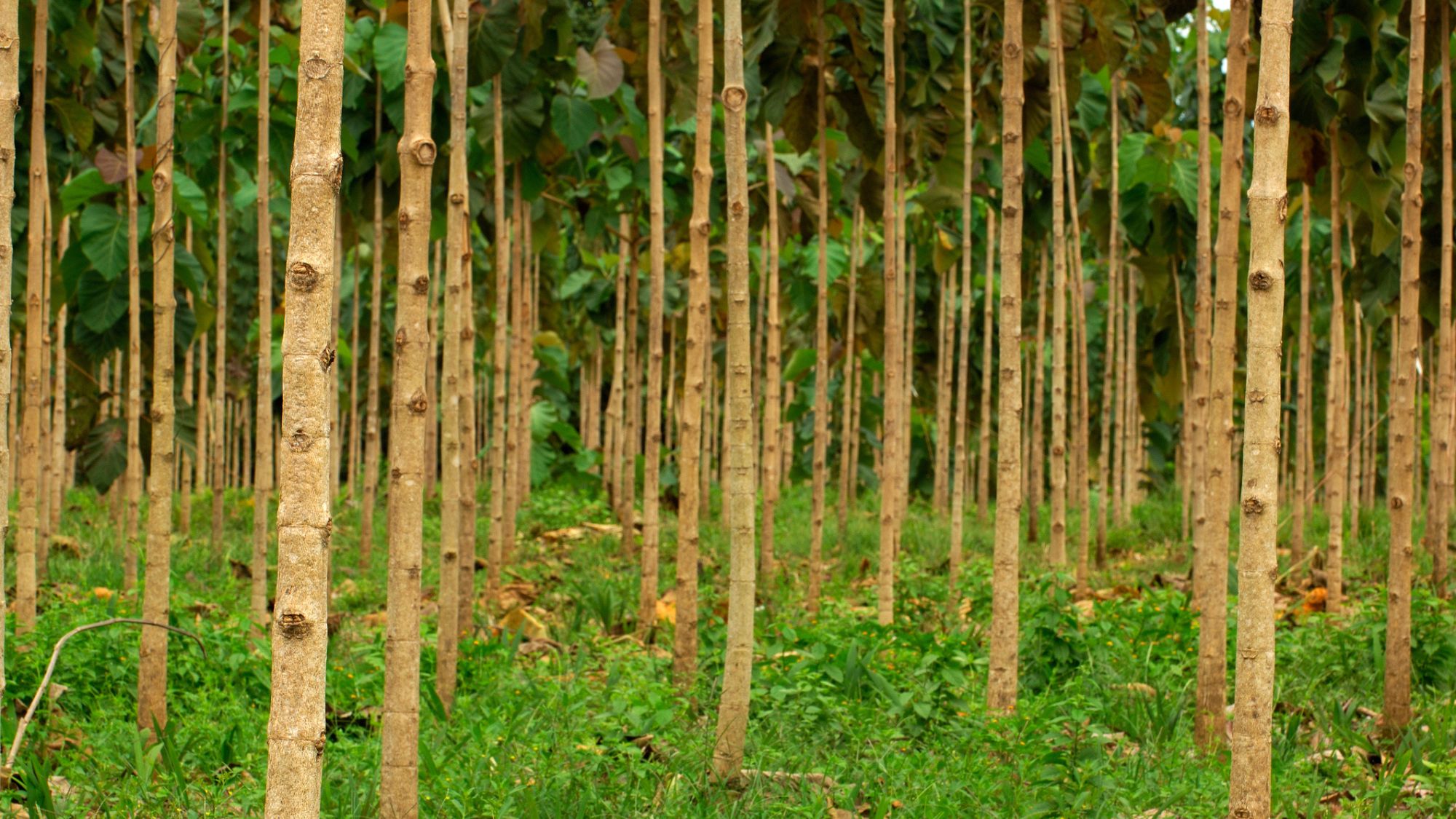
The teakwood tree grows across South and Southeast Asia. Learn where teak wood comes from, how plantations are managed, and why it matters when you buy.

Every piece of teak furniture begins as a tree that took decades to grow. Knowing where that tree stood, and how the land around it was cared for, tells you more about a piece than any product label. Here is what the teakwood tree is, where teak wood comes from today, and why origin should shape every purchase decision.
What Is a Teakwood Tree?
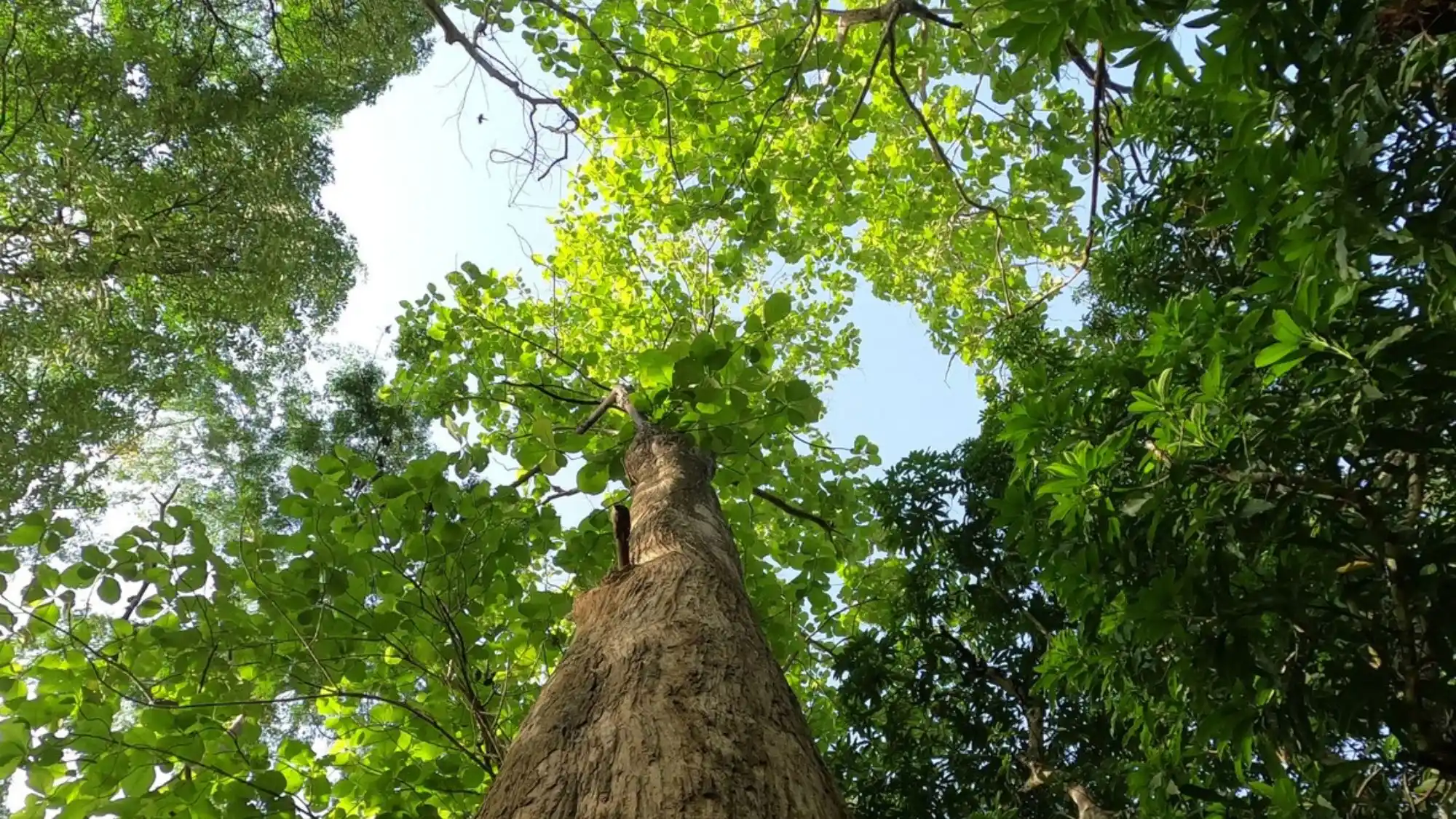
The teakwood tree is Tectona grandis, a large tropical hardwood with broad leaves and a tall, straight trunk. It is the species behind genuine teak.
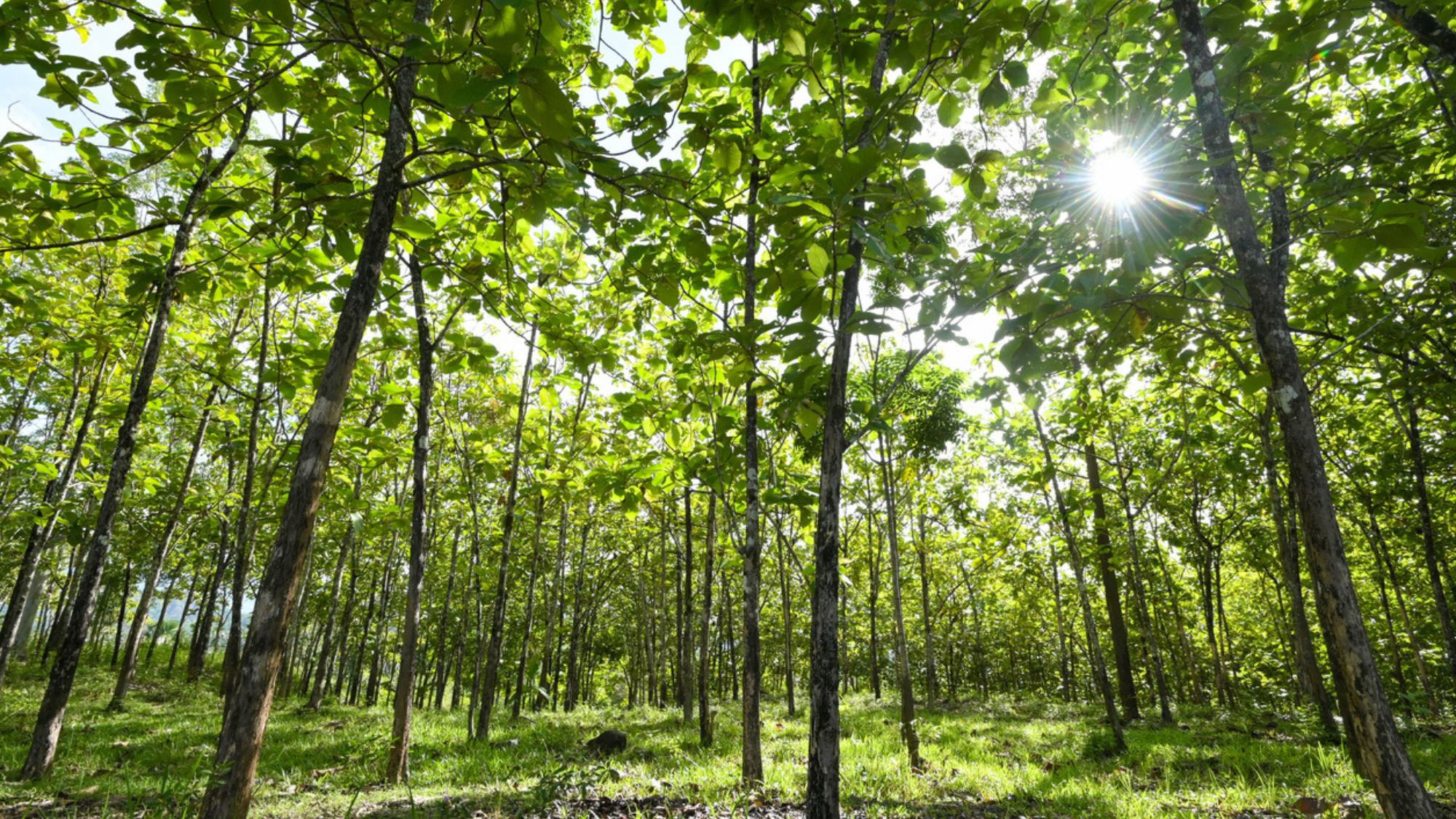
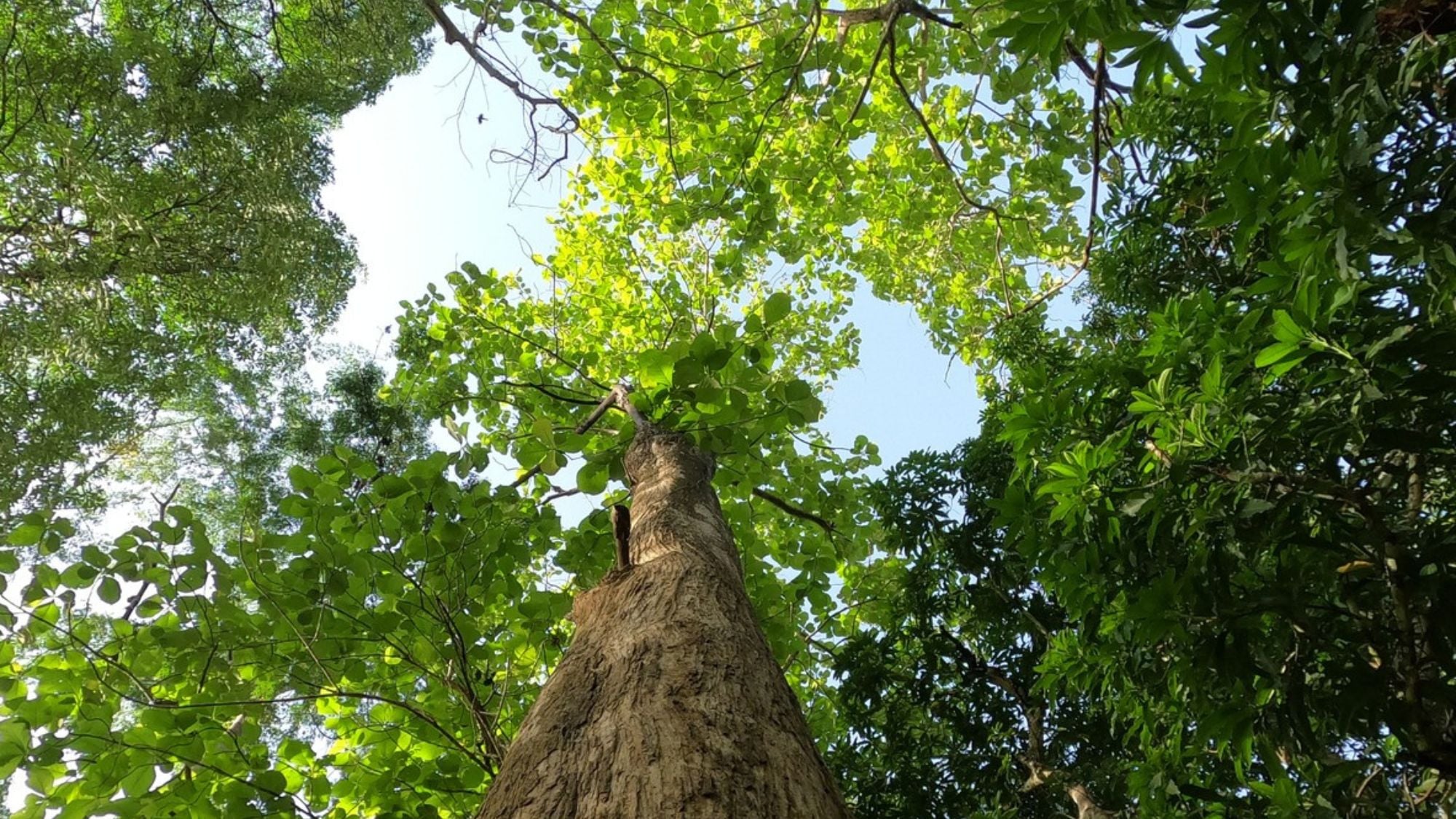
In favorable conditions, the tree can grow taller than 100 feet (about 30 meters), with a clean trunk and fibrous, light brown bark. Its leaves are remarkably large, often more than a foot long. The tree sheds them during the dry season and grows them back with the rains.
What makes the wood so valued is what forms inside the trunk over time. Mature teak is dense and rich in natural oils, and it contains silica. Together, these qualities give teak excellent resistance to moisture and outdoor exposure, which is why teak has been the material of choice for boats, homes, and outdoor teak furniture for generations.
Where Does Teak Wood Come From?
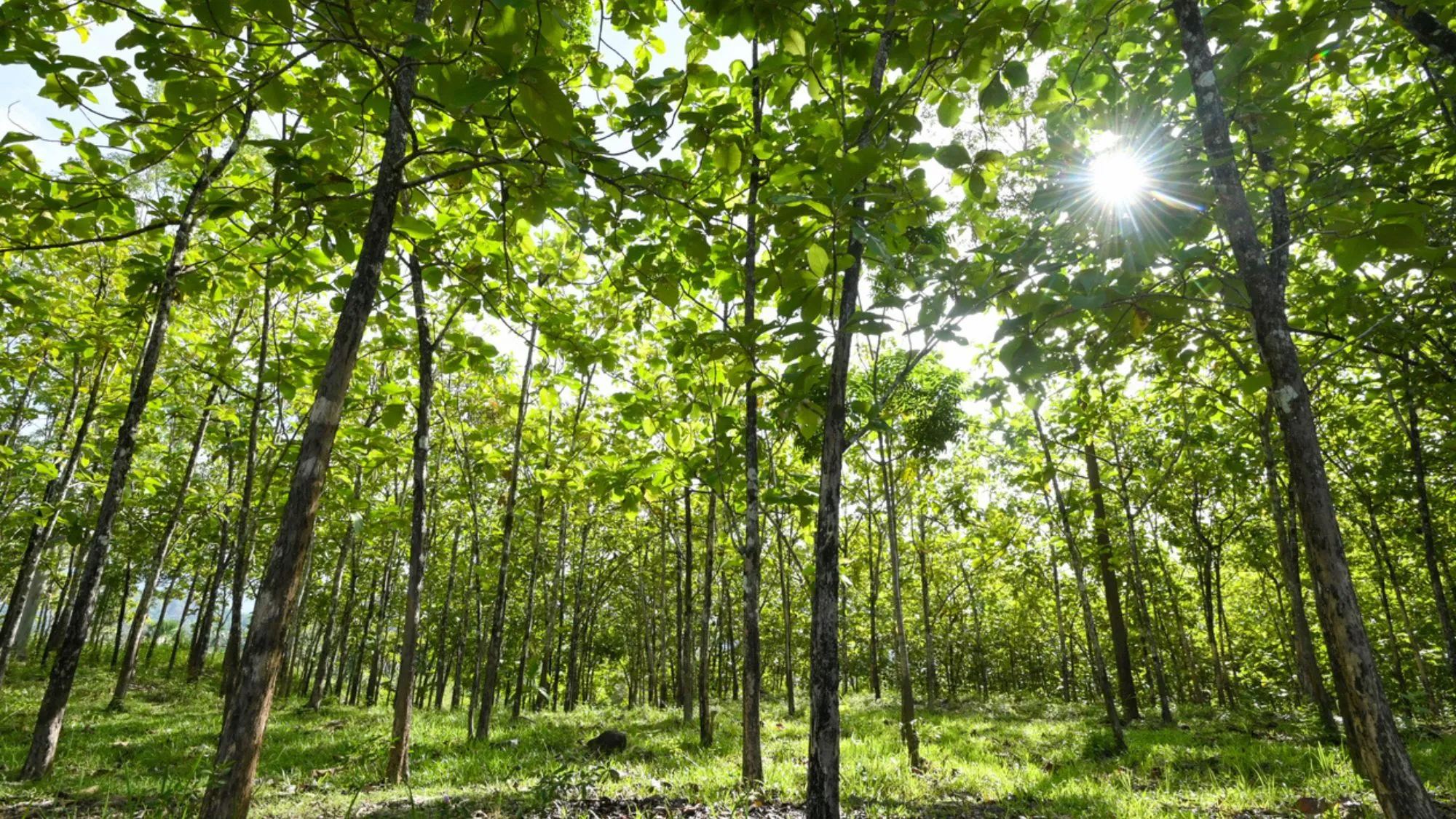
Teak wood comes from South and Southeast Asia, where the teakwood tree is native to India, Myanmar, Laos, and Thailand. Today, the answer to where does teak wood come from has two parts: the species' native forests and the managed plantations grown across the tropics. Natural teak grows in those native forests, while plantation teak is planted, tended, and harvested in cycles under a management plan.
Indonesia, and the island of Java in particular, is home to one of the world's largest and longest-established teak forestry systems. Systematic teak plantations there date to around 1880, and teak and managed forestry on Java are older still. That tradition is a large part of the answer to where does teakwood come from in Indonesia: a forestry system refined for well over a century. For the full story, read The Long History of Teak Forestry in Indonesia.
How Long Does a Teakwood Tree Take to Mature?
According to Mal Haddad, President & Designer of Westminster Teak, a teakwood tree takes about 40 years to mature. That patience shows up in the wood.
Maturity matters because of heartwood, the dense core of the trunk that forms slowly as the tree ages. The heartwood is where teak concentrates its natural oils, and it is the part prized for furniture. Younger trees carry a higher share of sapwood, the lighter outer layer with far fewer of those oils. We cover the difference in What Is the Difference Between Heartwood and Sapwood in Teak Furniture?
Is Teak Wood Sustainable?
Teak wood can be sustainable, but it depends largely on where it comes from and how the plantation is managed. The species itself is neither sustainable nor unsustainable. The forestry practices around it decide that.
A sustainably managed plantation shares a few traits. Harvests follow a forest management plan rather than short-term demand. The legality of the wood is verified at the source. Harvesting is paired with planned replanting, so teakwood trees keep growing over successive rotations. And the plantation supports the people who live around it.
That last point often takes the form of agroforestry. In many Javanese plantations, local farmers grow food crops in the rows between young teakwood trees, earning income while the trees grow and caring for the land. The forest and the community develop together.
Where Does Westminster Teak's Teak Come From?
We source our teak from Perum Perhutani, Indonesia's state-owned forestry enterprise, which manages about 2.4 million hectares (about 6 million acres) of forest across Java and Madura. It oversees planting, forest maintenance, harvesting, and the documentation that follows the timber through its managed forest system.
Our teak supply is supported by documented chain-of-custody controls that trace timber from its legal forest source through manufacturing. Learn more about our sourcing on our Sustainability page, and see how that teak becomes furniture in The Westminster Difference. Then explore our outdoor collections and indoor collections to see the result.
Why Does Origin Matter When You Choose Sustainable Outdoor Furniture?
Origin matters because it is a clear signal of whether a piece is truly sustainable outdoor furniture. Two pieces can both be called teak and still come from very different forests, managed in very different ways.
When you shop for sustainable patio furniture, three questions help. First, where does the wood come from? A clear answer names a country, a region and ideally the managing body. Second, can the supplier trace it? Traceability means the chain from plantation to piece can be documented. Third, how was the wood processed? Proper drying and careful selection of heartwood help determine how the piece will perform outdoors. We explain both in What Is Kiln Drying and Why It Defines the Quality of Your Teak Furniture and Teak Wood Quality: What Really Defines It.
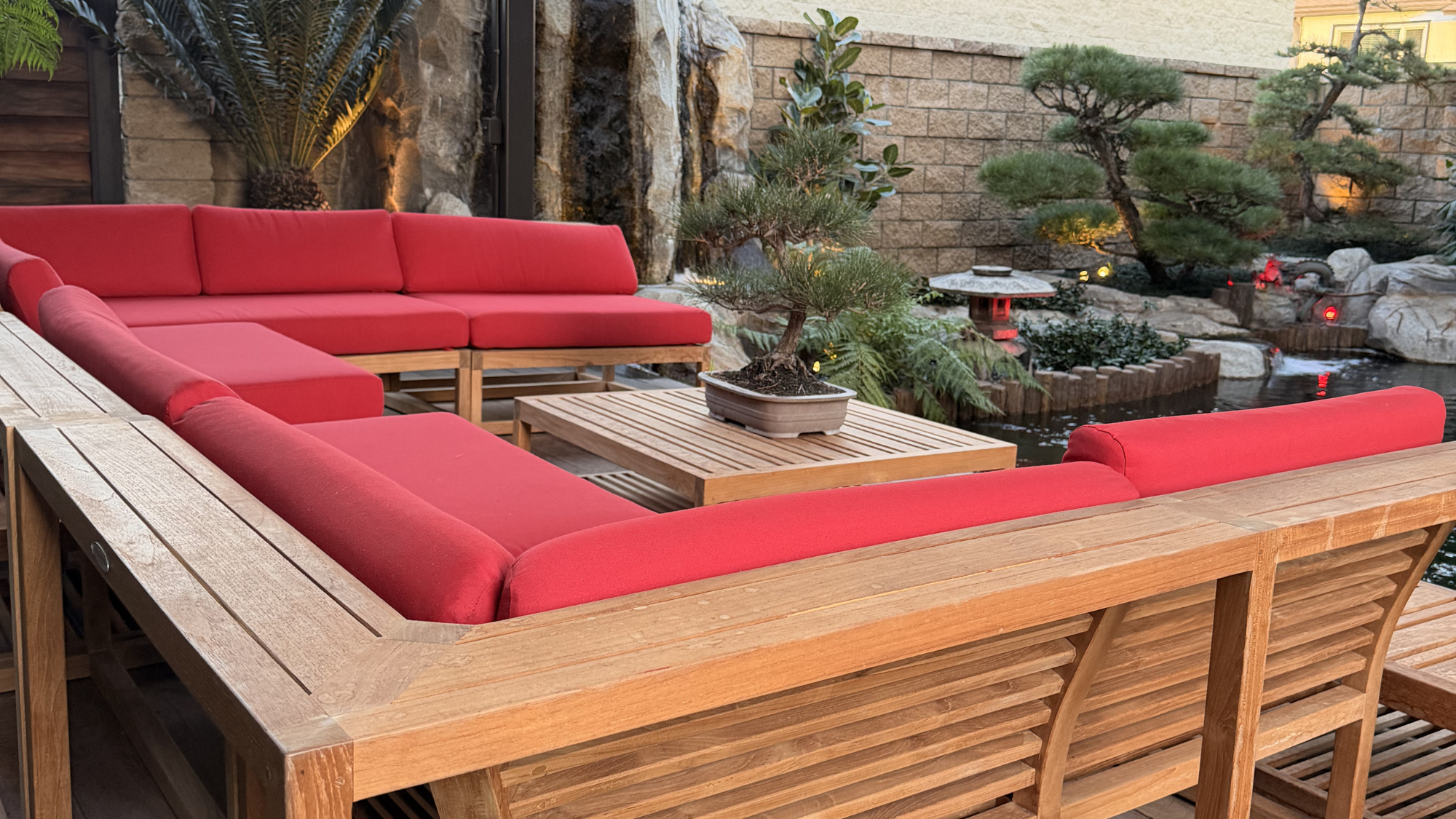
These are fair questions to ask any supplier of teak patio furniture. At Westminster Teak, we are glad to answer them, and our outdoor collections and indoor collections show what that care looks like in a finished piece.
Can You Build a Wood Bench Around a Tree?
Yes. A wood bench around a tree turns a living tree into the center of the garden, with seating that wraps its trunk and shade overhead.
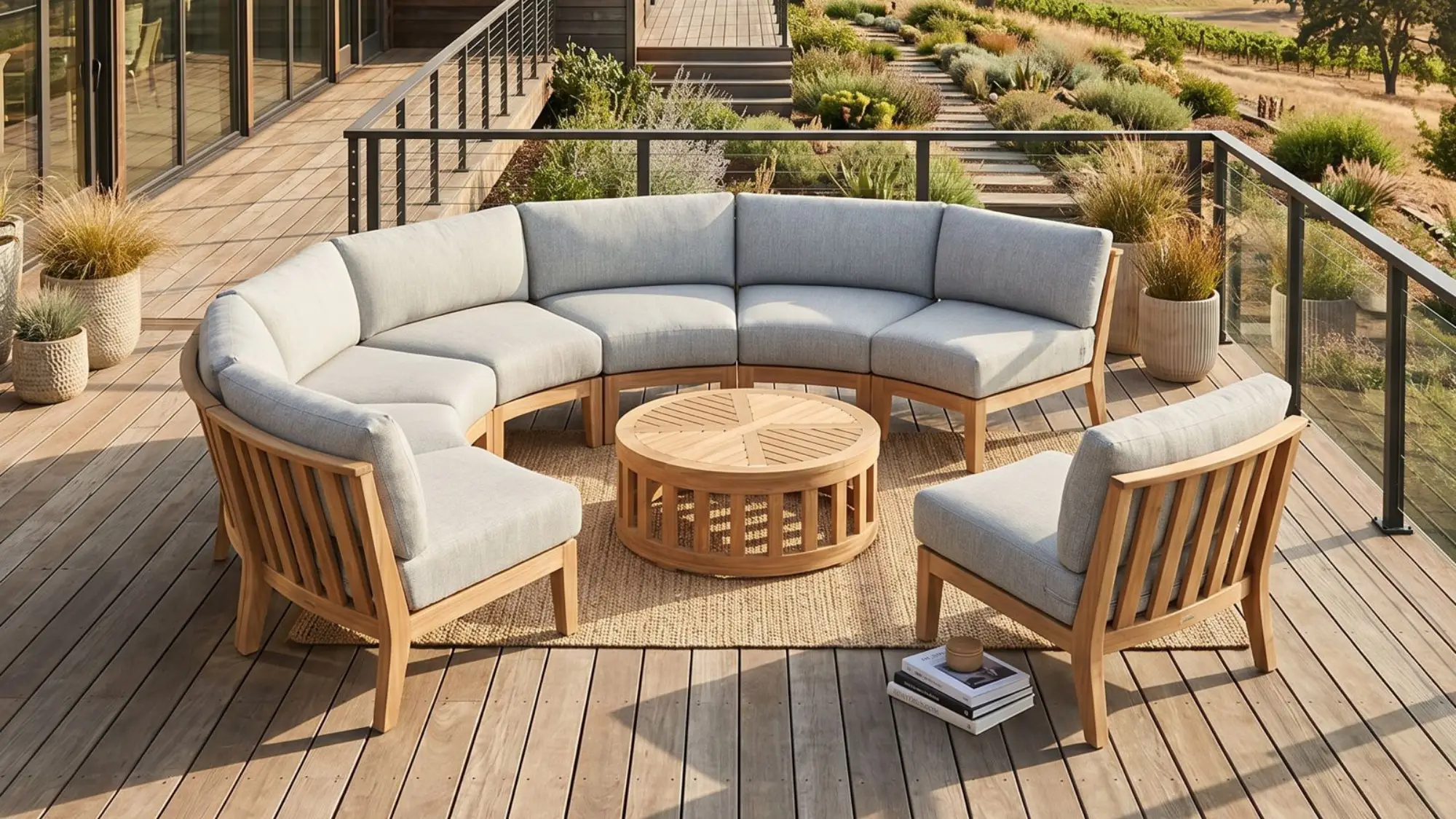
The Buckingham Teak Tree Hugger Bench is made for exactly this. Five curved sections join into a complete circle with a 63-inch inner diameter around the trunk, and each section can also be purchased on its own. For other shapes, our Round & Curved Benches offer arcs that follow a planting bed, a fire pit or the curve of a path. It is a fitting way to close the circle: a teak bench, cut from one tree, placed around another.
Frequently Asked Questions
Where Does Teak Wood Come From?
Teak wood comes from the teakwood tree, Tectona grandis, which is native to India, Myanmar, Laos, and Thailand. It is also widely grown in managed plantations, and Indonesia's island of Java is home to one of the world's largest and longest-established teak forestry systems.
Is Teak a Hardwood?
Yes. Teak is a tropical hardwood. Its dense heartwood and natural oils make it well suited to outdoor use.
How Long Does It Take a Teak Tree to Grow?
According to Mal Haddad, President & Designer of Westminster Teak, a teakwood tree takes about 40 years to mature. That time allows the heartwood, where the natural oils concentrate, to fully form.
Is Teak Furniture Sustainable?
Teak furniture is sustainable when the wood comes from responsibly managed plantations with verified legality, replanting, and support for local communities. Asking where the teak was grown and whether the supplier can trace it is a reliable way to find out.
What Is the Difference Between Plantation Teak and Natural Teak?
Natural teak grows in the species' native forests in South and Southeast Asia. Plantation teak is planted, tended, and harvested in cycles under a management plan, and harvesting is paired with planned replanting so new teakwood trees keep growing.